The "New Words and Buzzwords of the Year" award has been a Japanese year-end tradition since 1984. Run by publisher Jiyukokuminsha, it recognizes words and phrases from its reference book "Modern Terminology: A Dictionary of Contemporary Knowledge" that best capture the spirit of each year.
In 2025 the award gained a new sponsor and was renamed the "T&D Insurance Group New Words and Buzzwords of the Year." Candidate words are gathered through research by the dictionary's editorial team, a selection committee nominates 30 of them, and from that shortlist the Top Ten and the Grand Prize are chosen. The 2025 winners were announced at a ceremony on December 1.
The selection committee includes kōdan storyteller Hakuzan Kanda, cartoonist Yaku Mitsuru, comedian Patrick Harlan, and other figures from diverse backgrounds.
Where "Work, Work, Work" Came From
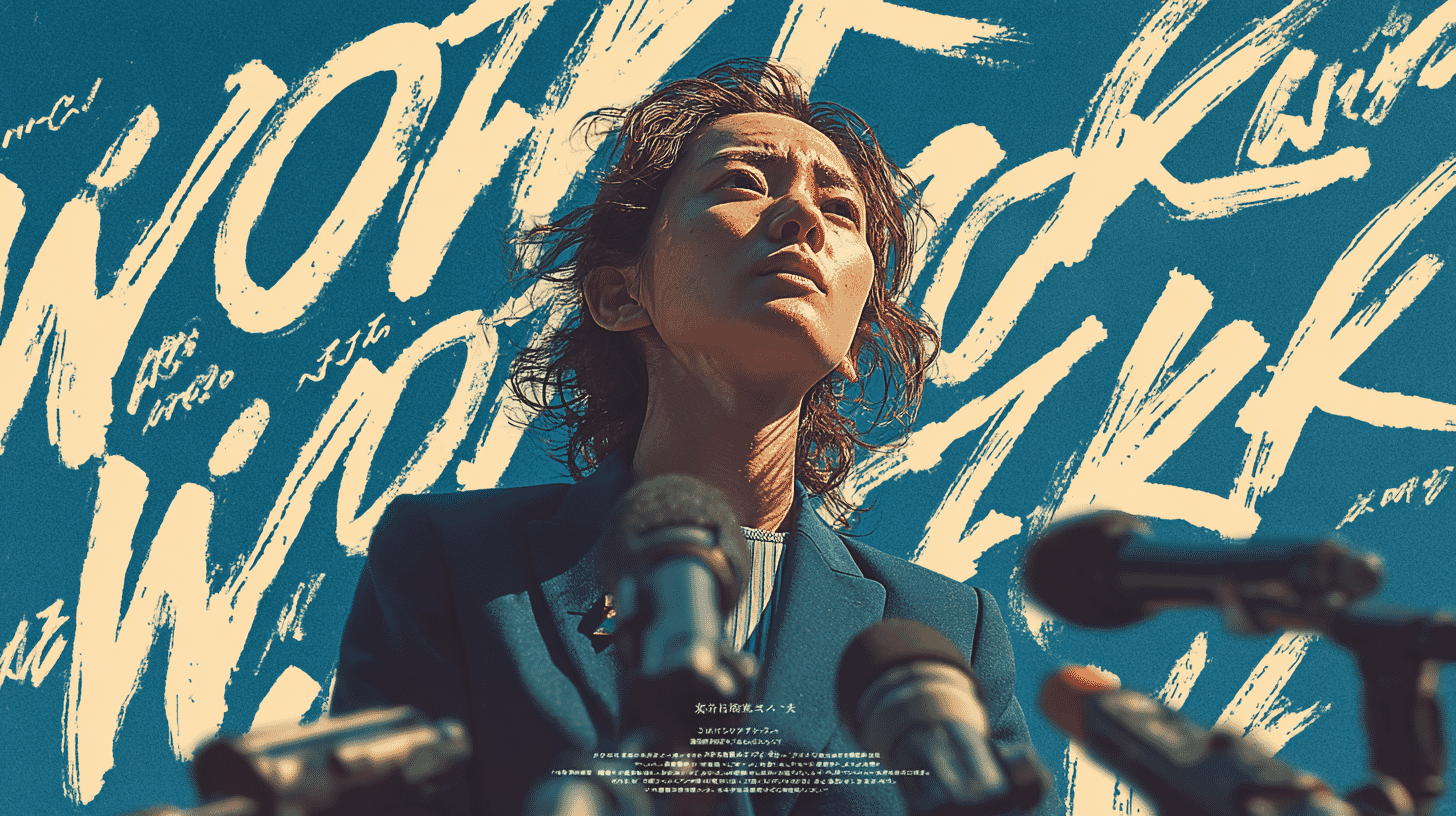
In October 2025, Sanae Takaichi became Japan's first female Prime Minister in constitutional history. In her speech immediately after winning the Liberal Democratic Party leadership runoff, she declared: "I will work, work, work, work, work."
The phrase drew attention because it came bundled with two other remarks: that she would "abandon the concept of work-life balance" and that everyone would "work like horses."
Takaichi has lived up to her words, reportedly holding study sessions at the Prime Minister's residence from 3 AM. She appeared in person at the December 1 ceremony, said the phrase had "drawn both praise and criticism" and that she had spoken as someone who wanted to serve the public as the manager of the Japanese state. She added that there was no intention to encourage overwork or to treat long hours as a virtue, and asked not to be misunderstood. The controversy did not die down.
Divided Public Reaction
Critical Voices
The strongest criticism came from families of karoshi (death from overwork) victims and labor experts. Noriko Nakahara, co-representative of a group for families of doctors who died from overwork, lost her pediatrician husband to overwork-induced suicide; he had used the very phrase about working "like a carthorse" before he died. At a December 11 press conference she said the words describe something that has actually killed people, and that if the phrase takes on a life of its own, her husband will never rest in peace. Critics also noted that on the day it took office, Takaichi's cabinet had instructed the health minister to consider easing working-hour regulations, raising doubts about how the ceremony remarks squared with policy.
The business community also voiced concern that the statement contradicts years of work-style reform. Critics called it a "return to Showa-era work culture" and "anachronistic."
Supportive Perspectives
Others read the phrase as reflecting "the reality that a woman must work even harder than men to become Prime Minister." Among the Showa generation, some felt nostalgia: "that's what work used to be like." Defenders also argued the remark expressed Takaichi's determination to dedicate herself to the public and should not be taken literally.
Debate Over the Selection
Was It Really a Buzzword?
Many social media users asked whether anyone had actually used the phrase in daily life. The award, however, has traditionally leaned less toward words people say in conversation and more toward words that symbolize the year's social climate.
Concerns About Political Intent
Politically charged selections have caused friction before. In 2014, "collective self-defense" and the comedy catchphrase "No way, no no" shared the Grand Prize. Read together, the two lines formed what many saw as a political message, and the pairing sparked controversy. The organizer denied any intent, and the recipient side of "collective self-defense" declined the award.
Similar speculation surrounds this year's choice, with some wondering whether the committee meant to send a message of its own.
What the Award Says About Japan
Committee member Hakuzan Kanda commented: "More than any entertainment, the political developments themselves felt like a dramatic ensemble piece this year."
In 2025, Japan reached the historic milestone of its first female Prime Minister, yet the country still ranks low in the Global Gender Gap Index. That Takaichi had to "abandon work-life balance" to reach the top office is a mirror of that unfinished work.
Other Top Ten Winners
Beyond "Work, Work, Work," these phrases made the 2025 Top Ten:
- Trump Tariffs - President Trump's tariff policies rippling through the global economy
- Triple-Old Rice - Government releases of stockpiled rice amid soaring prices drew attention to names that add an "old" each year
- Ehho Ehho - A meme born from photos of a barn owl chick
- National Treasure (Watched It) - The film "National Treasure" becoming the highest-grossing live-action Japanese film ever
- Emergency Hunting/Bear Damage - Increased bear encounters and new emergency hunting rules
- Two Seasons - A warning that climate change is turning four seasons into two
- Old Media - Debate over the relevance of traditional newspapers and television
- 80 Years After the War / Showa 100 - A year of stacked historical milestones
- Myaku-Myaku - The official mascot of Expo 2025 Osaka, Kansai
Spanning politics, economics, environment, and entertainment, the list reflects the complexity of Japanese society in 2025.
The Question the Phrase Leaves Behind
The award for "I will work, work, work, work, work" goes beyond a linguistic trend. It exposes questions about work culture, gender equality, and the relationship between politics and media in Japan. Whether you hear the phrase as a rallying cry or a warning may say as much about your own stance on work as it does about the Prime Minister's. If a leader in your country said the same thing, would it draw more cheers or more criticism?
[Update] The phrase ended up shaping policy as well. Since 2024, the health ministry had been deliberating the first fundamental revision of the Labor Standards Act in roughly 40 years, moving toward tighter rules such as banning stretches of 14 or more consecutive workdays and mandating rest periods between shifts. Then Takaichi, on taking office, instructed health minister Kenichiro Ueno to consider "easing working-hour regulations, premised on maintaining physical and mental health and on worker choice." Tightening and loosening were suddenly on the table at once. The two could not be reconciled, and on December 26, 2025, Ueno said the bill would not be submitted to the 2026 ordinary Diet session.
The debate itself has not stopped. The Labour Policy Council is still deliberating, and the government has made working-hour rules a priority at both its growth strategy council and its regulatory reform council. In her February 2026 policy speech, Takaichi spoke of expanding flexible work styles and raised a review of the discretionary labor system. Submission of a bill is now widely expected in the 2027 ordinary session or later (as of September 2026).








Global Discussion
20 comments