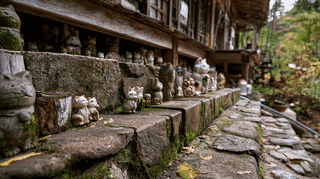
A temple in Hagi with more than 1,000 cat figurines offers a 1,000-yen charm against harassment. It shows a dog, for a reason hidden in the word 'harass', and it is meant to calm whoever is about to snap.
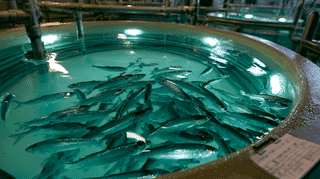
Murakami's salmon run fell from 55,000 fish to 1,400 in a decade. Now the town is spending about $32,000 to attempt what Norway and Chile have not: closing the life cycle of chum salmon entirely on land.
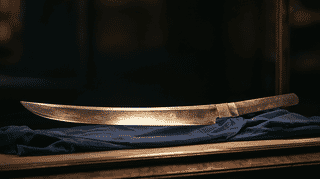
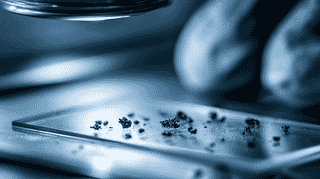
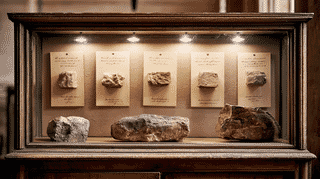
A lump of iron from a Toyama riverbed turned out to be a meteorite. Enomoto Takeaki had five swords forged from it in 1898, and the same rock later served as a reference for researchers analysing Tutankhamun's dagger.
In spring 2026, Honda wrote off roughly $10 billion in EV development. That same season, US ITER closed out the supply of ITER's 1,000-tonne central solenoid, the UK's Pulsar Fusion ignited the first plasma inside a fusion rocket engine, and Kyoto Fusioneering pushed on with its integrated fusion fuel cycle test facility in Canada. Stack the candidates in watt-hours per kilo and the picture is brutal: nothing beats gasoline in a form you can put in a car, except one category up, where fusion sits at 7.8 million times the density. Win the bet and you unlock effectively free electricity, working climate reversal, Mars in two months, lunar helium-3, and the solar system as a shipping route. Honda's mistake alone covers nearly 40 percent of ITER's budget. Maybe it's time to stop arguing about EVs and just go build the sun.
Japan is famously polytheistic and its gods rarely clash, unless the subject is mushroom-shaped versus bamboo shoot-shaped chocolate snacks. Inside the 50-year rivalry between Meiji's Kinoko no Yama and Takenoko no Sato: national elections, a celebrity-led campaign, a peace treaty, and why this debate can break friendships.
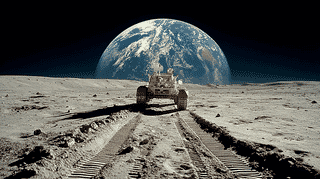
With Artemis II home safely, we look at Japan's contributions to lunar exploration: Toyota's Lunar Cruiser, MHI's regenerative fuel cells, Bridgestone's lunar tires, and the rest of the hardware keeping crews alive on the Moon.
Eureka Seven turned 20. Three key staff members all making their debut, the origin stories of Mamoru Miyano and Ami Koshimizu, and proof that the Itano Circus works without missiles: five reasons to watch this underrated 2005 series, backed by the creators' own anniversary comments.
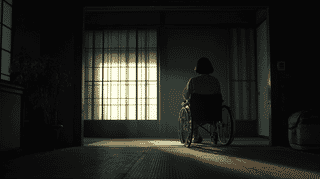
A 58-year-old mother who cared for her severely disabled daughter alone for 29 years was arrested after an attempted murder-suicide in Chiba, Japan. With approximately 40 caregiver-related killings reported annually, this article examines landmark cases and asks the world: is this a crime society should bear?
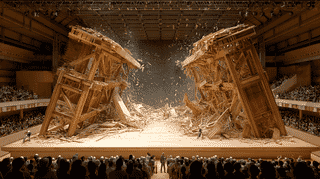
Two wooden walls are bolted down and pulled against each other until one breaks. That is the Kabe-1 Grand Prix, where universities, construction giants and home builders compete for the title of Japan's strongest shear wall. Born after the 1995 Kobe earthquake, it doubles as a public destructive test. Here is how it works and how the 2025 tournament went.
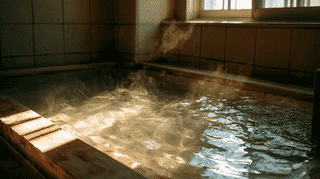
In 1926, a well drilled for oil in Hokkaido hit hot water. Toyotomi Onsen smells of petroleum, and guests treating skin conditions made up about 40 percent of its overnight stays in fiscal 2019.
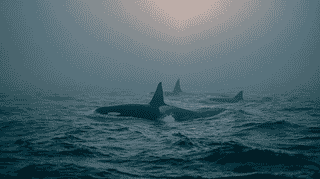
A white male orca first seen off Rausu in 2019 returned in thick fog in June 2026. About 1 in 1,000 orcas in the western North Pacific is white, and genetics hint at why.
Calicos are almost always female, so a male kitten in a Kumamoto rescue trap surprised the vet. Fearing resale, the group kept him. The orange gene was pinned down in 2025; "one in 30,000" has no cited source.
A University of Tokyo-led team finds Ryugu's sodium in clay and about 90% of its chlorine in serpentine, implying water a hundred times less salty than the sea. A Kyoto-led team had read a brine.
A Yonezawa ryokan is asking guests not to book it on Agoda. Rooms sold outside a hotel's control caused trouble in Taiwan, Vietnam and Europe years ago, and Agoda tops a Korean complaint tally with 2,190 cases.
Angola paid about ¥17 million to a Japanese subcontractor it never owed. Osaka's Expo hosts say they have no legal basis to pay. Behind the gap: a law that stops at wages and a relief bill that lapsed.
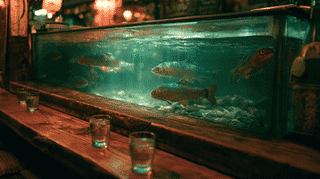
Behind Umitamago aquarium in Oita, a hose dispenses 120 liters of filtered seawater for 100 yen. Izakayas and home aquarists buy it, and one restaurant's remark kept the machine alive.
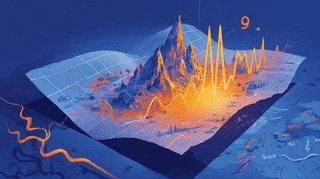
Japan's earthquake alert announced a magnitude 9.9 for Hokkaido to central Japan. The real quake was an M6.9 near Kamchatka, a safeguard added in 2020 wasn't working, and Docomo phones never got the alert at all.
A butterfly wing kept in a 100-yen insect fossil museum in Hyogo is the oldest known fossil of a living species. It is not the oldest butterfly, and the same room has yielded three finds in about 18 months.