Keio University reports up to four years of follow-up on four patients given iPS-derived cells for spinal cord injury: no tumors, no serious harm. What it means, and how Japan's path compares to the US and Europe.
An Osaka University startup, Endoluminal Solutions, has built a 4mm single-use endoscope aimed at replacing barium gastric-cancer screening. A look at the miniaturization behind it and where it fits in an endoscope industry Japan's Olympus dominates.
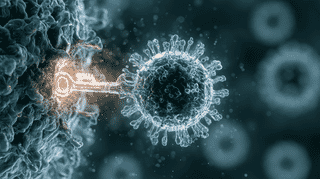
Telomelysin, a common-cold virus reprogrammed to destroy cancer cells, has won the world's first approval for esophageal cancer. It took 35 years, one surgeon's idea, and an Okayama University startup pushing through a regulatory maze.
Tohoku University spinoff Space Quarters has demonstrated its DAIQ orbital assembly robot system on a ground model, showing three kinds of small robots cooperating to pick, place, and weld building panels into a larger structure. We look at how it compares to NASA's cancelled OSAM-1 and DARPA's NOM4D, and what makes Japan's robotics approach distinct.
Yokohama National University spinoff LQUOM has closed a 1.23 billion yen ($7.7M) Series B to build quantum repeaters, the missing piece of the quantum internet. Here is what that means, and how it stacks up against Aliro in the US, USTC in China, and Japan's planned Tokyo-Osaka quantum backbone.
Kyoto University spinout Toregem Biopharma will begin Phase 2 trials of TRG035, the world's first tooth-regeneration drug, in summer 2026, dosing 24 children with congenital tooth agenesis. A pre-Series C round of ¥850 million brings cumulative funding, grants included, past ¥4.6 billion. A look at how Japan's university-biotech funding stack works, and why a super-aged society may produce this kind of innovation first.
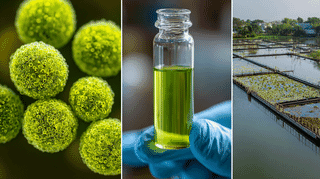
In 2012, the Sankei Shimbun reported a biofuel revolution centered on Enomoto algae, a hyper-growth Botryococcus bred by Kobe University spin-off G> under Professor Taira Enomoto. Heavy-industry giant IHI joined biotech venture Neo-Morgan Laboratory to commercialize it, with then-CEO Tomohiro Fujita declaring he wanted to cut the price to one-tenth within ten years. Fourteen years later, the joint venture has dissolved, but the algae fueled the world's first flight on SAF meeting ASTM D7566 Annex 7, and a Japanese-led 5-hectare facility in Malaysia is now the largest of its kind on Earth. Did the promise come true, or is the dream over?
Food tech is one of 17 pillars in Japan's new national growth strategy under the Takaichi administration, with a 30% global market share target by 2040. Beyond the obvious giants like Maruha Nichiro, Nissin, and Kikkoman, this deep dive spotlights 5 lesser-known but high-potential players: Regional Fish (gene-edited seafood), FRD Japan (closed-loop salmon), Chitose Bio Evolution (algae unicorn), UMITRON (aquaculture AI), and Oishii Farm (NY strawberry factory).
Alpaca, founded by two Japanese entrepreneurs in Silicon Valley, hit a $1.15 billion valuation in its Series D round, becoming the first Japanese-founded US unicorn. Serving SBI Securities, Kraken, and 300+ institutions across 40 countries, it aims to be the 'AWS of finance', alongside Plaid and Stripe. Why did they build this in America, not Japan?
Zippar, a self-propelled urban ropeway developed by Fukushima-based startup Zip Infrastructure, can run every 12 seconds and navigate curves. At 1/20 the cost of subway and 1/5 of monorail construction, it could rescue Japanese cities facing a bus driver shortage.
Japan's March 2026 startup funding ranking saw Startale Japan ($530M) and AI & AND ($500M) lead. With Pharos Network's $44M raise backed by Sumitomo and only ~9 unicorns vs. a 100-company target, we examine where Japan's ecosystem stands globally.