A Japan-led team corrected the single-letter mutation behind the inherited nerve disease HMSN-P without cutting DNA, with effects in model mice and in patient-derived organoids, plus the 40 years of work behind it.
Yamanashi and Riken researchers cut out the whole Y chromosome to make female clones of male mice. Read next to the same university's finding that cloning dies at 58 generations, and Osaka's eggs from male cells.
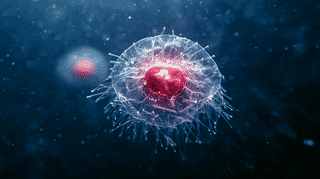
A 10 mm jellyfish rewound itself ten times in two years. A genome paper on about 1,000 genes cast it as nature's Yamanaka reprogramming; a US researcher attacked that premise with Japanese data it never cited.
Japan's NIES has made iPS cells from four endangered birds. The flightless Okinawa rail has lost one of the two genes birds use to spot a virus. Inside the minus-160°C cell bank and the brain organoids grown from it.
The first commercial transplant of AMCHEPRY, the world's first approved iPS cell-derived medicine, is set for October in Kyoto. Why proving it takes 35 patients and six years, and why the US and EU have no equivalent product.
Keio University reports up to four years of follow-up on four patients given iPS-derived cells for spinal cord injury: no tumors, no serious harm. What it means, and how Japan's path compares to the US and Europe.
Researchers at Showa and Kansai Medical Universities grew mesothelial-like cells from human iPS cells to repair the peritoneum, the membrane that wears out and ends peritoneal dialysis. A look at the mouse proof-of-concept and why Japan's PD rate is so unusually low.
Japan's iPS cell therapy already treated fresh spinal injuries. Now a Keio University team is preparing a trial for the far harder chronic phase, where more than 100,000 patients have long been told regeneration simply isn't possible.
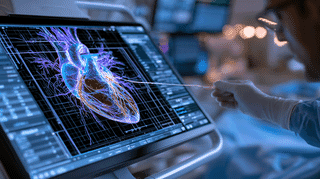
A Japanese biotech threaded a catheter into a failing heart and delivered iPS-derived muscle without opening the chest. Inside the world's first trial of its kind.
On May 20, 2026, Japan added three ultra-expensive regenerative medicines to public insurance coverage: Amshepri (world's first iPS cell-derived drug, for Parkinson's), Akugo (stem cells for traumatic brain injury), and Zolgensma Intrathecal (gene therapy for SMA patients aged 2+). Prices range from 55 million yen ($352K) to 167 million yen ($1.06M). We explain why these drugs cost so much, how Japan's high-cost medical expense system shields patients, and whether prices might fall over time.
A Japanese team led by Prof. Takanori Takebe (Osaka & Science Tokyo) and Dr. Mureo Kasahara (National Center for Child Health and Development) plans the world's first pediatric clinical trial of UTOpiA, a bioartificial liver that perfuses blood through iPS-derived liver organoids. Animal trials showed 90% survival. How it compares with King's College London's HELP trial and Beijing's CiPS-BAL.
Researcher Yohei Kawai and Professor Shin Kaneko at Kyoto University's CiRA have established a way to induce helper T cells, the conductors of the immune system, from human iPS cells without mouse feeder cells. The paper ran in Molecular Therapy on January 20, 2026. Why this matters against the three structural limits of CAR-T therapy, and where Japan stands against Fate Therapeutics in the US and China's sheer trial volume.
Panasonic has partnered with Kyoto University's iPS Cell Research Foundation to begin proof-of-concept trials for fully automating iPS cell establishment at Osaka's Nakanoshima Cross. The goal: slash per-patient costs from tens of millions of yen to around 1 million yen. How does Japan's approach compare with US rival Cellino's laser-driven biomanufacturing?
Japan's iCELL BANK launched in April 2026, offering individuals the ability to create and cryopreserve their own iPS cells for future regenerative medicine. Using ID Pharma's Sendai virus vector technology, the service marks a new phase in commercializing the Nobel Prize-winning iPS cell technology for everyday consumers.
Nobel laureate Shinya Yamanaka explained iPS Cell 2.0 on NTV's Bankisha. From next-gen stem cell tech overcoming current limitations to universal blood platelets that bypass blood-type matching, plus Japan's historic first-ever iPSC drug approvals in 2026 — a comprehensive look at where iPS cells stand 20 years after their discovery.
Not the iPS cells themselves, but the liquid they're grown in, injected into arthritic knees. A Japanese team's world-first study showed 71.4% improvement by international criteria with no serious adverse events. We look at what a seven-patient uncontrolled pilot can and cannot tell us, and where conditioned medium sits in Japan's regulations.
Japanese startup Orizuru Therapeutics has begun clinical trials transplanting iPS cell-derived islet cells into diabetes patients. The first-ever transplant surgery succeeded in February 2025, with company-sponsored trials planned in Japan and the US. Over a decade after Professor Yamanaka's Nobel Prize, Japan's regenerative medicine enters the practical stage.
On March 6, 2026, Japan's Health Minister formally approved ReHeart (severe heart failure) and Amshepri (Parkinson's disease), the world's first iPS cell-derived medical products. In May, Amshepri became the first iPS product covered by public insurance, priced at 55.3 million yen. Here are the conditions, the seven-year deadline, and the objections.
Researchers at Kyoto and Hiroshima Universities created iPS cells from bonobos, chimpanzees, and gibbons, then achieved the world's first differentiation into limb bud mesoderm cells. Inside Japan's Whole-Zoo iPS Cell Project and its work on primate evolution, conservation, and zoo veterinary medicine.
Osaka University spinoff Reimei has launched the world's first corporate clinical trial of a corneal epithelial cell sheet made from donor-derived iPS cells, with the first transplant performed on July 9, 2026. How the approach could ease the global corneal donor shortage, what the Lancet-published first-in-human data showed, and where Japan's regenerative medicine regulation stands against the US FDA.