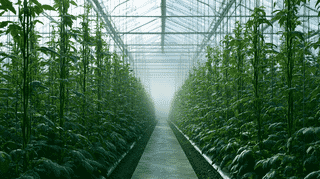
Kyushu Electric has grown and cured Japan-made vanilla beans in a Fukuoka greenhouse, branding them Carol Vanilla. With a pollination gun and an automated curing machine, the utility is taking on the world's second most expensive spice, and Japan's 90%-plus import dependence.
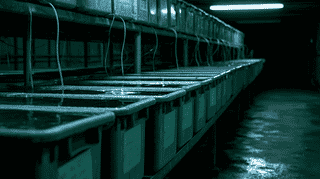
Aquaponics rarely pays as a standalone farm. So how does Aomori's closed-school project plan to make money? By monetizing the cafe, tours, education and welfare work around the tank, backed by public funds.
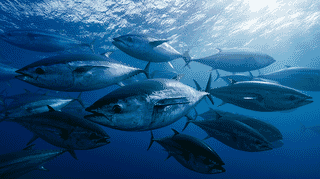
In 2002, Japan's Kindai University pulled off the world's first full-cycle bluefin tuna farming. Two decades on, the major seafood companies are walking away and commercial output is fading. The irony: the headwind is the recovery of wild tuna stocks. A look at the gap between sustainable and profitable.
Japan's food exports hit a record 1.7 trillion yen in 2025, a 13th straight high, while its calorie-based self-sufficiency stays at 38%. Why both are true: wagyu, green tea, the 27% feed rate and the 64% production-value figure, explained for global readers.
With water that is neither sea nor fresh, Okayama University of Science is trying to farm salmon through its entire life cycle on land. If it works, the university calls it a world first. We unpack the technology behind it, why salmon is the hardest fish to farm this way, a 250-year-old salmon town's role, and the global scramble for farmed salmon.
Tokai University is chasing a world-first: land-based, full-cycle aquaculture of the common octopus, long considered one of the hardest animals to farm. We unpack the cannibalism and escape problems, the clever 'octopus apartment,' the global octopus shortage behind it, and the ethical fight that has already produced farming bans abroad.
Yamada Suisan and Japan's fisheries research agency put fully farmed eel on public sale for the first time on May 29. After cutting glass-eel production cost from 40,000 to 1,800 yen, the country aims to end wild-juvenile dependence by 2050.
Caviar's definition of 'best' has shifted from geography to aquaculture technology. As China supplies 60% of the world's farmed caviar and Russian product disappears under sanctions, a landlocked Japanese prefecture is challenging the global hierarchy with a hybrid land-based farming system that combines patented closed-loop tech with rare ultra-soft spring water.
Japanese telecom giant NTT runs a land-based shrimp farm in Iwata, producing 180 tons/year and capturing the largest domestic share. A deep dive into the 10-year plan to free Japan from its 90% shrimp import dependence, plus how it stacks up against Norway and Singapore.
In central and southern Nagano, the dwarf bamboo Suzutake has begun a mass flowering said to occur roughly once every 120 years. The last record in northern Kamiina was 1906. The interval comes from old documents that logged "bamboo rice" harvests during famines, though the prefectural forestry centre says the exact cycle is still unknown and another mass flowering was recorded in 2017. Predator satiation, the risk that nothing regenerates afterwards, and how this compares with India's Mautam famine.
Food tech is one of 17 pillars in Japan's new national growth strategy under the Takaichi administration, with a 30% global market share target by 2040. Beyond the obvious giants like Maruha Nichiro, Nissin, and Kikkoman, this deep dive spotlights 5 lesser-known but high-potential players: Regional Fish (gene-edited seafood), FRD Japan (closed-loop salmon), Chitose Bio Evolution (algae unicorn), UMITRON (aquaculture AI), and Oishii Farm (NY strawberry factory).