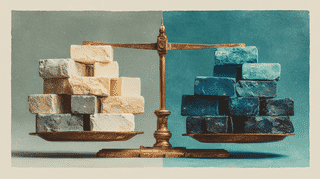
The IMF projects Japan will fall to sixth by nominal GDP in 2027, behind India and Britain, yet the gap to Britain is roughly 0.5%. The weak yen explains the ranking; it does not explain Japan's slow real growth.
After a suspected core member was sent from Osaka to Germany, Qilin called Japan's security among the world's worst, without evidence. Japan's new reporting law is narrower than the EU's NIS2.
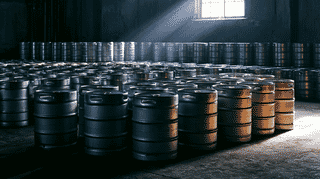
Japan's competition watchdog searched Asahi, Kirin, Suntory and Sapporo on October 7, 2026, over suspected coordination of wholesale beer prices. Nothing is proven. How would Europe or the US punish it?
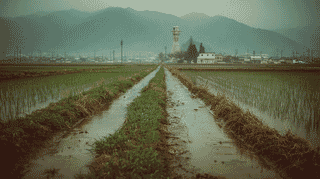
Extinct in Japan's wild in 1971, the Oriental stork now numbers 728, and only 49 were released. Most hatched in the wild, fed by low-pesticide paddies that cost farmers work and yield. Now they nest on power poles.
An international team used NAOJ's ATERUI III to show how a newborn black hole could look like one of Webb's little red dots. NAOJ's Japanese release says 'closing in'; its English one says 'explained.'
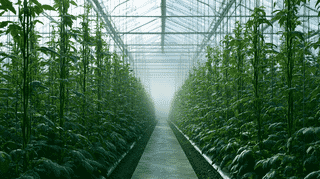
Japan's gene-edited GABA tomato opened its field. It wasn't the first gene-edited food sold (US soybean oil, 2019), but the first CRISPR food shoppers could buy. How Japan's rules compare with the EU's.
A decryption tool built by Japan's police has restored about 20 million files for 41 companies since February 2024. It is free and used in more than 100 countries, and it still reaches only a fraction of victims.
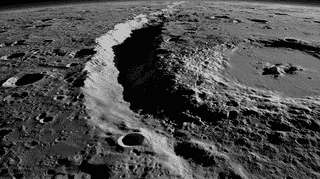
A Hokkaido University-led study says rough terrain hides Mercury's own tectonic wrinkles, and that past estimates missed up to 30 percent of the contraction. BepiColombo arrives to test it on November 21.
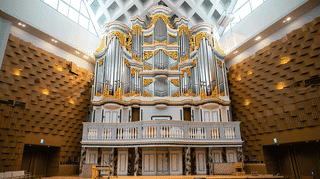
A 50-stop organ built by 18th-century methods has been finished at a Yamazaki Baking hall near Tokyo. It takes five people to sound right, at a moment when Japan's public halls are struggling to keep theirs.
Japan recorded 86,473 IVF births in 2024, about 1 in 8 of its 686,173 births. Treatments fell to 550,265 while the multiple-birth rate rose to 4.15 percent, and the 2022 insurance reform helps explain both.
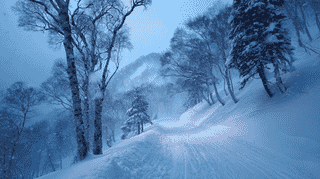
Hokkaido University and Japan's forestry institute modelled all 349 ski areas in the country. At 4°C of warming, only seven stay open 100 days a year on natural snow. At 2°C, 53 do.
France announced three theme parks near Paris, €6 billion of Saudi money, and the region said one would be Dragon Ball. Toei Animation says it granted no license; Paris now says it never put that name forward.
Goldman Sachs, Citi, Deutsche Bank, MUFG and 17 others will form a company in late 2026 to issue a dollar stablecoin. Why banks are entering a $303.7 billion market where Tether holds about 60%, and what is undecided.
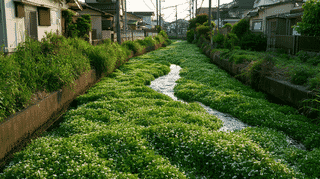
In spring 2026 a meter-tall mat of watercress smothered a suburban river in Matsuyama. Japan calls it a priority-control invasive species, yet farms ship 362 tons a year. How New Zealand, Australia and the US see it.
Warming seas pushed a pufferfish north across the Tsugaru Strait, and the hybrids do not fit Japan's 1983 table of edible species and parts. How the rulebook caught up, and why the Mediterranean has the same gap.
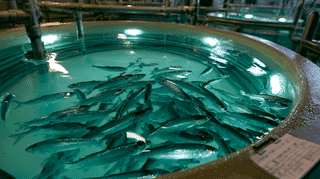
Murakami's salmon run fell from 55,000 fish to 1,400 in a decade. Now the town is spending about $32,000 to attempt what Norway and Chile have not: closing the life cycle of chum salmon entirely on land.
ABLIC's CLEAN-Boost banks tiny amounts of ambient energy and releases them in one burst, amplified up to 30,000 times. Inside the battery-less sensor that trips on 150 microliters of water.
Washing a jet at Narita still takes eight people and six hours of night work. JAL is bringing in the AW3, a Swedish robot, in service by the end of 2026. Japan once had a car wash for jumbo jets; now it buys.
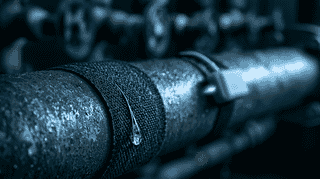
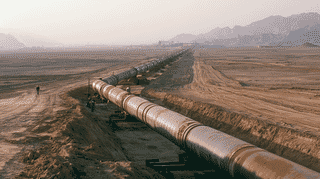
Transits through the Strait of Hormuz have fallen from 21.6 to 4.9 million barrels a day, and Gulf producers are building seven bypass pipelines. Japan restored procurement, but July brought a 634.5 billion yen deficit.
Hafnium keeps advanced chips and jet engines running, yet the world makes about 71 tonnes a year, nearly all of it in France and the United States. An Osaka chemical maker now wants a share of it by 2028.