🧽 Washing an airliner is still a job for people holding very long mops.
At Narita, eight of them spend six hours on it, in the dark, once every 90 days per aircraft. Japan Airlines has now brought in a Swedish robot to take part of that shift off their shoulders. Japan got here about thirty years later than it meant to.
Eight people, six hours, in the dark
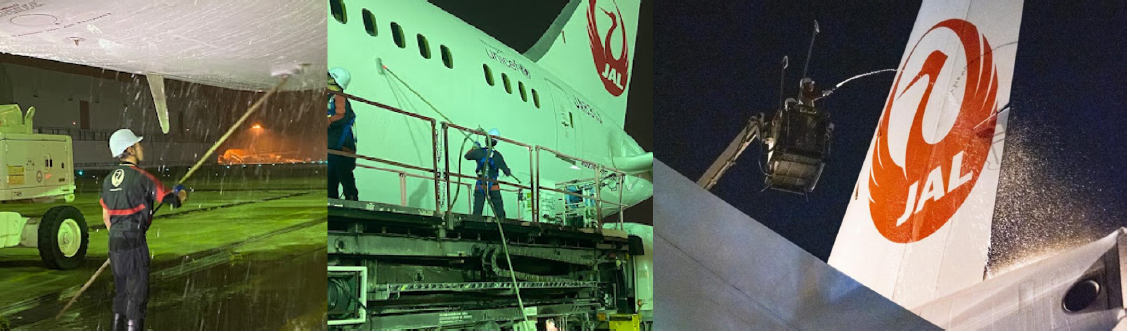
An aircraft picks up more than you would guess in the air: oil film, engine soot, volcanic ash, salt. JAL washes the exterior of each airframe every 90 days, and at Narita that work falls to about 30 staff at JAL Ground Service, the group's ground handling arm. According to Aviation Wire, the current method is eight people, long-handled mops, specialized detergents, and a six-hour window overnight.
It is not only about looking good. A clean skin is a smoother skin, which means slightly less drag and slightly better fuel burn. The maintenance value is bigger: when a mechanic walks the aircraft before departure, a fresh smear of oil around an engine, a gear bay or a control surface stands out instead of blending into months of grime.
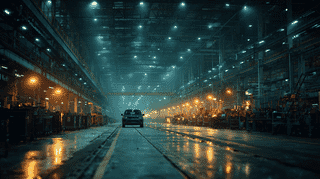
The awkward part is where the dirt sits. Much of a widebody's fuselage is well above head height, so the job means lifts, elevated platforms, and hours of holding a wet mop overhead at two in the morning.
Source: Japan Airlines press release
What the Swedish robot does, and what it will not touch
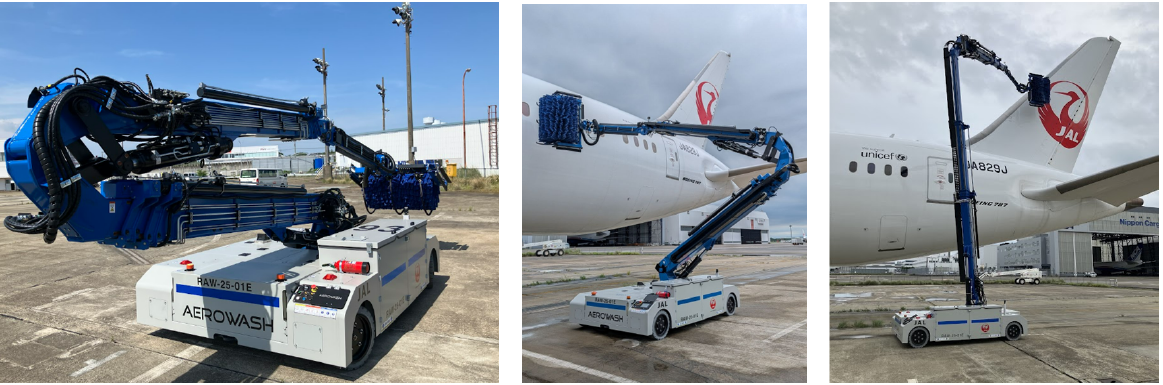
On August 28, 2026, JAL announced it was putting an AW3 into service at Narita. The machine is built by Aerowash, a Swedish company, and the airline says it is the first collaborative washing robot with per-type programmed approach to be adopted by a Japanese carrier.
It is not small. Aviation Wire puts it at eight meters long, 2.3 meters wide and 2.5 meters tall, running on a lead-acid battery, with all four wheels independently driven and steered so it can crab sideways into tight spots around a parked jet. An operator picks a menu on the machine, something like "upper fuselage, widebody," and the arm extends to a position already registered for that aircraft type. A camera and sensor sit at the brush head, feeding a tablet in the operator's hands.
Then the automation stops. The last stretch, where the brush meets the paint, stays under human control, deliberately. JAL calls the design collaborative: the robot handles reach, the person handles judgment. Areas crowded with antennas and sensors on top of the fuselage, and waterproofed sections toward the nose, are still washed by hand.
One AW3 covers ground that used to take two people, and a single machine handles the 737, 767, 787 and A350, which is most of what passes through Narita. Aerowash's catalog figures, which JAL quotes rather than claims as its own results, put the saving at up to 40 percent of labor hours and up to 50 percent of the water per aircraft, and the airline says it will check that in service.
JAL started looking at the machine in 2019; the wait since went into approvals from Boeing and Airbus and into its own tweaks, like that brush-head camera. Three JGS staff are training on it now, with full operations due by the end of 2026, and one of them told Aviation Wire the controls feel close to washing by hand. Neither the number of machines nor the price is in the press release.
Source: Japan Airlines press release
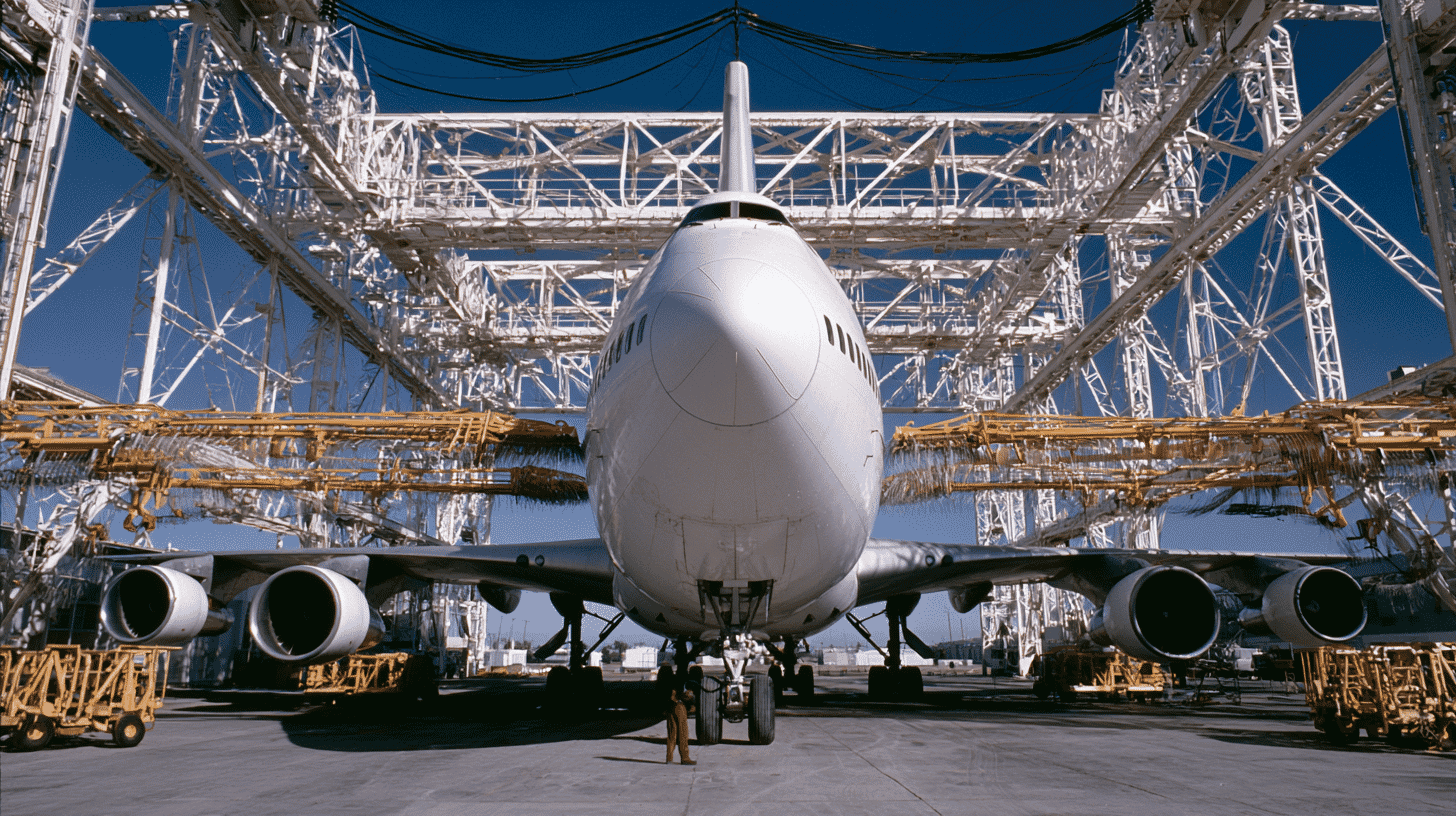
Narita once had a car wash for jumbo jets
Decades ago, in the maintenance area on the edge of Narita, near what is now Shibayama-Chiyoda Station, there stood a steel structure that washed an entire Boeing 747 the way a car wash washes a car. JAL built it with Kawasaki Heavy Industries, and the aviation site Norimono News describes it as the only machine of its kind anywhere in the world, credited with more than 5,000 jumbos before it was scrapped.
It died with the 747, and for a reason that sounds trivial: no two jumbos were quite identical. Protrusions such as pitot tubes sat slightly differently from airframe to airframe, so the settings had to be reworked again and again. When JAL retired the type, it went back to mops. A second attempt in the mid-1990s, a wired remote-controlled washer, did not stick either. That makes the AW3 a roughly 30-year rematch with the ambition inverted: the old dream swallowed the aircraft whole, the new one hands the last few centimeters back to a person.
Whether the Narita rig really was the only one in the world depends on where you draw the line. In 1997, Lufthansa's engineering arm put a truck-mounted washing robot called Skywash into service at Frankfurt. FlightGlobal reported that it lined itself up against the airframe with a laser scanner and ran the brush over the surface in a preprogrammed sequence, cutting a 747-400 wash from 10 hours by hand to 3. Narita's machine was a fixed cage the aircraft rolled into; Skywash was an arm that came to the aircraft. It entered service at roughly the moment JAL was giving up on its own remote control.
The robot nation is the customer here
There is a small irony in a Japanese airline making news for adopting a washing robot in 2026. The rest of the world has had them for a while, and the two names that come up most often in the airline market, Aerowash and Nordic Dino, are Swedish rather than Japanese.
Nordic Dino, established in 1983 and now part of Avia Solutions Group, has been building this kind of machine for four decades. Its own site advertises three times fewer labor hours and 90 percent water savings against manual washing. Those numbers do not line up neatly against Aerowash's 40 and 50 percent, and both sets come from the vendor. What survives on a wet apron at two in the morning is JAL's to find out.
Correns, the Tokyo trading company that sells the AW3 in Japan, told Aviation Wire that India operates the most units, with airports in Malaysia and Canada also using them. In the United Arab Emirates and Singapore, water scarcity has pushed operators toward dry washing, where cleaning agents are wiped on and off with almost no water. Japan is not leading any of this. It built its own machine once, put it at Narita, and then let it go.
Can you actually go and watch it?
Not for now. JAL has announced no public viewing, the work happens overnight in a restricted maintenance area, and the August 28 event was a demonstration for press only.
JAL's free factory tour, SKY MUSEUM, is at Haneda rather than Narita, needs advance booking, and shows aircraft under maintenance in a hangar, not washing. Near Narita, the Museum of Aeronautical Sciences is the closest vantage point, in the same corner of Shibayama as the site where the old jumbo washer stood.
Washing does turn up in JAL's one-off events. When the airline retired its last 777-200ER in 2023, the farewell tour included a cockpit visit and a chance to wash the aircraft, and Aviation Wire reported it was oversubscribed more than tenfold. Nothing of the sort has been announced for the robot.
In Japan, the answer to a punishing night shift turned out to be a Swedish arm on four steerable wheels. Who washes the planes where you live, and has anyone bothered to automate it?
References
- https://press.jal.co.jp/ja/release/202608/009690.html
- https://www.aviationwire.jp/archives/349629
- https://trafficnews.jp/post/703225
- https://trafficnews.jp/post/100282
- https://www.aerowash.com/
- https://www.nordicdino.com/
- https://www.jal.com/ja/kengaku/info/
- https://www.flightglobal.com/skywash-cleaner-goes-into-service-with-lufthansa/1485.article
- https://www.aeromuseum.or.jp/



Global Discussion
4 comments