A Yonezawa ryokan is asking guests not to book it on Agoda. Rooms sold outside a hotel's control caused trouble in Taiwan, Vietnam and Europe years ago, and Agoda tops a Korean complaint tally with 2,190 cases.
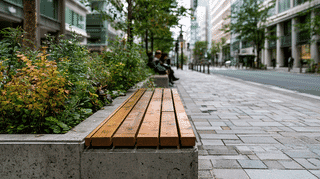
A TV report treated visitors sitting on Ginza's pavements as a manners problem. Benches had been tested on the same avenue days earlier. Road rules and anti-homeless design help explain why seats are scarce.
A ranking of 470 Japanese hotels by foreign-language Google Maps reviews puts Plaza Osaka, a 653-room city hotel in Juso, at No. 1 again. Only one global luxury brand made the top ten.
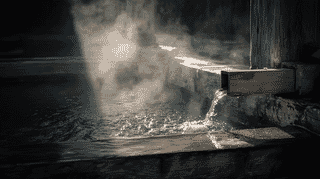
A private system will rate Japan's onsen on five criteria for the water in the tub and name 21 three-star sites on October 26. How it differs from notices required since 2005 and a label abolished in 2019.
Japan's children hit a record low while its toy market hit a record. Toys R Us Japan, dubbed a "black ship" in 1991, filed for court rehabilitation owing about ¥13.2 billion; Don Quijote's parent is set to take over.
Japan made 'mottainai' a global word, yet its restaurants often refuse to box up leftovers. A 2024 government guideline shows why: legally, you are meant to eat it on the premises.
Yamanashi wants to charge for off-season helicopter rescues on Mount Fuji, 8,000 yen per five minutes. Its own document calls it a package against reckless climbing. Is free rescue too cheap, or does a meter delay calls?
A 200,000-yen temple room and a 100-million-yen tax finding surfaced at Koyasan in the same week. Where that price actually sits, why Japanese law taxes the bed but not the offering, and how to book a night.
Hokkaido University and Japan's forestry institute modelled all 349 ski areas in the country. At 4°C of warming, only seven stay open 100 days a year on natural snow. At 2°C, 53 do.
Shingo, a village of 1,919 in northern Japan, has had a tomb of Jesus since 1935, declared by a promoter of a forged chronicle. Almost nobody there believes it, yet the Shinto rite hit its 62nd edition in 2026.
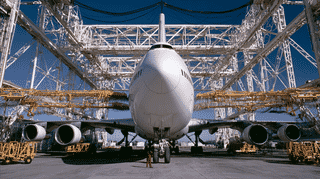
Washing a jet at Narita still takes eight people and six hours of night work. JAL is bringing in the AW3, a Swedish robot, in service by the end of 2026. Japan once had a car wash for jumbo jets; now it buys.
Tourists are buying eyeglasses in Japan, where no prescription is required and an Osaka store says it can go from eye test to handover in 25 minutes. In the US, a replacement pair can take two weeks to a month.
SUSHI BUS puts a working conveyor-belt sushi lane on the upper deck of an open-top double-decker and sends it around Tokyo from October 2026. Seventy minutes, all you can eat, 20 seats.
A high-kick photo under a torii split Japan, and shrine officials said Shinto has no rules to break. A country of 123 million reports 175 million adherents, yet only 26 percent claim a faith.
Japan's trade ministry is reportedly winding down the Cool Japan Fund and its 54 billion yen in losses. Hours later it published a strategy targeting 20 trillion yen in content exports by 2033.
From November 1, 2026, Japan drops instant tax exemption at the register. Visitors pay full price and get the 10% consumption tax back only after customs confirms the goods are leaving.
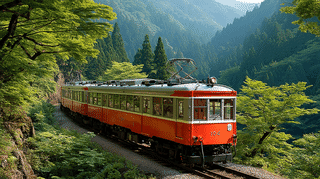
Odakyu Hakone will run a charter train on August 30, 2026 with every window pushed open on a 107-year-old railcar that has no air conditioning. The Hakone Tozan Railway's Type 100 retires in January 2028.
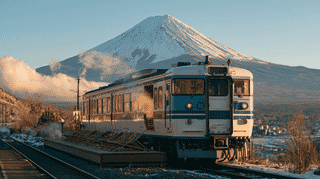
Fujikyu is turning a retired commuter train into SADEN, a day sauna sitting on the tracks at Shimoyoshida Station near Mt. Fuji. The Blue Train sleeping car that stood on the site will not be scrapped.
Japan's food exports hit 897.7 billion yen (about $5.7 billion) in the first half of 2026, a record. Green tea rose 83.5% and yellowtail 69.0%, but the yen was 5.5% weaker, so about half the growth was currency.
Chiikawa the Movie: The Secret of Mermaid Island opened in Japan on July 24, 2026. One Tokyo multiplex gave it all ten screens and 41 showings, with 32 near sold out by 7 a.m. Why this cute-but-brutal series travels, and what fans abroad can actually get.