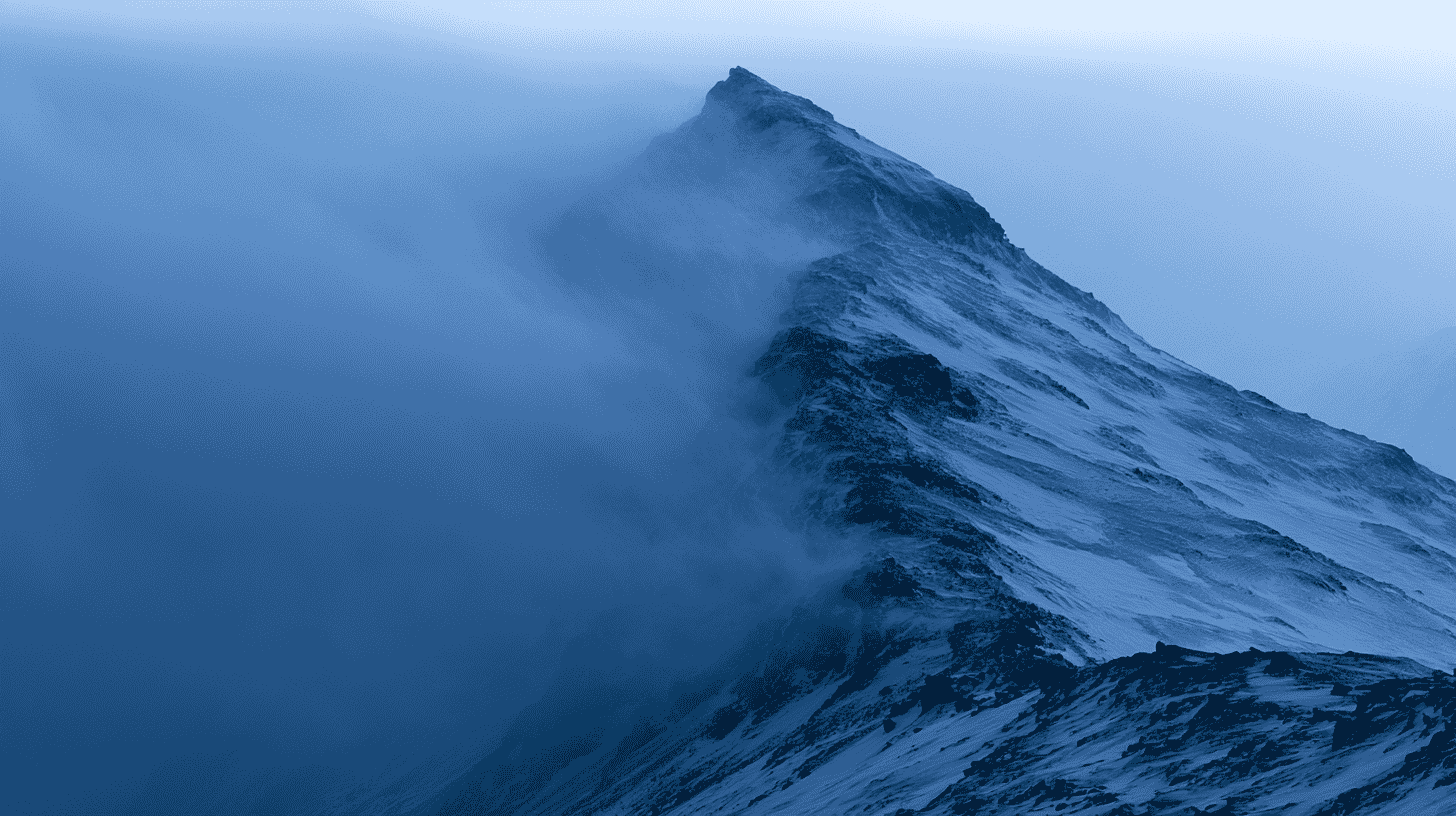
🏔️ Should the public pay to lift someone off a mountain they were told not to climb? Japan's answer has been yes for half a century. On September 14, 2026, Yamanashi Prefecture said it wants that to change on Mount Fuji during the months the mountain is shut: 8,000 yen (about $52) for every five minutes the helicopter flies.
What the prefecture is angry about
The document Yamanashi published answers that in its own title. It is a package of measures against reckless climbing during the closed season.
The number of people going up after the September 11 closure rose by about 30 percent in 2025. Yamanashi's own police force lists what it finds when it gets to them: climbers who did not check the weather, climbers in a sightseeing frame of mind, climbers without enough equipment, climbers on schedules too tight to turn back from. The force puts it flatly on its website: climbing by people who lack adequate knowledge, proper equipment and a plan is prohibited. A Japanese mountain-safety official, asked about rescue costs, described the same thing less formally: ascents in running shoes, ascents while drunk.
So the fee is not aimed at accidents. It is aimed at decisions.
And the argument that has grown loudest around it is not really about the money. It is that being carried off the mountain for free, after walking past a locked barricade on purpose, is too good a deal.
Mount Fuji has a season, and this is not it
Fuji is open for about ten weeks a year. The Yoshida and Subashiri trails run from July 1 to September 10, the Gotemba and Fujinomiya trails from July 10 to September 10.
Outside that window, the trails from the fifth station to the summit are closed under Article 46 of Japan's Road Act. Going past the closure can carry up to six months of confinement or a fine of up to 300,000 yen (about $1,940).
From November through April the summit sits below minus 10 degrees Celsius, average winds run above 15 meters per second and gusts can pass 40. First-aid stations, toilets and mountain huts are locked. There is no base station up there, so a phone is mostly a flashlight. The gentle brown slope of summer becomes a sheet of ice.
None of this is hidden. It is on the prefecture's website, on the police website, and on a barricade at the trailhead.
What the rescue side has already paid
There is a reason Japan's only existing fee for a rescue by a public aircraft does not read like a bill.
Saitama Prefecture, which has no Fuji and no peak with an international name, became the first place in Japan to charge for helicopter rescue on January 1, 2018. It did not write that ordinance because hikers were being careless. It wrote it after July 2010, when the prefecture's disaster-response helicopter crashed in the mountains of Chichibu during a rescue and five of the people on board were killed. The crew that goes up is the part of this that cannot be replaced, and Saitama learned it in the worst way.
The rate was 5,000 yen (about $32) per five minutes of flight, revised on April 1, 2024 to 8,000 yen. Saitama says an average rescue flight runs about an hour, which at the current rate is 96,000 yen, roughly $620. Yamanashi's proposal borrows that figure whole. The prefecture's own document contains no price at all; the 8,000 yen surfaced in news reporting as a proposal under consideration, with a target start of September 2027. Neither is settled.
A Japanese mountain-medicine body that asked civilian operators put the running cost of a small helicopter at 650,000 yen (about $4,200) an hour and a mid-size one at 1.2 million yen (about $7,760). The fee recovers a fraction of what flying costs, and none of what the flying risks. It was never designed to. It is designed to make someone stop at the barricade.
Can the line be drawn at self-responsibility?
The case against charging is not a defence of the climbers.
Start with the timing. A person weighing a running meter against their own embarrassment may wait two hours before calling, and on a mountain at minus 10 degrees two hours is the whole story. The people most likely to hesitate are the underprepared ones the policy is aimed at. Yamanashi's answer is the waiver: file a plan, meet the standards for equipment, itinerary and insurance, behave as you said you would, and the fee is reduced or dropped. Which makes the notification system, not the fee, the working part of the policy.
Then there is the question of where the line falls. A Yamanashi study panel examining the idea had already noted two problems: collecting firefighting costs from the public raises a question of legality, and because every other kind of rescue in Japan is free, charging for this one does not keep faith with the rest. The Japan Workers' Alpine Federation, arguing against Saitama's ordinance in 2017, put the same thing more bluntly. On the same mountain, climbing for work stays free while climbing for pleasure costs money, and nobody has explained why the mountain should care.
The charge also stops at one aircraft. It covers the prefecture's disaster-response helicopter; police helicopters, which fly mountain rescues as a public duty under the Police Act, stay free. Lifted off the same slope, whether you get a bill depends on whose aircraft reached you.
Switzerland solved the same argument by not having it. Rega, the Swiss air-rescue service, takes no state subsidy. A mission costs about 4,500 Swiss francs on average, and the bill goes to the rescued person or their insurer. About 60 percent of Rega's income comes from patrons who pay 40 francs a year, and patrons get the cost waived. The Swiss did not make rescue free. They made it cheap to insure, and then made the insurance a national habit, so nobody has to decide on a ridge at minus 10 whether they can afford the call.
Same mountain, two different answers
Fuji straddles a border. The northern slope is Yamanashi, the southern slope Shizuoka, and the summit belongs to neither cleanly. The two had been discussing off-season climbing together, and in September 2026 they arrived at different places.
Shizuoka, according to Japanese broadcasters, has set the rescue charge aside. Its plan centers on making off-season climbing notifications mandatory, with a penalty for climbers who do not file. Governor Yasutomo Suzuki has argued that who pays for a rescue is a question the national government should settle, not something each prefecture should answer its own way. Yamanashi read the same objections and went ahead anyway, having decided the deterrent is worth the awkwardness.
One more thing sits behind both decisions. A mountain-safety official asked about the rising numbers pushed back on the assumption that this is a foreign tourist problem: the accidents, he said, are overwhelmingly Japanese. The person the policy is arguing about is, statistically, a local.
If you are thinking about climbing anyway
Outside the season, walking the trail at all is not a fee question but a Road Act offense.
Inside the season, since 2025 every route on both sides charges 4,000 yen (about $26) per person. Gates shut from 2 p.m. to 3 a.m. unless you hold a mountain hut booking, a rule aimed at the overnight dash to the summit that Japanese calls "bullet climbing." Yamanashi caps entries at 4,000 climbers a day. Shizuoka makes you finish an online safety course first.
The existing rule leaves a gap. Yamanashi's ordinance already requires a filed climbing plan on Fuji, but only above roughly the eighth station and only between December 1 and March 31, and it carries no penalty. September 11 to November 30, and April 1 to June 30, are off-season but outside that requirement. The new notification system is aimed at that gap.
For now the bill still lands mostly on the public. In your country, when somebody has to be lifted off a mountain they were warned away from, who pays?
References
- https://www.pref.yamanashi.jp/sogobosai/release/0809/14.html
- https://www.pref.yamanashi.jp/documents/127705/260914_pressrelease_fujisantaisaku.pdf
- https://www.pref.yamanashi.jp/police/p_tiiki/sangaku/fujitozan.html
- https://www.pref.saitama.lg.jp/a0404/herizyourei/herizyourei.html
- https://www.rilg.or.jp/htdocs/img/reiki/148_climbing.htm
- https://www.fujisan-climb.jp/off-season/
- https://www.pref.shizuoka.jp/kankosports/kanko/mtfuji/1002809/1072062.html
- https://www.pref.yamanashi.jp/fujisan/annzenn/documents/r8fujitozan.html
- https://sangakui.jp/medical-info/cata03/medical-info-347.html
- https://www.ben54.jp/news/2460
- https://hiroba.njsf.net/archives/507
- https://www.yamakei-online.com/journal/detail.php?id=4532
- https://www.rega.ch/en/questions-and-answers
- https://unseen-japan.com/fuji-offseason-rescue-charges/
- https://www.77bank.co.jp/kawase/usd2026.html


Global Discussion
4 comments