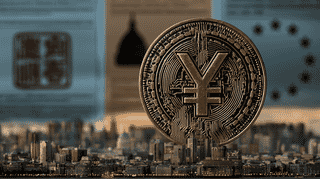
Japan's Finance Ministry is studying on-chain settlement of government bonds. Bonds and cash already swap together on BOJ-NET; what could change is the one-day T+1 gap and night hours.
Goldman Sachs, Citi, Deutsche Bank, MUFG and 17 others will form a company in late 2026 to issue a dollar stablecoin. Why banks are entering a $303.7 billion market where Tether holds about 60%, and what is undecided.
Metaplanet moved 5,014 BTC between its own custody addresses for about $8 in fees, and the market assumed a sale. Why nobody believed the denial, and what the balance sheet says.
On August 7 Japan's Financial Services Agency turns its crypto team from a councillor's office three levels down into a standalone division, one of five created that day. The EU and US answer it differently.
Japan's Diet passed the FIEA amendment on July 15, making crypto a financial product under the same law that governs stocks and bonds. Insider trading rules, tougher penalties, and disclosure duties arrive with it, and the preconditions for a 20% flat tax and domestic crypto ETFs are now cleared. Enforcement is expected in fiscal 2027, with the tax change from January 2028. Meanwhile, the US CLARITY Act remains stuck in the Senate.
Japan's finance minister has again signaled support for domestic crypto ETFs. But under current law crypto is not an eligible asset for a Japanese fund, so no spot ETF can be built. The bill that fixes that became law on July 15, 2026. Here is the honest answer to the three questions global investors ask: when, which tokens, and at what tax rate.
Japan's three megabanks, Mizuho, MUFG and SMBC, are jointly issuing a single-brand trust-type stablecoin. We unpack why it skips the 1-million-yen cap, why banks are building a tool that could drain their own deposits, and how it lines up with Japan's revised Payment Services Act, the US GENIUS Act, EU MiCA and the digital yen.
On May 19, Japan's ruling LDP unveiled a policy proposal calling for stablecoins and tokenized deposits to be treated as national financial infrastructure — and added to PM Takaichi's Big-Boned Policy in June. We compare Japan's approach with the Web3 hubs of Singapore, Hong Kong and the UAE.
On May 16, 2026, BOJ Deputy Governor Ryozo Himino delivered a keynote on the 'singleness of money' at the Japan Society of Monetary Economics. Beyond the binary of US-style stablecoin policy and a digital euro, the BOJ is quietly exploring a third path built on tokenized deposits and tokenized central bank reserves on blockchain.
Japanese crypto exchange Coincheck has partnered with telecom giant KDDI to launch au Coincheck Digital Assets, a joint venture offering a non-custodial wallet inside the au PAY mini-app to 39.7 million users. KDDI is investing roughly $65 million in Coincheck's parent company. How this differs from US (Coinbase, Robinhood) and Korean (SK Telecom T Wallet) models — and what it signals for the stablecoin era.
At a Fireblocks event in Tokyo, SMBC Group CDIO Kazuho Isowa and Mitsui & Co.'s Shinsuke Waka outlined Japan's on-chain finance strategy. January 2028 will bring simultaneous tax and financial-law reforms. ZipangCoin is going cross-border on public chains. And 95% of JPYC trades are now executed by AI. We compare Japan's cooperative model with JPMorgan's $5 billion-a-day Kinexys.