Japan's children hit a record low while its toy market hit a record. Toys R Us Japan, dubbed a "black ship" in 1991, filed for court rehabilitation owing about ¥13.2 billion; Don Quijote's parent is set to take over.
KADOKAWA is merging five anime studios, ENGI among them, into Studio One Base in November 2026. What the deal changes for overseas viewers, and what it does not.
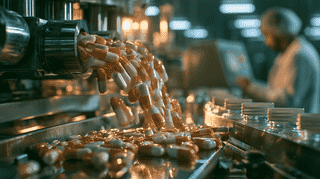
Kirin Holdings is buying Jamieson Wellness, Canada's top-selling vitamin brand, for C$1.898 billion. Why a 141-year-old brewer thinks fermentation science sells supplements, and why Western brewers chose another route.
Diamond reports Sony has offered around 200 billion yen for Tamron, whose lenses outsell Sony's own in Japan. An activist fund had already overtaken Sony on the shareholder register.
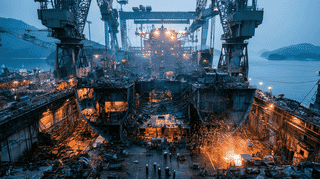
Imabari Shipbuilding posted 600.5 billion yen in fiscal 2025, and with Japan Marine United the group now sits at roughly 1 trillion yen, about $6.1 billion. The bigger news of July 23 was a deleted clause: LNG carriers are back in scope.
Seven & i, the owner of 7-Eleven, entered talks over a multi-billion-dollar stake in Żabka, Poland's largest convenience chain, then walked away on July 25. A look at why Europe is the gap in 7-Eleven's map, how the Polish upstart's autonomous stores and fintech already outpace many Japanese konbini, and how the deal contrasts with Seven & i's fuel-heavy US business.
Japan's Terra Drone has taken controlling stakes in WinnyLab and Amazing Drones, two Ukrainian firms whose interceptor drones have downed Shahed attack drones in combat. Here's why moving from investor to owner matters, and how the cheap, 3D-printed interceptors are rewriting the cost of air defense.
Sanyo Special Steel, Japan's No.1 maker of bearing steel and a world leader in steel cleanliness, will be absorbed by Nippon Steel and dissolved on April 1, 2027. The model for the famous novel The Grand Family, it once suffered postwar Japan's largest bankruptcy. Why give up the name now? A look at China's steel glut and an unexpected Swedish thread.
Katsuhiro Harada launched VS Studio under SNK. Shinji Mikami's Unbound was absorbed by Korea's SHIFT UP. Daisuke Taka burned through his savings to go solo. As Japan's most celebrated game creators strike out on their own, the capital keeping them afloat is overwhelmingly Saudi and Korean. Here's why Japan's own giants can't fund their stars, and why foreign money can.
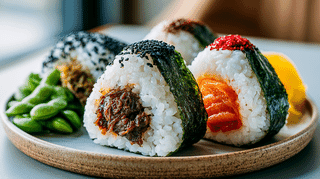
Japanese izakaya group Watami has acquired a 51% stake in Onigilly, a San Francisco onigiri chain, a bet on America's rice-ball boom. But the buyer is also a company long known in Japan as a symbol of 'black company' overwork culture. We unpack the deal, why onigiri became a healthy, photogenic US lunch, and who Watami really is.
Top shareholder Oasis Management is pushing to remove KADOKAWA CEO Takeshi Natsuno, triggering a full proxy fight ahead of the June 24 shareholder meeting. We break down the arguments over an 89% EPS drop, the 'isekai over-reliance' critique, and FromSoftware's monetization, and check how our earlier predictions held up.
Toshiba reported record net profit of 1.9673 trillion yen (about $12.5 billion) for fiscal 2025, a sevenfold jump driven by gains from selling its stake in Kioxia and a structural surge in transmission and HDD demand from AI data centers. Nearly two years after the JIP-led privatization, what has Japan's biggest private-equity restructuring actually changed? We compare it with Blackstone's Hilton success and the cautionary tale of Toys R Us.
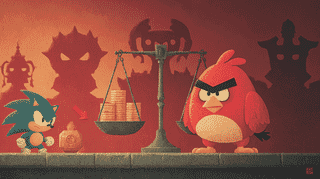
SEGA Sammy Holdings reported its FY2026 results: record revenue of 487.5 billion yen ($3.1B, +13.7% YoY) was wiped out by 58.8 billion yen in special losses tied to Rovio Entertainment (Angry Birds) and Stakelogic, producing the company's first net loss in 11 years. We unpack the impairment, the international community's skepticism about the 776 million-dollar Rovio acquisition, the deprioritization of F2P, the redeployment of 100+ developers onto full-game projects, and SEGA's bet on four new mainstay-IP titles ahead of Sonic's 35th anniversary.
Japanese crypto exchange Coincheck has partnered with telecom giant KDDI to launch au Coincheck Digital Assets, a joint venture offering a non-custodial wallet inside the au PAY mini-app to 39.7 million users. KDDI is investing roughly $65 million in Coincheck's parent company. How this differs from US (Coinbase, Robinhood) and Korean (SK Telecom T Wallet) models — and what it signals for the stablecoin era.
Nikon posted a record net loss of 86 billion yen (about $548 million) for the year ended March 2026, dragged down by a 90.6 billion yen writedown on its German SLM Solutions metal 3D printer acquisition. As Canon attacks the lithography market and TSMC Kumamoto ramps up 3nm production, Japan's optics giant is missing its own country's semiconductor boom. We unpack the ASML technology gap, the diversification bets that went wrong, the EssilorLuxottica stake, and the new mid-term plan built around "near-leading-edge" ArF immersion tools.
In March 2026 Sony signed binding agreements to move its TV business into BRAVIA Inc., a joint venture with China's TCL holding 51% and Sony 49%, starting operations in April 2027. Why Sony is letting go of its Trinitron-era icon, how Hawk-Eye and sports entertainment became the new home for its electronics ambitions, and what global investors should watch.
On April 28, 2026, the day Denso formally withdrew its acquisition proposal for Rohm, Mitsubishi Electric CEO Kei Uruma declared he wants to spin off only the power semiconductor businesses of all three companies and form a joint venture. This proposes a different framework from Rohm and Toshiba's full semiconductor integration plan, adding a new wrinkle to the world No.2 alliance vision. We analyze competition with Wolfspeed, Infineon, and STMicroelectronics, the SiC market share battle, and the impact on the EV industry.
Mitsubishi Electric is in talks to transfer 50% of its $4.3B auto parts subsidiary to Taiwan's Foxconn, with a deal expected by May. As BYD captures 19% of the global EV market, how is Japan's auto supply chain being reshaped?
On April 25, 2026, Denso announced plans to withdraw its $8.2 billion acquisition proposal for Rohm. Rohm chose the three-way alliance with Toshiba and Mitsubishi Electric, while Denso pivots to actively explore partnerships with third parties. We analyze the conclusion of Japan's 50-day power semiconductor reshuffle and what's next for Toyota Group's chip in-house strategy.
Japan's government blocked Korean PE firm MBK Partners' $1.7 billion takeover of Makino Milling Machine, the first-ever stop order under the revised FEFTA since 2017. Why did a non-classified machine tool maker trigger national security alarms? We break down both sides of the overreach-versus-reasonable debate.