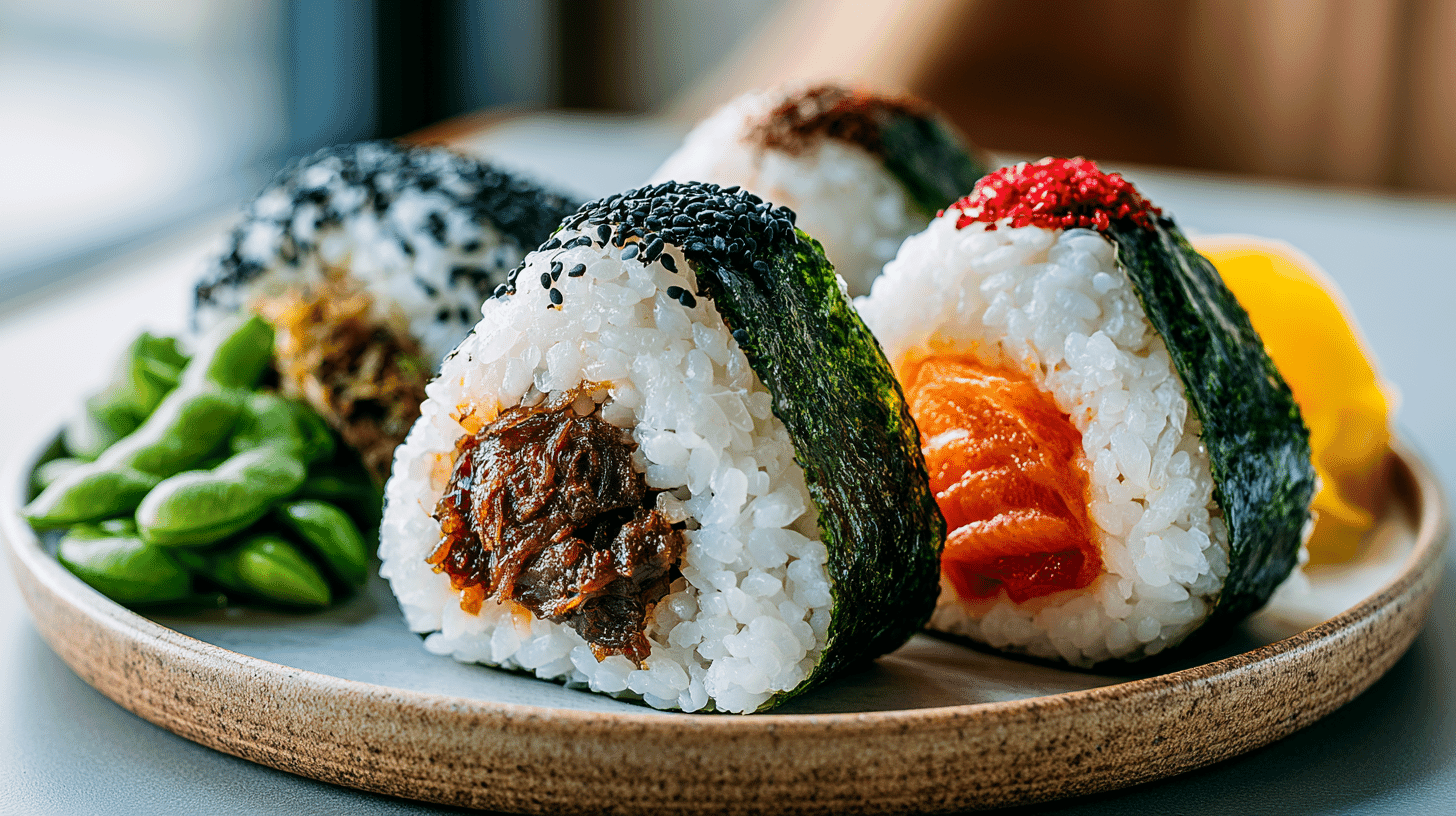
🍙 In Japan, onigiri is the ¥150 rice ball you grab at a convenience store without thinking twice. In San Francisco, the same thing now sells for around $4 as a "healthy, photogenic lunch." A Japanese restaurant company just paid to own a piece of that shift. The deal itself is small, but the buyer is a company many Japanese still associate with the country's worst overwork scandal.
A 51% Stake in a Bay Area Rice-Ball Chain
Tokyo-listed Watami Co. (TSE: 7522) approved the purchase of a 51% stake in Onigilly, Inc., a San Francisco-based chain of onigiri shops, at a board meeting on May 13, 2026, and completed it on May 18. The deal also covers Onigilly's franchise and intellectual-property units. The purchase was made through Watami's Nevada subsidiary, Watami US Corp, which processes and wholesales sushi. Watami says the price was set after an independent valuation but has not disclosed it; the money comes from bank borrowings.
By corporate standards Onigilly is small. For the fiscal year ending December 2025 it reported revenue of about $7.49 million (roughly ¥1.19 billion), operating profit of $1.15 million (about ¥182 million), net profit of $0.90 million, and net assets of $2.9 million (about ¥463 million).
So why does a deal this size matter? Because of what it signals. Watami already supplies food to American supermarkets through its US arm, and folding in a chain of onigiri shops gives it sourcing, product development, and manufacturing muscle on the ground. It also plants a flag in a food category that has, quietly, started to take off in the United States.
From a Street Cart to Five Bay Area Cities
Onigilly's origin story is the kind Americans tend to like. Its founder, Koji Kanematsu, moved from Japan to California in 2006. He was puzzled: the Bay Area was full of sushi restaurants, yet the onigiri he had eaten almost daily back home was nowhere to be found. After visiting a local school and seeing children with thin, unbalanced lunches, he decided to sell onigiri as a healthy, convenient alternative.
He started with a food cart in 2008, opened his first storefront in San Francisco in 2012, and built the business with help from La Cocina, a well-known food incubator, and impact investors. Today Onigilly operates seven locations across five Bay Area cities: San Francisco, Palo Alto, San Mateo, Daly City and Santa Clara.
Kanematsu also tuned the recipe for local tastes. Traditional onigiri is mostly rice, but many American customers wanted more filling, so Onigilly presses rice into flatter patties stuffed generously with ingredients like ginger beef, miso eggplant, or spicy salmon. It uses California-grown haiga rice, partially milled so it keeps some of brown rice's nutrition while staying soft, and offers more than 30 fillings, many of them vegan or gluten-free. A single onigiri runs about $4.
Why Onigiri Is Having a Moment in America
Sushi went global in the 1980s. Ramen had its worldwide breakout in the 2000s. Onigiri looks like the 2020s candidate, and the United States is a key front.
Several things are converging at once. The shape itself is an asset: a neat black-and-white triangle that resembles nothing in Western food and photographs beautifully, precisely the kind of thing that travels on TikTok and Instagram. Through 2025, onigiri quietly became a fixture of the "aesthetic lunch": wrapped with care, eaten slowly, shared online. Anime handled the rest of the marketing for free, since overseas viewers have spent years watching characters eat rice balls and wondering what they were.
There is a practical case too. Onigiri is portable, endlessly customizable and, next to a $12 salad or sandwich, genuinely cheap. It slots neatly into the wellness-meets-budget mood that has shaped American eating lately. For a country already comfortable with sushi and ramen, a rice ball is an easy next step.
Watami's Long Escape From the Izakaya
For Watami, Onigilly is the latest move in a years-long reinvention.
The company built its name on izakaya, Japanese pub-restaurants, under the "Watami" brand. But izakaya dining has been shrinking for years, and the pandemic accelerated the slide. So Watami has been buying its way into new businesses instead. It picked up a Singapore-based food trading group in late 2023, a Nevada sushi-processing operation in early 2024, and, most strikingly, the Japan operations of sandwich giant Subway in October 2024, announcing a goal of 3,000 Subway stores in Japan within two decades.
Chairman, president and CEO Miki Watanabe, who founded Watami in 1984, has been candid about wanting overseas growth. His bet is that a weak yen and a global appetite for Japanese food make this the moment to expand abroad. The Onigilly deal fits that thesis almost exactly.
The Name That Still Carries Weight in Japan
Here is the part of the story many readers outside Japan won't know, and that many inside Japan have not forgotten.
Mina Mori, 26, joined Watami Food Service (now Watami) in April 2008 and died that June. She had worked long shifts running from late evening into the early morning with almost no days off, logging more than 140 hours of overtime a month. In February 2012, labor authorities ruled that overwork had caused an adjustment disorder and recognized her death as karoshi, death caused by overwork. In 2013, the Watami group received the "Black Company Award," a pointed civil-society prize that Japanese activists hand to employers seen as exploiting workers. ("Black company," or burakku kigyo, is the everyday Japanese term for a firm with abusive labor practices.)
The bereaved family sued Watami and Watanabe personally. On December 8, 2015, the company admitted legal responsibility, apologized, and settled for ¥133.65 million (roughly $1.1 million at the exchange rate of the time). The settlement terms also required accurate recording of hours worked, adherence to overtime caps, and counting training sessions and written assignments as working time, plus about ¥45 million in back pay to employees hired from fiscal 2008 onward. Unusually for such a case, the terms were made public. Watanabe, who also served a term as a national lawmaker between 2013 and 2019, later said the company should have settled sooner.
Watami says it has changed: shortening store hours, tracking working time properly, repaying unpaid overtime and promoting "work-style reform." But the reputation has been sticky. For a certain generation of Japanese, "Watami" is still shorthand for the country's overwork problem, and some labor commentators argue that complaints have not entirely disappeared. That history is exactly why this acquisition reads differently in Tokyo than in San Francisco. A company whose domestic story is tied up with how Japan treats its workers is now an employer of American restaurant staff, and US labor law and US public opinion will judge it on their own terms.
Can Onigiri Become Japan's Third Global Food?
Strip away the corporate backstory and the core trend is real: a rice ball that Japan treats as everyday fuel is being re-introduced abroad as something aspirational. Whether Watami is the right steward for that, given its past, is a fair question, and one Japanese commentators are asking out loud.
In Japan, onigiri is so ordinary it is almost invisible. Abroad, it is becoming a small luxury, a lunch worth photographing. What is the most ordinary food from your own country that might surprise people somewhere else?






Global Discussion
4 comments