The company behind roughly 40% of the world's semiconductor encapsulant supply just made its biggest move ever.
With AI demand squeezing memory chip supply, Sumitomo Bakelite announced on January 22, 2026 that it will acquire Kyocera's chemical business for ¥30 billion (roughly $200 million). It is the company's largest deal to date, aimed at a gap in its lineup: materials for the memory chips that fill AI data centers.
Deal Overview: What, How Much, and When
Sumitomo Bakelite will acquire the following product lines from Kyocera's chemical business:
- Epoxy molding compounds (EMC) for semiconductor encapsulation: Resin materials that protect semiconductor chips
- Bonding pastes for semiconductors: Materials used to attach semiconductor chips to substrates
- Industrial resins: Resin products for various industrial equipment
The deal also includes Kyocera's wholly-owned Chinese subsidiary, KYOCERA (Wuxi) Electronic Materials Co., Ltd. Run until now by Kyocera's semiconductor component and ceramic materials division, the target business generated ¥23.2 billion in revenue for the fiscal year ending March 2025, against an acquisition price of ¥30 billion (subject to price adjustments). Sites in Kanagawa, Tochigi and Fukushima prefectures and in China transfer as well.
The transaction runs in two stages. In July 2026 Kyocera sets up a new company to inherit the business through an absorption-type split, with roughly 600 employees in Japan and abroad expected to move across. Around the end of October 2026, the split takes effect and Sumitomo Bakelite acquires all shares on the same date, making it a wholly owned subsidiary. The new company will be headquartered in Kawasaki, Kanagawa Prefecture. Timing could shift depending on competition-law clearances.
Strategic Rationale: Why This Deal, Why Now
Sumitomo Bakelite's Goal: Breaking Into AI Data Center Market
Sumitomo Bakelite traces its roots to 1911, when trial production of phenolic resin (Bakelite) began at the Shinagawa plant of pharmaceutical maker Sankyo (today Daiichi Sankyo). The Bakelite division was spun out as Nippon Bakelite in 1932 and took its present name after a 1955 merger with Sumitomo Kakoki Kogyo. Today the company holds roughly 40% of the global market for semiconductor encapsulation epoxy molding compounds under its Sumikon EME brand, by its own estimate, putting it first in the industry.
Production runs across Japan, Singapore, Taiwan, and China. A new plant was completed in Kaohsiung, Taiwan in 2024, and a facility in Suzhou, China entered full-scale production in 2025.
The gap was in memory. Sumitomo Bakelite's memory-related materials skew toward conventional grades, while Kyocera brings advanced ones, so the two lines fit together. Regarding this acquisition, the company stated that it aims to "enhance presence in the expanding AI data center applications by combining our high technological capabilities in semiconductor epoxy molding compounds and bonding pastes with the unique technologies of the new company."
Kyocera's Goal: Portfolio Restructuring
For Kyocera, this sale represents part of its "select and focus" strategy. At its February 2025 earnings presentation, the company flagged "business portfolio restructuring" as a key initiative. Pressure from Hong Kong-based activist fund Oasis Management, plus struggles in its organic substrate business, had pushed it toward concentrating on core operations.
The sale is not a one-off. Kyocera is working through non-core divestitures totaling roughly ¥200 billion in revenue during the fiscal year ending March 2026, following the sale of a construction materials distribution subsidiary, US-based Southern Carlson, and its power semiconductor business to Shindengen Electric. The chemical business had been a steady, if flat, profit earner, but Kyocera judged that further growth and synergy were unlikely.
Regarding this transaction, Kyocera explained that it "aligns with our efforts to restructure the business portfolio and will lead to further growth and value enhancement of the target business." Sumitomo Bakelite made the approach; substantive talks ran over the six months before the announcement.
The Backdrop: A Memory Supply Crunch
2026 HBM Is Already Sold Out
Investment in AI data centers ballooned through 2025, and demand for memory chips, High Bandwidth Memory (HBM) above all, went with it.
SK Hynix of South Korea announced that its HBM supply for 2026 is already sold out. Micron has indicated that it will allocate the majority of its 2026 HBM production to AI companies. DRAM contract prices rose more than 170% year-over-year in Q3 2025, with market observers expecting "supply shortages to continue until 2027-2028."
Impact of OpenAI's "Stargate" Project
Accelerating this supply crunch is OpenAI's massive AI data center "Stargate" project. Reports indicate negotiations with Samsung Electronics and SK Hynix for DRAM wafer supplies of up to 900,000 wafers per month, roughly twice the global HBM production capacity.
Tailwinds for Semiconductor Materials Manufacturers
The surge in memory demand lands directly on materials suppliers. Encapsulants and bonding pastes scale with chip production volumes.
SEMI's December 2025 forecast puts semiconductor manufacturing equipment sales at a record $133 billion in 2025, up 13.7% year-over-year, rising to $145 billion in 2026 and $156 billion in 2027, breaking the $150 billion mark for the first time. The drivers are investment in leading-edge logic, memory, and advanced packaging.
A ¥50 Billion Investment Budget, and Where This Fits
The ¥30 billion is not a one-off splurge. Under its 2024-26 medium-term management plan, Sumitomo Bakelite has earmarked roughly ¥50 billion for strategic investment across those three fiscal years, and this deal draws on it. Combined with previously announced acquisitions from the Asahi Kasei and AGC groups, commitments reach about ¥40 billion, leaving some ¥10 billion of headroom.
What it buys is Kyocera's advanced materials technology plus production capacity in China, the largest consuming market for semiconductor encapsulants. Sumitomo Bakelite initiated the approach, with concrete discussions running for about six months.
Significance for Japan's Semiconductor Materials Industry
Japanese companies remain competitive in semiconductor manufacturing equipment and materials, holding leading global shares in encapsulants, resists, and silicon wafers. Sumitomo Bakelite ranks first worldwide in encapsulants and in phenolic resins. This deal is one instance of Japanese firms defending their footing in a growth market.
[Update] On May 14, 2026, Sumitomo Bakelite announced price increases of 10-20% on semiconductor encapsulants, effective with shipments from June 1. Procurement costs for the resin feedstock had risen amid tensions in the Middle East, putting AI-driven demand and raw material inflation in play at the same time (as of August 2026).
When Rivals Join Forces
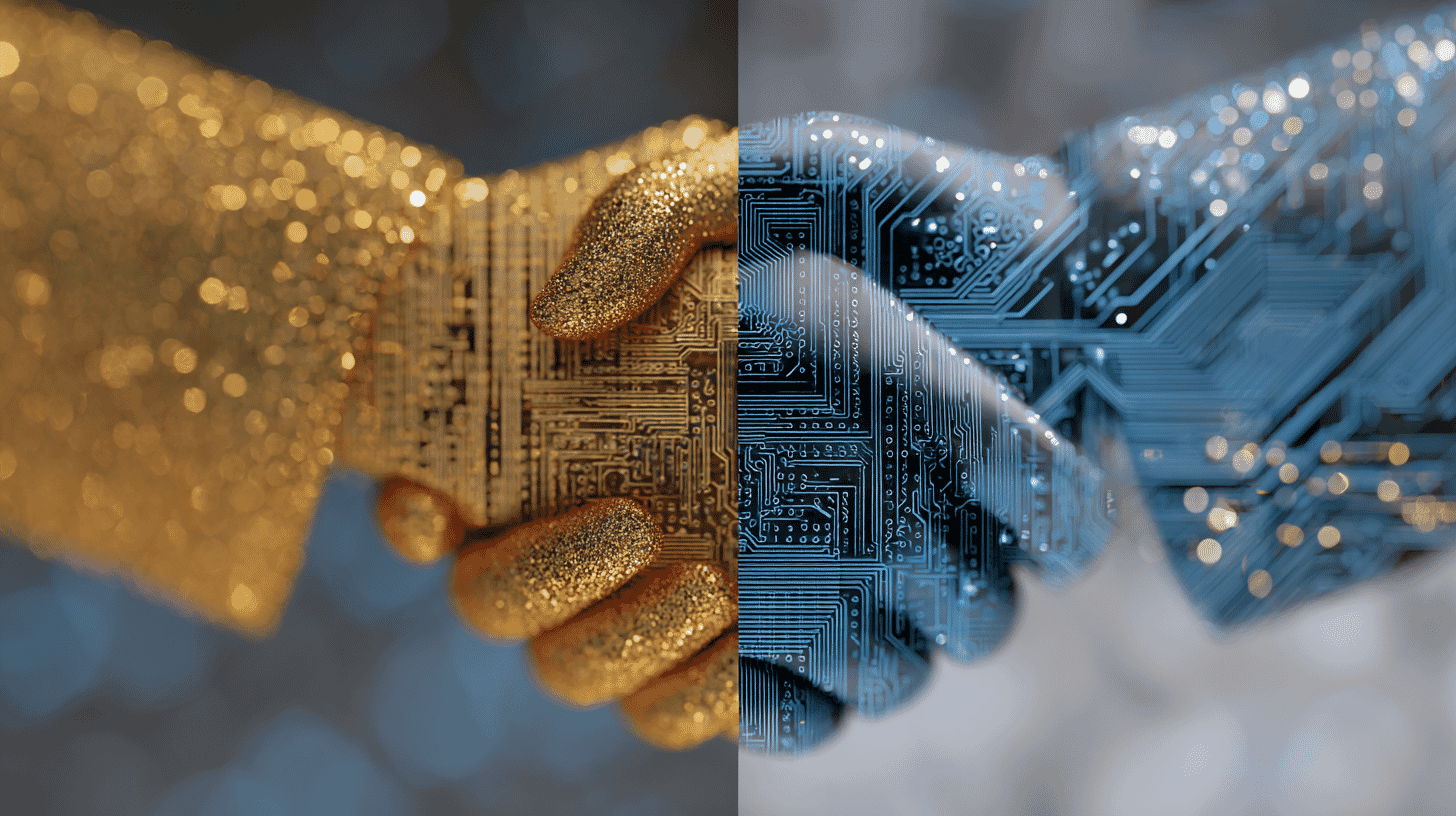
Former competitors shaking hands: this deal is Sumitomo Bakelite reaching past encapsulants to grab more of the AI data-center opportunity. As long as memory chips stay tight, the moves of the materials makers who quietly underpin supply will keep shaping where the semiconductor industry goes.
In Japan, companies are reshuffling their portfolios and stacking up strategic M&A to fit the AI era. In your country, what's happening in AI-related semiconductors? How big a presence do materials and components makers have?







Global Discussion
17 comments