On May 1, METI summoned executives from 24 critical infrastructure operators—covering power, gas, oil, chemicals and credit cards—and ordered emergency cybersecurity audits within one month. The trigger: Anthropic's Claude Mythos, an AI announced April 7 that found a 27-year-old flaw in OpenBSD. We compare Japan's response with the US CISA OT principles and the EU's NIS2 Directive.
Japan's Digital Agency open-sourced 'Gennai', its in-house government generative AI environment, under commercial-use licenses. With a 180,000-employee rollout planned for FY2026, we compare Japan's build-then-open approach with the US GSA's USAi platform, the UK's Humphrey suite, and the EU AI Act framework.
Alpaca, founded by two Japanese entrepreneurs in Silicon Valley, hit a $1.15 billion valuation in its Series D round, becoming the first Japanese-founded US unicorn. Serving SBI Securities, Kraken, and 300+ institutions across 40 countries, it aims to be the 'AWS of finance', alongside Plaid and Stripe. Why did they build this in America, not Japan?
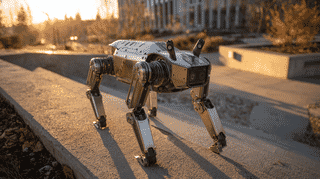
University of Tokyo's MEVIUS2 is a Spot-sized open-source quadruped robot built from sheet metal and e-commerce parts. With full hardware and software on GitHub, LiDAR and HDR camera perception, and reinforcement learning locomotion, it aims to democratize advanced robotics, at a fraction of Spot's $74,500 price tag.
Ruby creator Yukihiro Matsumoto (Matz) warns against the "juniors are unnecessary" narrative in the AI era. If training opportunities for young engineers disappear, technical knowledge transfer will cease, leaving the IT industry a "scorched earth." Exploring Japan's IT talent challenges and global trends.