Godot has moved on Japan with a CRI Middleware partnership. Why an engine at 5% in GDC's 2026 survey gets called the third engine, why its MIT licence stops at the console door, and what Unity and Unreal actually cost.
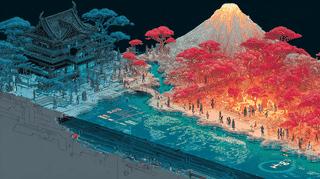
A Japanese developer has built a full Sengoku strategy game that runs inside the Vim text editor. Set in 1560, it holds 41 provinces, 32 clans and 256 historical generals in one 2,371-line file.
Tier IV, the company behind open-source self-driving stack Autoware, listed in Tokyo on July 22, 2026 and opened 7% below its offer price. How do you monetize software you give away?
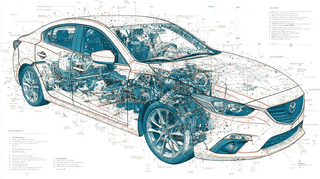
Why a Nissan deep in restructuring picked Red Hat for its next-generation in-vehicle OS. We unpack the trap of in-house software development that cost Volkswagen's CARIAD 14 billion euros, and the path Nissan chose to avoid it.
Japan's Digital Agency open-sourced 'Gennai', its in-house government generative AI environment, under commercial-use licenses. With a 180,000-employee rollout planned for FY2026, we compare Japan's build-then-open approach with the US GSA's USAi platform, the UK's Humphrey suite, and the EU AI Act framework.
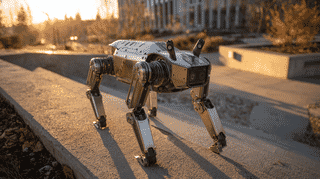
University of Tokyo's MEVIUS2 is a Spot-sized open-source quadruped robot built from sheet metal and e-commerce parts. With full hardware and software on GitHub, LiDAR and HDR camera perception, and reinforcement learning locomotion, it aims to democratize advanced robotics, at a fraction of Spot's $74,500 price tag.
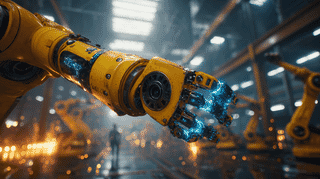
FANUC, the world's largest industrial robot maker, partners with NVIDIA for Physical AI while deliberately avoiding humanoid robots. We break down its historic open-platform shift, the NVIDIA Isaac integration, and how it plans to compete against ABB, KUKA, and China's robot surge.
Sakana AI, the Tokyo-based startup founded by former Google researchers, has raised $135M to reach a record $2.65B valuation — making it Japan's top unicorn. Citibank made its first-ever strategic investment in a Japanese company through this round. With backing from the CIA's venture arm and Google, Sakana is spearheading Japan's push for sovereign AI.
Ruby creator Yukihiro Matsumoto (Matz) warns against the "juniors are unnecessary" narrative in the AI era. If training opportunities for young engineers disappear, technical knowledge transfer will cease, leaving the IT industry a "scorched earth." Exploring Japan's IT talent challenges and global trends.
"open.space" is an open-source phased array antenna built for Earth-Moon-Earth (EME) communication. It aims to replace the traditional dish-and-kilowatt setup with a 1-meter, 240-element array, priced from $49-99 for a single tile up to $4,999 for the full array. Here is what the project offers and where it now stands.
LF Research's State of Open Source Japan 2025 finds 69% of Japanese organizations reporting rising business value from OSS against a 54% global average, alongside a 40-point gap in open source OS adoption and executives who rate OSS lower than their own engineers. A look at the numbers, including Japan's fourfold lead in AR/VR.