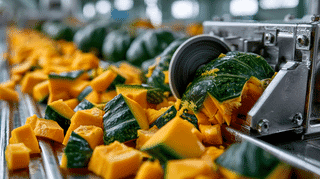
The only machine on Earth that cuts pumpkins into deliberately irregular 'rangiri' pieces. How Hokkaido's Synthemec cracked the paradox, then brought its parts in-house to win on precision and lead time, against an industry built for uniform cuts.
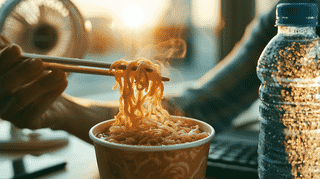
Nissin launches the first-ever cold-water-only Cup Noodle on July 20. Its patented Cold Rehydrate technology turns fridge-chilled water into chewy noodles in 5 minutes. Here's how Japan, birthplace of instant ramen, keeps reinventing it.
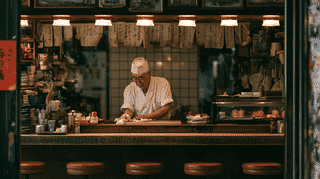
Japan saw a record 36 ramen shop bankruptcies in the first half of 2026. While the world pays $18 a bowl, shops in ramen's homeland collapse against a cultural price ceiling of 1,000 yen (about $6). Here is the structural squeeze behind the paradox.
Japan's antitrust regulator raided six major ice cream makers over an alleged price-fixing cartel. Among them: Akagi Nyugyo, the maker of Garigari-kun, a company beloved for theatrically apologizing over a 10-yen price increase. Here is what the probe alleges and why it stings.
Japan's food exports hit a record 1.7 trillion yen in 2025, a 13th straight high, while its calorie-based self-sufficiency stays at 38%. Why both are true: wagyu, green tea, the 27% feed rate and the 64% production-value figure, explained for global readers.
A Chiba startup has rebuilt yokan into an energy bar now test-selling in Japan and Australia. Here is why this centuries-old confection is one of the smartest survival foods ever made.
Warabi mochi is a Japanese sweet famous for its jiggly, melt-in-your-mouth texture. We dig into its surprising origin (it is not made from rice), its thousand-year history, the rise of matcha warabi mochi, and why it keeps going viral on TikTok.
Yamada Suisan and Japan's fisheries research agency put fully farmed eel on public sale for the first time on May 29. After cutting glass-eel production cost from 40,000 to 1,800 yen, the country aims to end wild-juvenile dependence by 2050.
Caviar's definition of 'best' has shifted from geography to aquaculture technology. As China supplies 60% of the world's farmed caviar and Russian product disappears under sanctions, a landlocked Japanese prefecture is challenging the global hierarchy with a hybrid land-based farming system that combines patented closed-loop tech with rare ultra-soft spring water.
Hokkaido Hamanasu Foods, a natto maker in Ebetsu, has grown its exports 60-fold in eight years, almost entirely to China, where Beijing supermarkets stock Japanese-labeled four-pack sets that take 80% of shelf sales. Prefecture-wide natto exports hit 640 million yen in 2025, five times the level seven years earlier. Back home, Mizkan suspended four natto products in May 2026 as Middle East tensions disrupted packaging supplies. Plus: the science of Bacillus subtilis and where to buy natto abroad.
Calbee is switching 14 of its flagship snacks (including Potato Chips Lightly Salted, Consomme Punch, and Kappa Ebisen shrimp chips) to monochrome 'petroleum-saving packages' from May 25. The cause: ink shortages triggered by the Hormuz Strait crisis. A symbolic case of geopolitical risk reaching Japan's shelves, compared with parallel moves at Lindt, Lamb Weston and Smithfield Foods.