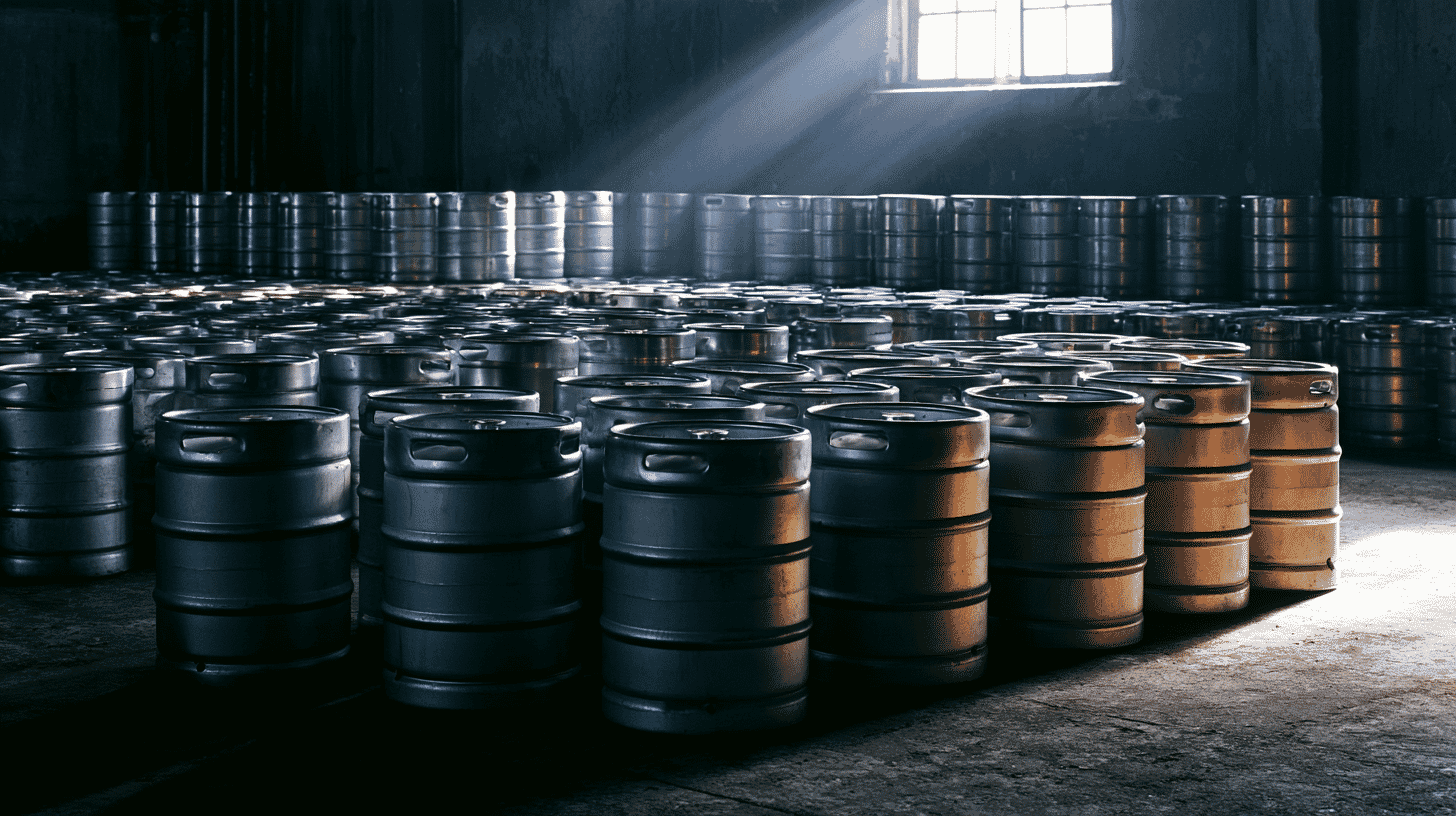
🍺 Order a beer almost anywhere in Japan and it very likely came from one of four companies: Asahi, Kirin, Suntory or Sapporo. On October 7, 2026, the Japan Fair Trade Commission (JFTC), the country's competition watchdog, searched all four on the same day over suspected price-fixing. Nothing has been proven, and no one has been charged.
What investigators suspect
The searches covered the brewers' head offices in Tokyo and other sites, according to TBS, a national broadcaster. Investigators also searched the Brewers Association of Japan, the industry body all four belong to. The legal basis is the Antimonopoly Act, Japan's competition law, which bars rival companies from agreeing on prices instead of setting them independently. That kind of agreement is called a cartel.
TBS reported, citing sources close to the case, that the brewers are suspected of coordinating, for several years, the size and timing of increases in the prices they charge wholesalers. The products involved are regular beer, happoshu (a lower-malt beer-like drink) and the cheaper "third category" beers. Sales managers and other representatives are suspected of meeting informally around the Ichimokukai, a gathering the association hosted on the first Thursday of every month, and setting targets for how much to raise prices.
These are the prices a brewer charges distributors, not the prices on a supermarket shelf, which retailers set for themselves. But the shipment price is the base that every later price is built on.
All four companies said they would cooperate fully. Suntory's statement, quoted by ABC News, confirmed an on-site inspection over a suspected breach of the Antimonopoly Act in its alcohol trading. None of the statements addressed whether the suspicion is true.
When the whole market is under the microscope
The four companies hold about 90 percent of Japan's beer market, according to AFP. In a market this concentrated, prices often move together for ordinary reasons. The major brewers raised prices across the board in April 2025, citing higher raw material costs. On October 1, 2026, a long-planned tax change took effect, unifying the liquor tax on beer-type drinks at 54.25 yen per 350ml can. Regular beer's tax dropped from 63.35 yen, while happoshu and third-category beers now pay more. Every brewer faced the same change on the same day.
Moving in step is not illegal by itself. Talking to rivals about it is. At a press conference on September 2, 2026, the JFTC's secretary general warned that agreeing with competitors on prices or the timing of increases would be treated as a cartel, and said rising costs make those conversations more tempting. The raids came about a month later.
Japan also has a leniency program. Under it, the first company to report a cartel before an investigation begins pays no surcharge, and later applicants get smaller reductions. The JFTC has said publicly that it does not file criminal complaints against the first applicant or its employees. At the same September press conference, the secretary general urged companies to consider the program. Whether any brewer has applied in this case has not been made public.
Could this become a criminal case?
This was not a routine inspection. The JFTC used its criminal investigation powers, which it reserves for cartels it sees as serious and broadly harmful to daily life. Investigators search and seize evidence under a judge's warrant. If the evidence is strong enough, the JFTC files a criminal complaint with the Prosecutor-General, and prosecutors decide whether to indict. According to coki, a Japanese business site, this is the first food or drink case pursued with a criminal complaint in view.
Such complaints are rare. The most recent came on April 17, 2026, when the JFTC accused five diesel fuel distributors of fixing prices and prosecutors indicted them the same day. The individual employees were not referred, which Japanese press reports called unusual.
On paper, an individual convicted of taking part in a cartel faces up to five years in prison or a fine of up to ¥5 million (about $32,000). A company faces a fine of up to ¥500 million (about $3.2 million). Separately, if the JFTC finds a violation, it can order a surcharge of 10 percent of the sales involved, counted over up to 10 years.
How Europe and the US have handled beer cartels
At the European Union level, cartels are punished with administrative fines on companies, not criminal charges, capped at 10 percent of a group's worldwide turnover. In 2007, the European Commission fined Heineken, Grolsch and Bavaria a combined €273.8 million for coordinating beer prices in the Netherlands between at least 1996 and 1999. InBev, which also took part, paid nothing because it handed over decisive evidence under the leniency program.
Germany's Bundeskartellamt fined brewers about €338 million in total in a case it closed in 2014, which began with a leniency application from AB InBev's German unit. Not every penalty held up. In 2019, a Düsseldorf court dropped proceedings over a fine of about €62 million against Carlsberg, ruling that only an attempted agreement in 2007 could be proven and that the time limit had passed.
Compared with Japan and the EU, the US goes further against individuals. Under the Sherman Act, a company can be fined up to $100 million, and a person up to $1 million and 10 years in prison.
Next to those figures, Japan's ¥500 million cap on a corporate criminal fine looks modest. Japan's heavier tool is the surcharge, which grows with the sales involved.
Brands you may drink at home
Asahi owns European brands including Pilsner Urquell, Kozel, Peroni and Grolsch. In Australia it has almost 4,000 employees across 17 manufacturing sites, the company told ABC News earlier this year. Kirin owns Lion, a major brewer in Australia and New Zealand. Suntory owns Suntory Global Spirits, the maker of Jim Beam and Maker's Mark. Sapporo owns Sleeman in Canada and Stone Brewing in the US.
The suspicion concerns prices inside Japan. Reports so far say nothing about the companies' overseas businesses.
For Asahi the raid comes a little over a year after a ransomware attack in September 2025, which cut its October–December sales by nearly 20 percent, as we reported in our earlier story. The JFTC is looking beyond beer, too: on June 16, 2026, it searched six ice cream makers over a suspected cartel (our report), a case with no conclusion yet.
Who decides what your beer costs?
In Japan, four companies brew almost all the beer, and investigators now want to know whether they also priced it together. How many brewers share the beer shelf where you live?
References
- https://newsonjapan.com/article/150981.php
- https://www.youtube.com/watch?v=1uU4MRx0ERY
- https://www.nippon.com/en/news/yjj2026100700343/4-major-japan-brewers-raided-for-suspected-price-cartel.html
- https://www.malaymail.com/news/money/2026/10/07/four-brewers-controlling-90pc-of-japans-beer-market-raided-in-cartel-probe/238036
- https://coki.jp/article/column/94679/
- https://www.mof.go.jp/tax_policy/summary/consumption/d07_0.pdf
- https://www.jftc.go.jp/houdou/teirei/2026/260902.html
- https://www.jftc.go.jp/dk/seido/hansoku.html
- https://www.jftc.go.jp/en/policy_enforcement/speeches/2007/saicsymposium2007.html
- https://laws.e-gov.go.jp/law/322AC0000000054
- https://www.sakigake.jp/news/article/20260417CO0048/
- https://competition-policy.ec.europa.eu/index/fines_en
- https://www.europeansources.info/?p=342123
- https://bundeskartellamt.de/SharedDocs/Meldung/EN/Pressemitteilungen/2014/02_04_2014_FernsehbiereII.html
- https://www.yumda.com/de/news/1160466/oberlandesgericht-stellt-bierkartell-verfahren-ein.html
- https://www.law.cornell.edu/uscode/text/15/1
- https://www.abc.net.au/news/2026-10-08/japan-raids-biggest-beer-brewers-over-price-collusion-claims/107241114
- https://asahiinternational.com/brands
- https://www.suntoryglobalspirits.com/
- https://en.wikipedia.org/wiki/Sapporo_Breweries





Global Discussion
4 comments