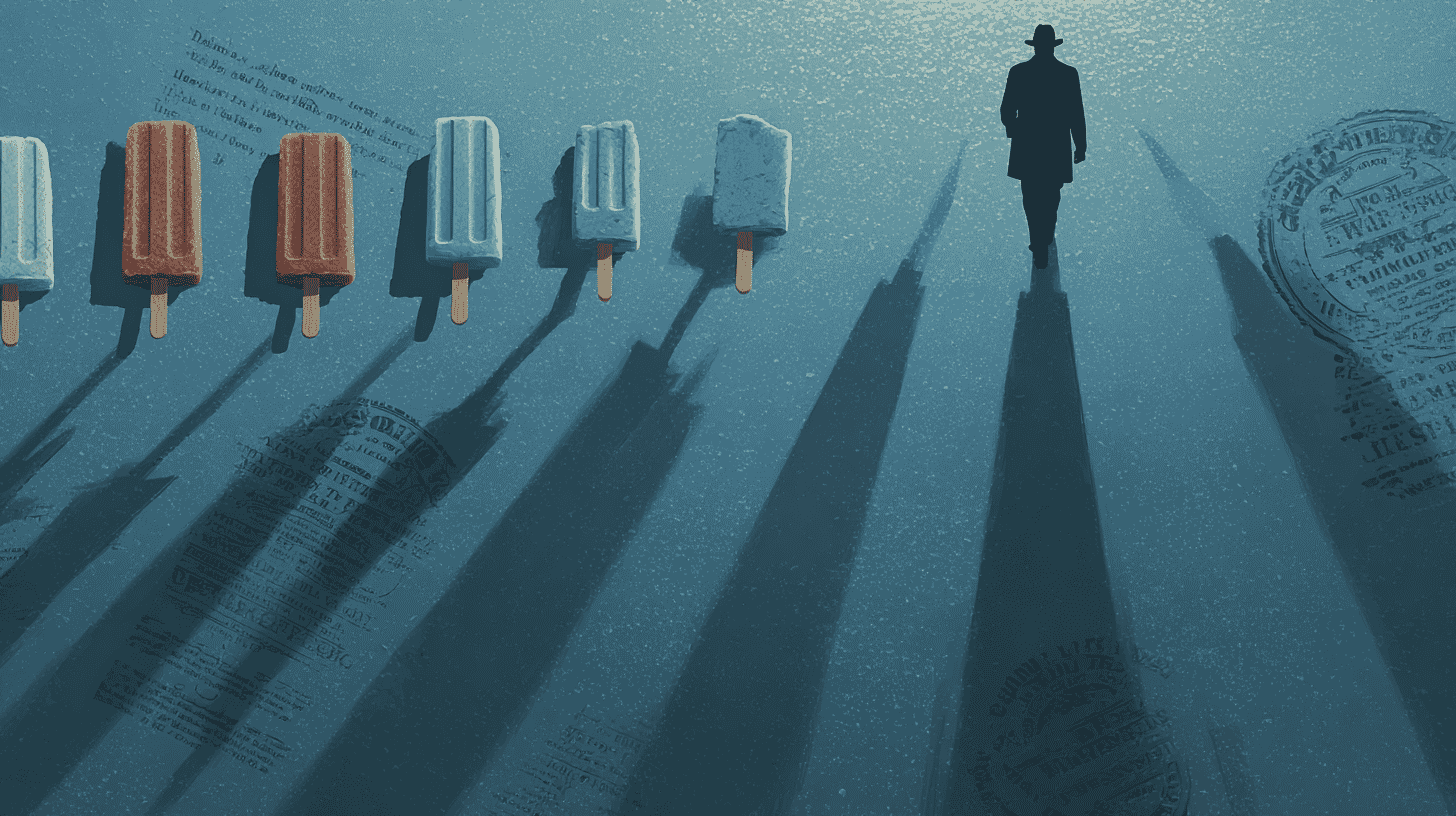
🍦 In 2016, one Japanese ice cream maker did something almost no company does: it lined up about a hundred employees, bowed to a camera, and publicly apologized for raising the price of its flagship popsicle by 10 yen. The country loved it. A decade later, that same company is one of six raided by antitrust investigators who suspect the industry quietly agreed to push prices up together. If the suspicion holds, the contrast is hard to swallow.
What the regulator actually did
On June 16, Japan's Fair Trade Commission (JFTC), the agency that polices anti-competitive behavior, carried out on-site inspections at six of the country's biggest ice cream manufacturers. The companies are Meiji, Morinaga Milk, Lotte, Ezaki Glico, Morinaga & Co., and Akagi Nyugyo. Together they control more than half of Japan's retail ice cream market.
The suspicion is a price-fixing cartel: under Japan's Antimonopoly Act, it is illegal for competitors to coordinate prices instead of setting them independently. According to reporting by Kyodo News and the Nikkei, investigators believe the six firms spent several years exchanging information through meetings and emails, allegedly agreeing on whether to raise the "manufacturer's suggested retail price" shown to retailers, and by how much. Reports put the increase at 10 to 20 yen per item.
One detail makes this case unusual. The JFTC is reportedly looking at whether the makers used a wave of genuine cost increases as cover. Japan has seen relentless food inflation, and a price bump on ice cream would surprise no one. The worry is that a real reason to raise prices became a convenient excuse to raise them in lockstep, a practice Japanese coverage calls binjou neage, roughly "piggyback price hikes." If competitors quietly align their increases under the noise of inflation, shoppers lose the protection that real competition is supposed to give them.
This is the first time the JFTC has investigated a suspected price cartel in ice cream specifically. Ezaki Glico confirmed it is under investigation and said it is cooperating fully. As of this writing, the other companies had not issued detailed public statements.
A raid is not a verdict. No findings have been issued, no penalties ordered, and every company is entitled to the presumption that the allegations remain unproven until the JFTC concludes its work.
Why this one stings: the popsicle that apologized
To understand why this particular lineup landed like a gut punch in Japan, you need to know about Garigari-kun, Akagi Nyugyo's soda-flavored shaved-ice bar. It is cheap, it is everywhere, and for generations it has been the popsicle a kid could buy with pocket change. For 25 years its price sat at 60 yen.
When Akagi finally raised it to 70 yen in 2016, the company did not bury the news. On April Fool's Day, it ran a full-page newspaper ad and a TV spot in which around a hundred of its own employees stood outside headquarters and bowed in apology, set to a wistful folk song literally titled "Price Increase." The message was a simple "60 to 70," and an apology for the first hike in a quarter century.
The reaction was not anger. It was affection. The clip drew millions of views, was picked up by hundreds of media outlets, and was later estimated to have generated advertising-equivalent exposure worth more than 550 million yen (about $3.4 million at roughly 160 yen to the dollar). According to trade-press accounts, one supermarket chain executive reportedly decided it would be "rude" not to pass the new 70-yen price through, voluntarily accepting an increase that retailers normally resist. Sales rose the month after the apology.
The logic Akagi gave became almost a case study in marketing classes. A former marketing manager explained the thinking as: some companies quietly raise prices, but that feels like lying to the customer. The brand leaned into honesty as identity. It even publicly confessed, on television, that a failed "Napolitan" spaghetti-flavored popsicle had lost it close to 300 million yen (roughly $1.9 million). When it raised prices again in 2024, it bowed once more, reportedly even deeper than before.
So when the news broke that Akagi was among the six firms inspected over an alleged cartel, the response online captured the whiplash in three words that loosely translate to "Akagi, you too?" The company built its reputation on the promise that it would never quietly inflate a price behind a customer's back. The allegation under investigation is, in effect, the precise opposite of that promise. Again: nothing has been proven. But the gap between the brand story and the suspicion is the reason this case became a talking point rather than a back-page item.
What happens if a cartel is confirmed
If the JFTC ultimately finds that a cartel existed, the consequences are concrete. The agency can issue a cease-and-desist order and, more painfully, impose a financial surcharge calculated from sales of the products involved during the violation period. For price cartels by large companies, the base surcharge rate is 10 percent (4 percent for smaller firms), and the lookback can reach as far as ten years. Repeat offenders and ringleaders face a 1.5x uplift. Japanese legal commentary notes that past cartel cases have produced surcharges on the scale of tens of billions of yen (hundreds of millions of dollars). Here the figure could run into the billions of yen, depending on each company's sales.
There is also an escape hatch that shapes how these cases unfold: Japan's leniency program. The first company to come forward and report the conduct can have its surcharge waived entirely, with reductions for those who follow. That design tends to turn allegiance among cartel members into a race to confess, which is often how these investigations gather momentum.
For consumers, the stakes are simpler. If makers agreed to raise the prices retailers were shown, that pressure can flow to the freezer case, and the person reaching for a 90-yen popsicle is the one who ends up paying for the arrangement.
A small treat, a big nerve
Part of why this story traveled is that ice cream is not abstract. People do not feel a semiconductor cartel in their daily lives, but they feel the price of the thing they hand a child on a hot afternoon. Coverage noted a swell of online anger along the lines of "no wonder it's been getting expensive" and "they're making fools of consumers," alongside calmer voices urging everyone to wait for the facts.
There is a broader anxiety underneath, too. After years of rising grocery bills explained away as unavoidable cost pressure, a cartel suspicion in one beloved category invites an uncomfortable question about every other category. If competitors can coordinate here, where else has the convenient story of "inflation made us do it" been doing quiet work?
The investigation could confirm a cartel, narrow it, or clear the companies entirely.
A note from the writer
Just ice cream, you might say. But Japan's ice cream market topped 645 billion yen in fiscal 2024 (about $4 billion), a record high for the fifth year running, and it no longer goes quiet in winter; people eat it year-round now. Around year-end, a prime-time show puts the nation's favorite bars to a vote of ten thousand people, with the big makers crowded into the studio to watch the results. I genuinely believed they were out there sweating over cost and flavor, fighting one another for my coin.
So if the suspicion holds, yes, I feel a little betrayed.
This summer I'm sticking with the little guy. My pick is the ICE Bo from Adachi Seika, a small maker nowhere near that list of six: a pack of cheap soda-flavored tube popsicles, eight for around 140 yen, well under a dollar, at my local supermarket. If you ever come to Japan, grab a pack.
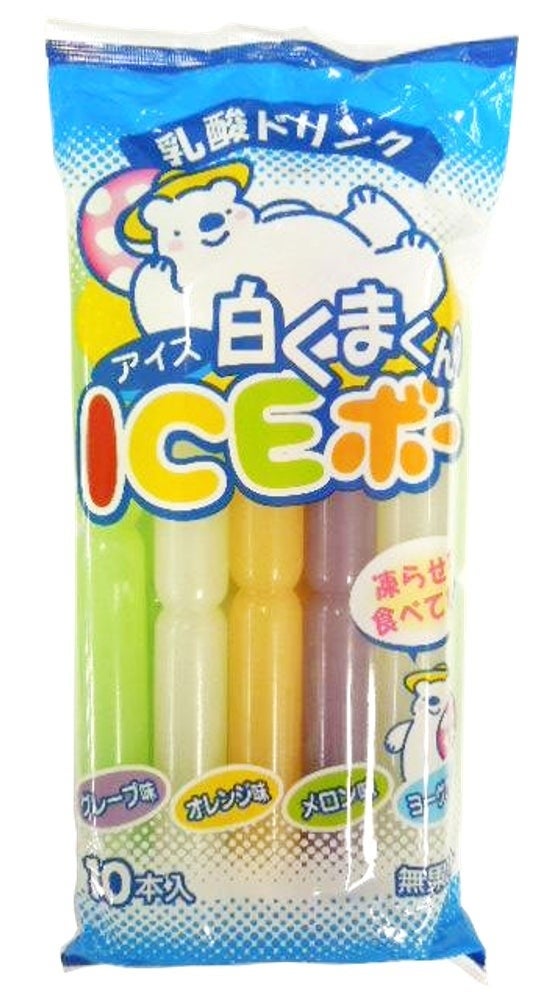
Source: PR TIMES press release image
Which makes me wonder about you. In your country, is there a small brand you trust precisely because it has not been swept up with the giants? And what would it take for that trust to break?
References
- https://news.yahoo.co.jp/articles/fe10c7f819a8780ca92de7a4601b622e49510e4c
- https://www.nikkei.com/article/DGXZQOUD127NQ0S6A610C2000000/
- https://newsonjapan.com/article/149688.php
- https://coki.jp/article/column/85167/
- https://studyhacker.net/garigari-kun-honesty
- https://www.akagi.com/news/2024/240301.html





Global Discussion
4 comments