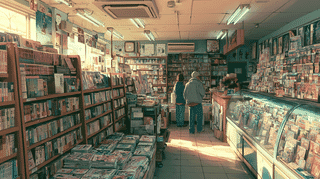
Seven & i, the owner of 7-Eleven, is in final-stage talks to take a multi-billion-dollar stake in Żabka, Poland's largest convenience chain. A look at why Europe is the gap in 7-Eleven's map, how the Polish upstart's autonomous stores and fintech already outpace many Japanese konbini, and how the deal contrasts with Seven & i's fuel-heavy US business.
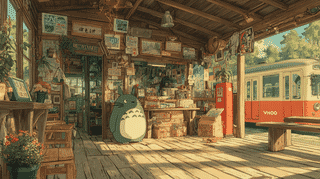
Studio Ghibli specialty chain Donguri Republic opens its first U.S. store as a pop-up near Los Angeles. Dates, hours, perks, and why the chain isn't actually new to overseas markets.
From October 2026, Japan requires every employer to shield staff from abusive customers. Inside the 'customer is a god' myth, the front-line toll, and why most countries lack the word.
Bandai's new Shizuoka factory boosts production capacity by 35%, and discounted Gunpla is returning to store shelves. But restock-day chaos, customers running through aisles, grabbing boxes from carts, is pushing some retailers to drop Gunpla entirely. We cover Yahoo Auction's 3-month resale ban, overseas availability improvements, and what it all means for fans worldwide.
Seven & i Holdings postpones its North American 7-Eleven IPO to fiscal 2027 or later, citing market instability from Middle East tensions and sluggish US consumer spending. A look at the strategic calculus behind the delay and what it means for global convenience store competition.
Storm Labels, the music arm of STARTO ENTERTAINMENT, opened its first official online store on April 1, 2026, with international shipping and support for 5 languages. Over 700 titles from Arashi, SUPER EIGHT, Hey! Say! JUMP and others are available, a shift for overseas fans who previously relied on proxy services.
A pop-up convenience store in Tokyo where everything is free — if you can grab it without making a sound. The third edition of TOH, created by rapper TaiTan and partnered with Red Bull, fills a store with BMX bikes, skateboards, frozen ramen, and apparel. You have 60 seconds. One noise and you're out. Here's what happened at Japan's craziest experiential event.
Toshiba's C-type escalator, whose handrail drops vertically into the floor instead of looping, existed in just two places: the 8th and 9th floors of Nagoya's Meitetsu Department Store. They stopped when the store closed on February 28, 2026, after 71 years. Demolition is now on hold and Yodobashi Camera is moving in.
Once struggling to gain a foothold in Western markets, Japan's Uniqlo has surged to 47th on Interbrand's Best Global Brands 2025 ranking. With overseas revenue exceeding 56% and Europe/North America now outpacing China, we break down the strategies behind this turnaround — from outfitting Sweden's Olympic team to its LifeWear philosophy and differentiation from ZARA and H&M. What can other Japanese brands learn from Uniqlo's global conquest?
Rakuten and Google have announced Japan's first YouTube Shopping Affiliate partnership, letting viewers buy Rakuten Ichiba products directly from videos. A look at how Japan's largest e-commerce mall and the world's biggest video platform are merging into a new "V-commerce" era, and what it means for creators, shoppers, and online retail.
What if your pajamas could heal you while you sleep? In Japan, "recovery wear" (clothing infused with ceramic minerals that emit far-infrared rays to boost blood circulation) has become a national craze, even earning a Word of the Year nomination. Now budget chains Workman ($13), Nitori ($10), and Aeon are making this uniquely Japanese wellness trend accessible to everyone. Here's what recovery wear is and why millions of Japanese are buying it.