Uniqlo's owner hit 3.9633 trillion yen ($25.1 billion) and passed H&M. The weak yen inflated its growth, not its rank. The risks now: China, tariffs, wages, succession, and a Zara owner still 1.8 times bigger.
Hong Kong's SCMP reports that Trump asked Xi to lift China's export curbs on Japan, citing a threat to US industry. In July, China's magnet exports to Japan fell 52.2% while US shipments rose 4.6%.
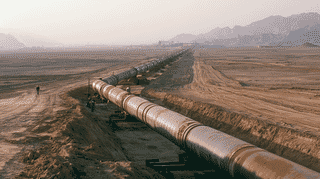
Transits through the Strait of Hormuz have fallen from 21.6 to 4.9 million barrels a day, and Gulf producers are building seven bypass pipelines. Japan restored procurement, but July brought a 634.5 billion yen deficit.
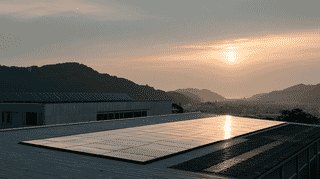
Japan's Environment Ministry will stop subsidising the purchase of conventional solar panels for new projects from fiscal 2027. The stated reason was not carbon but industry: the money was benefiting factories abroad.
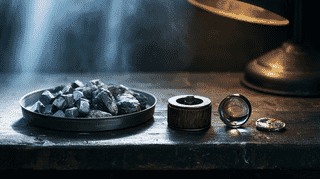
China's rare earth magnet shipments to Japan fell 52.2% in July 2026 while US-bound shipments rose 4.6%. Japan tells itself pressure breeds breakthroughs. Optical glass and neodymium magnets agree; aluminium does not.
JAXA has set MMX for launch at 4:41:03 a.m. on October 20, 2026. The probe lands on Phobos, collects at least 10 grams and returns in fiscal 2031, chasing a first from the Martian system.
Japan's H3 Rocket No. 9 put the Michibiki No. 7 satellite into orbit on August 11, 2026, the first operational payload since the No. 8 failure. The seven-satellite goal now waits on fiscal 2031.
ZEALS opened orders for D1, a 129.3 cm Japanese humanoid, from 5 million yen (about $32,000). Why the company calls it semi-domestic rather than fully Japanese, and why 100 units and 10,000 hours is a modest goal.
AIST and Tokyo startup OptQC have switched on MoQuren, a photonic quantum computer that needs no refrigerator and no vacuum chamber. What it can do now, and how Japan's bet differs from the US and China.
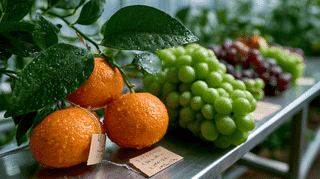
Japan has rewritten its seed law to add ten years to breeders' rights and let officials block exports even before a variety is registered. We unpack the bill enacted on July 17, 2026, the suspected leak of Ehime's premium citrus to China, and why the 2020 version left a hole that fruit pirates walked right through.
Japan estimates the leak of its Shine Muscat grape to China and South Korea costs about $120 million a year. We unpack how a missed registration deadline, a strawberry precedent and a too-late seed law left one of Japan's best fruits unprotected abroad.
On June 26, 2026, Japan's Diet passed a law renaming the Air Self-Defense Force as the Aerospace Self-Defense Force, the first rename of an SDF branch since 1954. A new 880-strong Space Operations Command will track satellites and threats in orbit. Here is what changes, and why now.
Sanyo Special Steel, Japan's No.1 maker of bearing steel and a world leader in steel cleanliness, will be absorbed by Nippon Steel and dissolved on April 1, 2027. The model for the famous novel The Grand Family, it once suffered postwar Japan's largest bankruptcy. Why give up the name now? A look at China's steel glut and an unexpected Swedish thread.
Dysprosium and terbium, essential to EV magnets, were China's one unbroken monopoly. In 2025, Australia's Lynas, backed by Japan since 2011, produced them outside China for the first time. What it means, and what it doesn't.
Japan's 2025 census preliminary count puts the population at 123 million, down 3.1 million in five years, the steepest drop since records began. The country fell from 11th to 12th in the world, overtaken by Ethiopia. We translate that number into cities you can picture, then compare how South Korea, Italy, and China face the same cliff, and ask whether Japan's immigration, birth-support, and regional-revival policies are working.
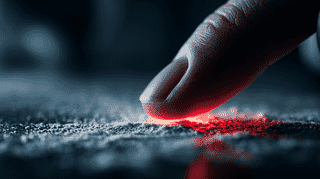
A team in Japan re-engineered zinc oxide, the harmless powder in sunscreen, into a material that emits near-infrared light from a gentle fingertip press. No power, no rare earths. Here's why it matters for medicine, bridges, and the rare-earth standoff.
China's Chery and Japan's Autobacs are among five companies behind EMTA, a new kei-class EV brand planned for 2027. Why Japan's open market looks nothing like the US or EU.
China overtook Japan in net external assets at the end of 2025, dropping it to third place, yet Japan's holdings hit a record high. Here is what the numbers really mean for the yen.
At the APEC trade ministers meeting in Suzhou, China, Japan's industry minister demanded that exporting countries rectify arbitrary rare earth curbs. A look at the slow squeeze on Japan, its roots in a Taiwan remark, and Tokyo's exit strategy.
Seven months after metal-organic frameworks (MOFs) won the 2025 Nobel Prize in Chemistry, where does the technology actually stand? A status check on Atoco's air-to-water devices, scaled-up carbon capture by Svante and Kobe Steel, China's lead in MOF research output, and why an Atomis executive says a Nobel does not lower the hurdles.