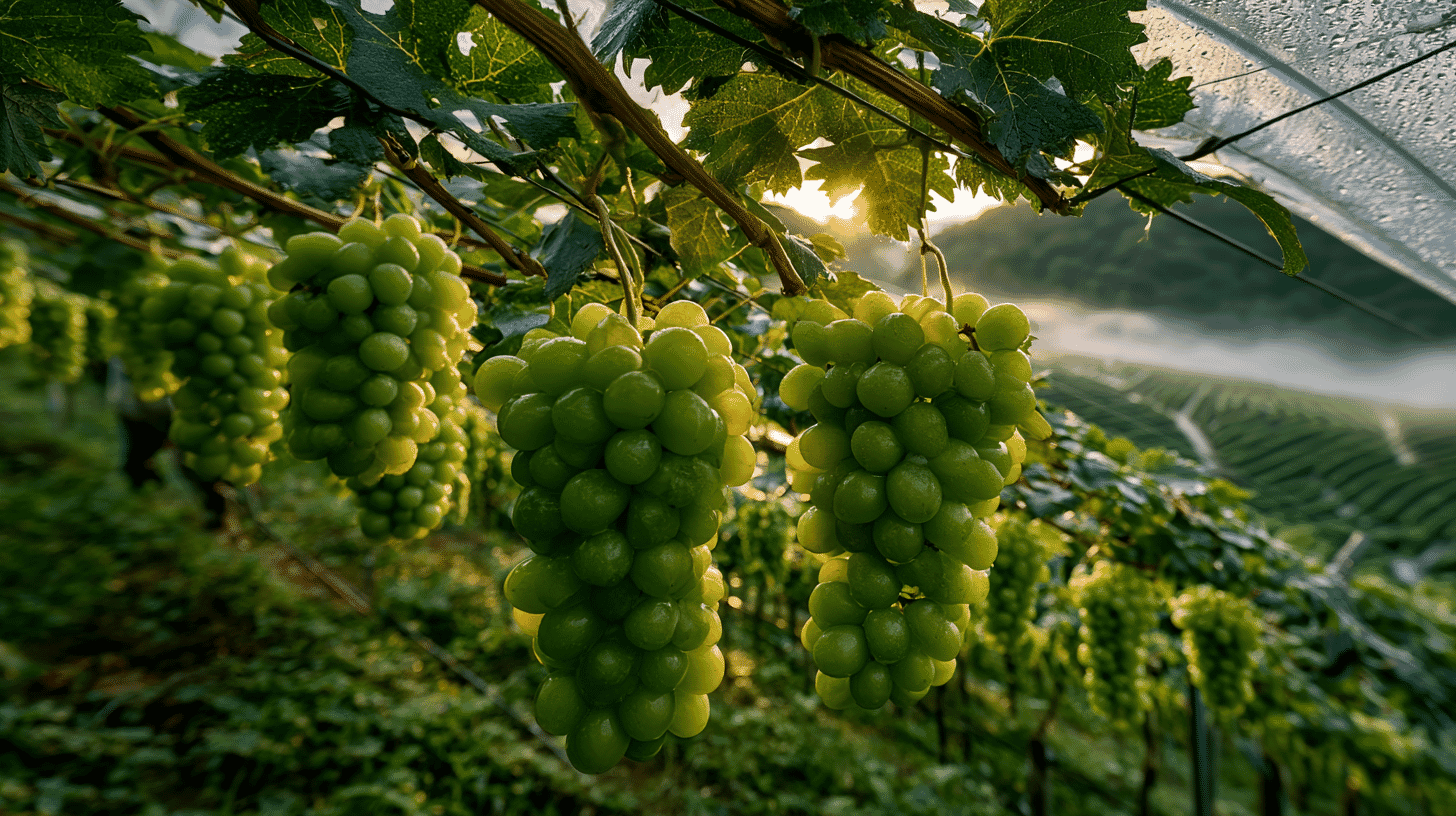
🍇 Japan's most famous grape now grows on an area the size of Singapore. The catch: it's in China, and almost none of the money flows back to the country that spent decades breeding it. Tokyo now estimates that the leak of "Shine Muscat" is costing Japanese farmers around $120 million every year, and the law meant to stop this arrived too late to save it.
A grape that built a brand, then walked across the border
On June 22, Agriculture Minister Norikazu Suzuki told reporters that Shine Muscat leaking into China and South Korea now costs Japan at least close to ¥20 billion (about $120 million) a year. He called it a "serious problem."
The figure is an estimate, and the ministry was open about how it built it. Officials assumed that if the two countries had been growing the grape under a proper license, Japan would have collected a royalty worth roughly 3% of the shipment value. They worked backward from cultivation area. As of 2022, China was growing Shine Muscat on about 73,700 hectares and South Korea on about 6,067. Together that is roughly 30 times the area Japan devotes to it. China's plantings alone, at 737 square kilometers, are about the size of Singapore.
That ¥20 billion only counts the missing royalties. It leaves out the sales Japanese exporters lose when cheaper Chinese and Korean grapes undercut them in markets like Hong Kong, Thailand and Vietnam. The real cost, the ministry admits, is almost certainly higher.
How did Japan's star grape get out?
Shine Muscat is a Japanese invention. It was bred by the national agricultural research institute now known as NARO, from a cross first made in 1988, and registered as a protected variety in Japan in 2006. Seedless, thin-skinned enough to eat whole, sweet, and hardy in Japan's rainy climate, it became one of the country's biggest fruit hits in a generation.
Except for one thing. NARO registered the variety at home but never registered it abroad. As one official later admitted, no one at the time expected the grape to travel. Around 2016 it did anyway, carried out without permission, and Chinese and Korean growers began planting it at scale.
By then it was too late to claw back. Plant varieties are protected country by country under an international treaty called UPOV, and a breeder has only a limited window to file abroad after a variety goes on sale at home. For grapevines, that window is six years. Japan let it close, and once it did, growing Shine Muscat outside Japan became fully legal, with no permission or royalty owed to anyone.
This has happened before
Grapes are not the first case, and the most famous one involved strawberries and an Olympic snack break.
At the 2018 Pyeongchang Winter Olympics, members of Japan's women's curling team praised the Korean strawberries they ate during a break. The remark stung back home, because Japan's then-agriculture minister pointed out that most Korean strawberries are crossbred from Japanese varieties that had leaked years earlier. Korea's best-selling strawberry, Seolhyang, descends from Japanese parent varieties, and so do most of the others on the shelf.
The numbers rhymed with the grape story. In 2017 the agriculture ministry estimated that strawberry leakage had cost up to ¥22 billion (about $135 million) in lost export chances over five years, plus around ¥1.6 billion ($10 million) a year in royalties Japan could have collected from Korea's strawberry market. More recently, "Beni Princess," a citrus developed in Ehime, has been reported leaking into China as well. A 2020 government survey found 36 Japanese-registered varieties being sold online in China and Korea under their original names.
Why this is so hard to stop
The frustrating part for Japan is that the system mostly worked exactly as designed. UPOV's logic is blunt: if you want your variety protected in another country, register it there. Miss the deadline and the protection is gone. In legal terms, the leaks were less theft than paperwork filed too late.
Japan has since tried to plug the gaps. A 2020 revision to its Seed and Seedling Act, phased in across 2021 and 2022, lets breeders block registered varieties from being carried abroad and requires a license to propagate them. Penalties run up to ten years in prison or a ¥10 million ($62,000) fine. But the law mainly covers new varieties going forward. It could not rewind Shine Muscat, which was already out and already impossible to protect overseas.
One weak spot remained: the gap between filing an application and formal registration. The review takes three to six years, and the material sits exposed the whole time.
Update (July 17, 2026): The revised Seed and Seedling Act cleared Japan's upper house. Breeders can now seek an injunction against unauthorized export before their rights are formally granted, and the term of protection has been extended by ten years, to 40 years for fruit trees and 35 for everything else.
Theft, or an own goal?
Inside Japan the leaks are often framed as something close to theft, and the resentment is real. But a growing number of voices point to a harder truth: Japan dropped the ball. It bred world-class fruit and then forgot to lock the door, treating these varieties as national treasures rather than global products worth defending.
That tension runs straight through Japan's unusual relationship with premium fruit, where a single bunch of grapes can sell for thousands of dollars and one flawless strawberry becomes a luxury gift. A country that turns fruit into art has been slow to treat it as intellectual property. The grape that conquered Asian supermarkets is, in a way, a victim of how good Japan got at growing it.
So, wherever you live, it's worth asking: when your country invents something the rest of the world wants, a crop, a recipe, a design, who actually ends up owning it?








Global Discussion
4 comments