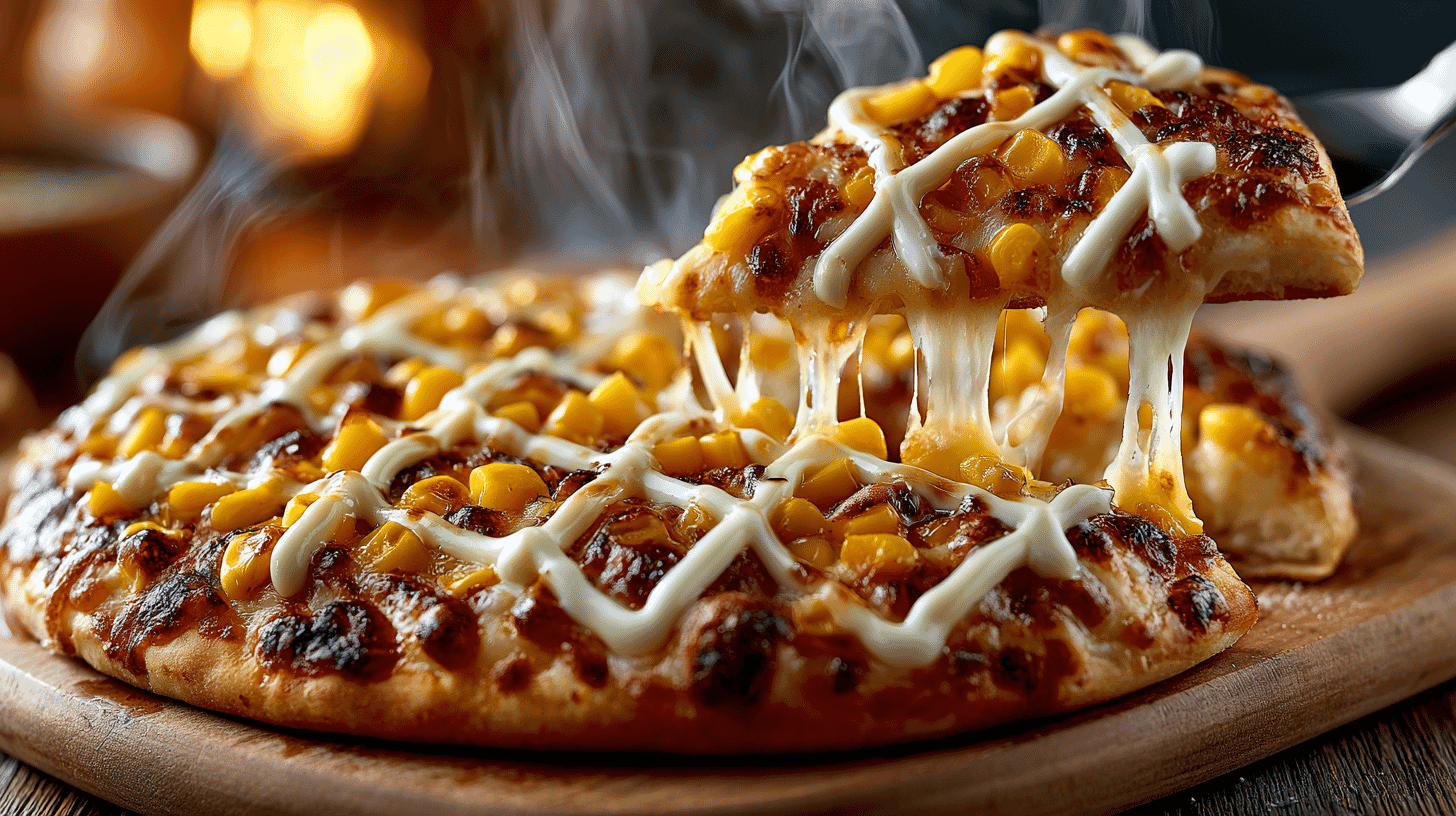
🌽 Forget pineapple. In Japan, the pizza topping that stops foreign visitors in their tracks is sweet corn buried under a zig-zag of mayonnaise. It shows up on pizza, on bread, in salads, in noodles, everywhere, and Japanese people barely notice it's there. To much of the rest of the world, it looks like a dare. So why does Japan put corn and mayo on everything, and why do so many skeptics end up loving it?
The topping that breaks the internet (gently)
If you grew up arguing about whether pineapple belongs on pizza, Japan would like to raise the stakes. Open a delivery menu in Tokyo and you'll find a children's-menu staple: a cheese base, a generous scatter of bright yellow sweet corn, and a thick lattice of creamy mayonnaise piped across the top before baking. There's even a potato-and-mayo cousin called mayo jaga that turns up at Domino's branches across the country.
Posts about this combination surface on Reddit and social media every few months, usually with the same baffled caption: why the sweet corn, and why the mayo on top of it? One food writer summed up the foreign reaction by joking that to an American palate, mayonnaise on hot pizza sounds almost illegal. And yet the punchline is nearly always the same: people try it, brace themselves, and quietly admit it works.
The corn-mayo combo isn't a novelty item or a gimmick aimed at tourists. It's wallpaper. It's so woven into everyday Japanese eating that locals are often surprised anyone finds it strange at all. That gap, between "this is completely normal" and "wait, you eat what?", is the whole story.
Why corn ended up everywhere in Japan
To understand the corn half of the equation, you have to go back to the north. Corn first reached Japan in 1579, when Portuguese traders brought flint corn to Nagasaki, and by the Edo period it was a staple in mountain districts where rice paddies were impossible. Large-scale cultivation began in the Meiji era, after Hokkaido's agricultural experiment station imported an American sweet corn, Golden Bantam, to help settle the country's cold northern island. Post-war varieties followed, Golden Cross Bantam and then the high-sugar Honey Bantam of the 1960s and 70s, and the crop's role shifted from feed and staple toward something people actually wanted to eat. Hokkaido sweet corn became famous for being almost fruit-like in its sugariness: the kind of corn you could eat raw off the cob.
That sweetness matters. In much of the West, corn tends to live in one of two lanes: a buttered cob at a summer barbecue, or a humble side dish. The idea of corn as a flavor accent, something you sprinkle over ramen, fold into a salad, bake into bread, or pile onto pizza, never really took hold the same way. In Japan, sweet corn slid comfortably into the role of a versatile, faintly dessert-like garnish, and it stuck. Today it turns up in instant noodles, convenience-store bread, snack foods, and dressings without anyone blinking.
The mayo is not the mayo you know
Here's where it gets interesting, because the bigger surprise for many visitors isn't the corn: it's the mayonnaise. Japanese mayo, dominated by the Kewpie brand with its squeeze bottle and baby logo, is a genuinely different product from the jarred white stuff most Westerners grow up with.
Three things set it apart. First, it's made with egg yolks only, roughly double the yolk concentration of standard American brands, instead of whole eggs, which gives it a richer, golden, custard-like body. Second, it uses rice vinegar (and often a blend of vinegars) rather than plain distilled white vinegar, which makes it tangier and a touch sweeter with a more rounded acidity. Third, the Japanese version contains a small amount of MSG, layering in a savory, umami depth that, as one taste comparison put it, the American-made Kewpie noticeably lacks. (The US version swaps the MSG for yeast extract and adds a little sugar, so even "the same" brand isn't quite the same on both sides of the Pacific.)
Add it up and you get a condiment that doesn't behave like Western mayo at all. It's thicker, sweeter, eggier, and far more savory: less of a neutral binder and more of an actual flavor in its own right. That's why in Japan it's not relegated to sandwich duty. It goes on okonomiyaki (savory pancakes), takoyaki (octopus balls), fried chicken, yakisoba, and yes, corn.
So why does it actually work?
Once you understand the ingredients, the logic clicks into place. The sweet, popping crunch of the corn plays against the rich, tangy, umami-heavy mayo, and the contrast of textures and the sweet-savory balance is exactly the kind of combination the human palate tends to find moreish. Baked on a pizza, the mayo browns and turns nutty; the corn caramelizes slightly. What looks chaotic on the menu turns out to be a pretty deliberate flavor equation.
Skeptics keep proving the point. The recurring arc in nearly every "I tried Japanese corn-mayo pizza" post runs from suspicion to surprise to a slightly sheepish verdict: it's better than it has any right to be. It's the same trajectory people describe with Kewpie generally: plenty of self-described mayo-haters say the Japanese version is the one that won them over.
None of this means it's for everyone: plenty of visitors take one look at the yellow-and-white pie and politely pass, and that's fair. But the "only in Japan" reputation says less about the food being strange and more about how two ordinary ingredients took a different path here. To most Japanese people, corn-mayo isn't exotic at all; it's the comfort-food flavor of childhood lunches and after-school slices. The surprise lives entirely in the gap between two food cultures.
So: in Japan, sweet corn and mayo on pizza is as unremarkable as pepperoni. Where you live, is corn-mayo a delicious idea, a culinary crime, or something you'd secretly love to try just once?






Global Discussion
4 comments