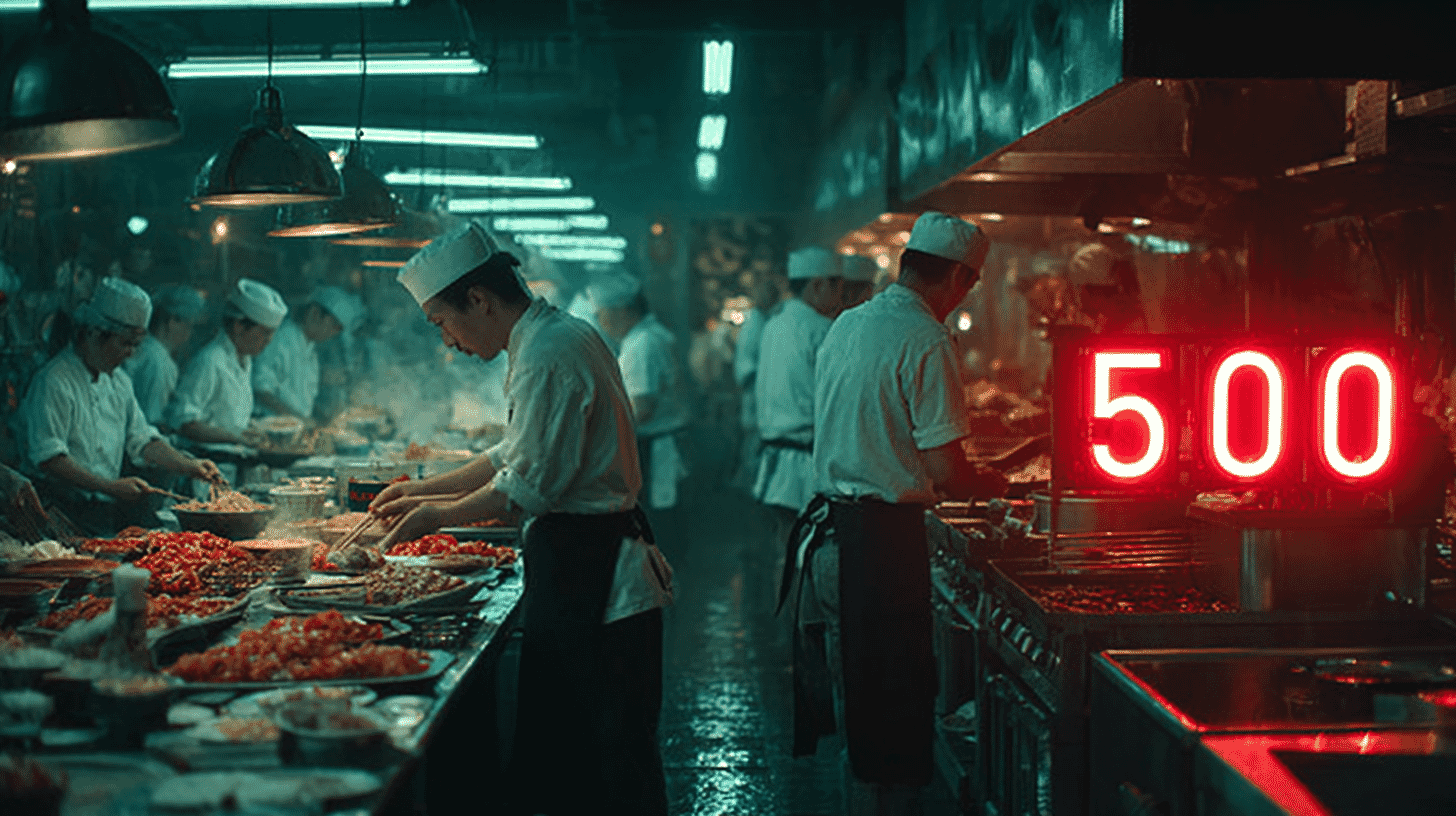
The foreign workers keeping Japan's restaurants running hit a wall. From April 13, 2026, Japan suspended new applications for its Specified Skilled Worker visa in the food service sector, because the cap of 50,000 was about to be breached. Restaurants are still desperate for staff. That gap is the story.
Japan's First Long-Term Visa Suspension in Food Service
On March 27, 2026, Japan's Ministry of Agriculture, Forestry and Fisheries (MAFF) and the Immigration Services Agency (ISA) published a notice on "the operation of the intake cap in the food service field": new applications for the Specified Skilled Worker (SSW) Type 1 visa in food service would be suspended in principle from April 13.
The SSW visa was created in 2019 to address critical labor shortages across designated industries. Workers must pass both a skills test and a Japanese language exam to qualify. Food service quickly became one of the most popular categories, offering a relatively accessible path into Japan's workforce for foreign nationals, especially from Southeast Asia.
But that popularity proved to be a double-edged sword. As of late February 2026, approximately 46,000 foreign workers held SSW Type 1 status in food service, rapidly approaching the cap of 50,000 that a January 2026 cabinet decision set for the five years from fiscal 2024 through fiscal 2028. Officials projected the limit would be breached by May, prompting the preemptive freeze. It is the first time in the program's seven years that a field has been shut under the intake-cap rule.
A 3.5x Surge in Just Two Years
The growth has been staggering. In December 2023, roughly 13,000 foreign workers held SSW Type 1 visas in food service. By February 2026, that number had ballooned to about 46,000, roughly 3.5 times larger in just over two years.
Several forces drove this explosion. Japan's post-COVID tourism boom saw inbound visitors reach 42.68 million in 2025, passing 40 million for the first time and fueling unprecedented demand at restaurants, izakaya pubs, and fast-food chains. At the same time, fewer young Japanese workers are willing to take on the long hours and relatively low pay typical of the food service industry, widening the labor gap.
Looking at the bigger picture, total SSW visa holders across all industries reached a record 390,296 by the end of 2025 (382,341 on Type 1 and 7,955 on Type 2), a sixth straight record. Vietnamese nationals are the largest group at 164,352, or 42.1%, though that share is shrinking as Indonesians and Myanmar nationals surge. Japan's overall foreign workforce hit 2,571,037 as of October 2025, passing 2.5 million for the first time since records began in 2008.
What Changes After April 13
The suspension carries real consequences for both employers and prospective workers.
For overseas applicants, the Certificate of Eligibility (COE), the essential document needed to enter Japan on a work visa, is no longer issued for food service SSW applications received after April 13. Candidates who have already completed interviews abroad and were waiting to enter Japan will find that door closed.
For foreign residents already in Japan, such as international students hoping to switch to SSW status after graduation, change-of-status applications will also be denied in principle. This disrupts hiring plans that many restaurant chains had already set in motion for the spring graduation season.
However, not everything stops. Foreign workers who already hold SSW Type 1 status in food service can still change employers, since they don't consume a new slot in the quota. Workers transitioning from specific technical intern training programs in welfare-facility meal preparation also qualify for limited exceptions.
Crucially, SSW Type 2, a more advanced visa for skilled workers, is not affected by the suspension. Type 2 has no cap on length of stay, permits family members to join, and effectively opens a path toward permanent residency. As of late 2025, 7,955 people held Type 2 status, a 2.6-fold increase in just six months.
The damage runs deeper than the visa queue, though. On MAFF's instruction, the food service SSW Type 1 skills test itself was suspended, in Japan and abroad. Candidates cannot even sit the exam, which effectively closes the route for anyone applying from overseas. The food manufacturing tests and the Type 2 tests are unaffected.
Is 50,000 the Right Number?
This is where the policy debate gets uncomfortable. MAFF has argued that SSW workers represent only about 1% of the total food service workforce and that "employers should improve working conditions and make stronger efforts to hire Japanese workers."
But that framing clashes with reality on the ground. A representative from a major restaurant chain told media they were "stunned by the sudden decision," and many operators say they literally cannot open their doors without foreign staff.
There's also a geographic mismatch. SSW workers are heavily concentrated in urban areas, with Tokyo, Osaka, and Aichi Prefecture at the top, while rural restaurants continue to face severe staffing shortages. A nationwide cap that stops all new entries, regardless of regional need, arguably punishes the areas that need help most.
One restaurant owner put it bluntly: "We can't operate without foreign staff. We'd love to hire Japanese workers, but nobody applies."
How South Korea and Singapore Handle It
Japan is hardly alone in wrestling with foreign labor in the service sector, but other Asian economies take notably different approaches.
South Korea runs the Employment Permit System (EPS), introduced in 2004. Under EPS, the government sets annual quotas by country and sector. The E-9 visa covers manufacturing, construction, agriculture, fisheries, and services. Korea's 2026 quota was set at 80,000 new E-9 visas, down from 130,000 in 2025 and 165,000 in 2024, as post-pandemic labor demand normalized. Notably, South Korea expanded E-9 eligibility in 2025 to include restaurant serving duties, acknowledging the same food-service labor crunch that Japan is experiencing.
Singapore uses a two-pronged approach: the Dependency Ratio Ceiling (DRC) limits the proportion of foreign workers any single company can employ, while the Foreign Worker Levy (FWL) imposes monthly fees of roughly $220–$700 per worker on employers. For service-sector businesses, foreign workers cannot exceed 35% of the total workforce. Starting in 2026, levy rates were increased further for construction and marine sectors. Singapore's key difference from Japan is that limits are set at the company level, not as a national total. Businesses with genuine staffing needs can continue hiring, while companies overly reliant on foreign labor face escalating costs.
Japan's sector-wide national cap is unique among these models, and it is precisely what led to the current situation: the quota filling up before workers could reach the places that need them most.
What's Left for Workers Eyeing Japan
For anyone planning to work in Japan's restaurant industry, the suspension is a significant setback, but not the end of the road.
The food manufacturing sector (factory-based food production) continues to accept SSW applications. Hospitality, nursing care, agriculture, and other sectors also have available slots. The January 23, 2026 cabinet decision reset the SSW Type 1 intake figure at 805,700 across all 19 fields for the five years to the end of fiscal 2028. Add the 426,200 for the Employment for Skill Development program starting in April 2027 and the combined ceiling reaches 1,231,900. There are still slots outside food service.
MAFF has given no timeline for resumption. Unless a cabinet decision raises the intake figure itself, the suspension stays, and when that debate happens is anyone's guess.
For those already working in Japan, the path to SSW Type 2 offers real stability: no time limit on stay, the right to bring family, and a stepping stone to permanent residency. The skills test for Type 2 in food service continues to be administered.
Can Japan Become a Country Workers Choose?
Japan's working-age population has been shrinking for decades, and industries from restaurants to construction to healthcare cannot function without foreign workers. Yet the systems for integrating those workers, improving their conditions, and offering them genuine futures lag far behind the demand. The suspension makes both facts visible at once.
The competition for Asian labor is intensifying. South Korea, Taiwan, Singapore, and Gulf states are all courting the same pool of workers, and the weak yen has eroded the appeal of earning in Japan and sending money home.
What this forces on the food service industry is a shift from volume to quality. Companies that invest in better wages, career development, and genuine support for foreign employees will attract and keep people. Those that don't will find their options narrowing.
Japan just hit the ceiling on foreign restaurant workers, but in your country, how does the food service industry deal with labor shortages? Are there caps on foreign workers? We'd love to hear how your country handles this challenge, share your thoughts below!






Global Discussion
14 comments