Angola paid about ¥17 million to a Japanese subcontractor it never owed. Osaka's Expo hosts say they have no legal basis to pay. Behind the gap: a law that stops at wages and a relief bill that lapsed.
Kawasaki's four-legged Home LEO prototype is meant to live with older people and notice falls, not do chores. What it says about Japan's stalled care workforce of 2.126 million, and what is still missing.
Japan halted new foreign hires for restaurants on April 13, 2026, near a 50,000 cap. Job changes stay legal, and one placement firm found 46.4% of July hires moving into big-city prefectures, up from 31.9% in March.
Japan culled 1,381,700 deer and wild boar in fiscal 2024, and 5.6 percent of that mass became meat. The rest goes to a hole in the ground or an incinerator, and the capacity is not there. Scotland does it differently.
KADOKAWA is merging five anime studios, ENGI among them, into Studio One Base in November 2026. What the deal changes for overseas viewers, and what it does not.
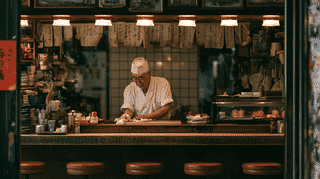
Sushi shop bankruptcies in Japan rose 45.5% in the first half of 2026, yet only 18.8% were losing money, the lowest in Teikoku Databank's 20 years. They are not failing. They close because nobody takes over.
Washing a jet at Narita still takes eight people and six hours of night work. JAL is bringing in the AW3, a Swedish robot, in service by the end of 2026. Japan once had a car wash for jumbo jets; now it buys.
Japan's anime studios billed a record $2.56 billion in 2025, clearing 400 billion yen for the first time. Teikoku Databank says 2026 could bring the first decline since 2021, in a year when 34.6% already ran a loss.
Japan saw a record 36 ramen shop bankruptcies in the first half of 2026. While the world pays $18 a bowl, shops in ramen's homeland collapse against a cultural price ceiling of 1,000 yen (about $6). Here is the structural squeeze behind the paradox.
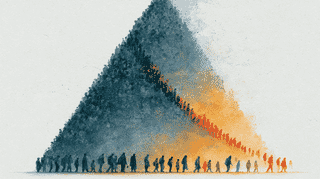
Japan's 2026 population estimate shows foreign residents up 9.64% to 3.73 million while the total falls. How Japan is quietly becoming an immigration society, compared with Germany and Canada.
Ibaraki has become the first prefecture in Japan to pay residents a cash reward for reporting illegal foreign employment. Inside the design, the governor's defense, the backlash from lawyers, and the farming-economy contradiction underneath it all.
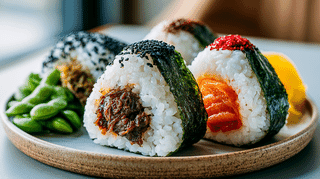
Japanese izakaya group Watami has acquired a 51% stake in Onigilly, a San Francisco onigiri chain, a bet on America's rice-ball boom. But the buyer is also a company long known in Japan as a symbol of 'black company' overwork culture. We unpack the deal, why onigiri became a healthy, photogenic US lunch, and who Watami really is.
JAL launches Japan's first humanoid robot trial at Haneda Airport in May 2026. Chinese-made Unitree G1 and UBTECH Walker E will handle cargo loading and cabin cleaning, Japan's bipedal answer to its aging workforce and aviation labor crisis.
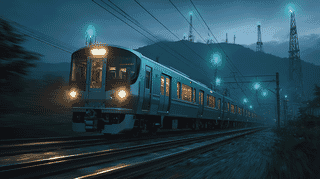
JR Kyushu's new RK System will control trains over public cellular networks starting 2028—a Japan-first approach. How it compares to Europe's ERTMS and America's PTC, and what it means for aging societies everywhere.
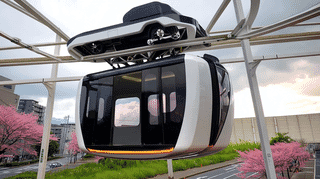
Zippar, a self-propelled urban ropeway developed by Fukushima-based startup Zip Infrastructure, can run every 12 seconds and navigate curves. At 1/20 the cost of subway and 1/5 of monorail construction, it could rescue Japanese cities facing a bus driver shortage.
Japan's government has approved a plan to make standard childbirth costs free by 2026. But the Japan Association of Obstetricians warns of a looming collapse in maternity care, delivery facilities have halved since 1996, and rural 'maternity deserts' are spreading. How does Japan's birth system compare to France and Sweden?
Japan's resignation agency industry is booming — 94% of new graduates know about these services, and 25% would consider using one. Explore why Japanese workers pay someone else to quit for them, and what it reveals about workplace culture, generational shifts, and the collapse of lifetime employment.
Japanese robotics startup Jinki Ittai unveils its Bilateral Arm — a collaborative robot that transmits force feedback to operators — at Japan IT Week 2026. Also on display: a transformable humanoid heavy machine designed by Macross anime creator Shoji Kawamori. Partnering with Advantech (42.5% global IPC share), the company pursues a distinctly Japanese approach to robotics: human-operated force control rather than full autonomy, setting it apart from Boston Dynamics and Tesla Optimus.
SmartHR, Japan's leading cloud HR platform, had targeted a Tokyo Stock Exchange listing at a ¥160B (about $1B) valuation. In July 2026 Bloomberg reported the IPO was pushed to 2027 at the earliest after investors balked at the price. We look at the ARR trajectory to ¥30B, the General Atlantic and KKR backing, and what the delay says about how AI is repricing SaaS.
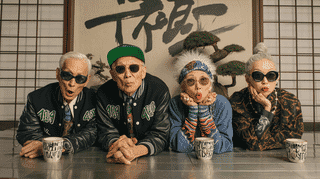
A takeout tea cafe staffed by seniors averaging 73 years old has opened in Tokyo's Shibuya. 'G-CHA & Ba-CHA' reimagines how the elderly can stay active and connected — with creative tea drinks, seated service, and flexible work rules. A heartwarming look at Japan's approach to aging.