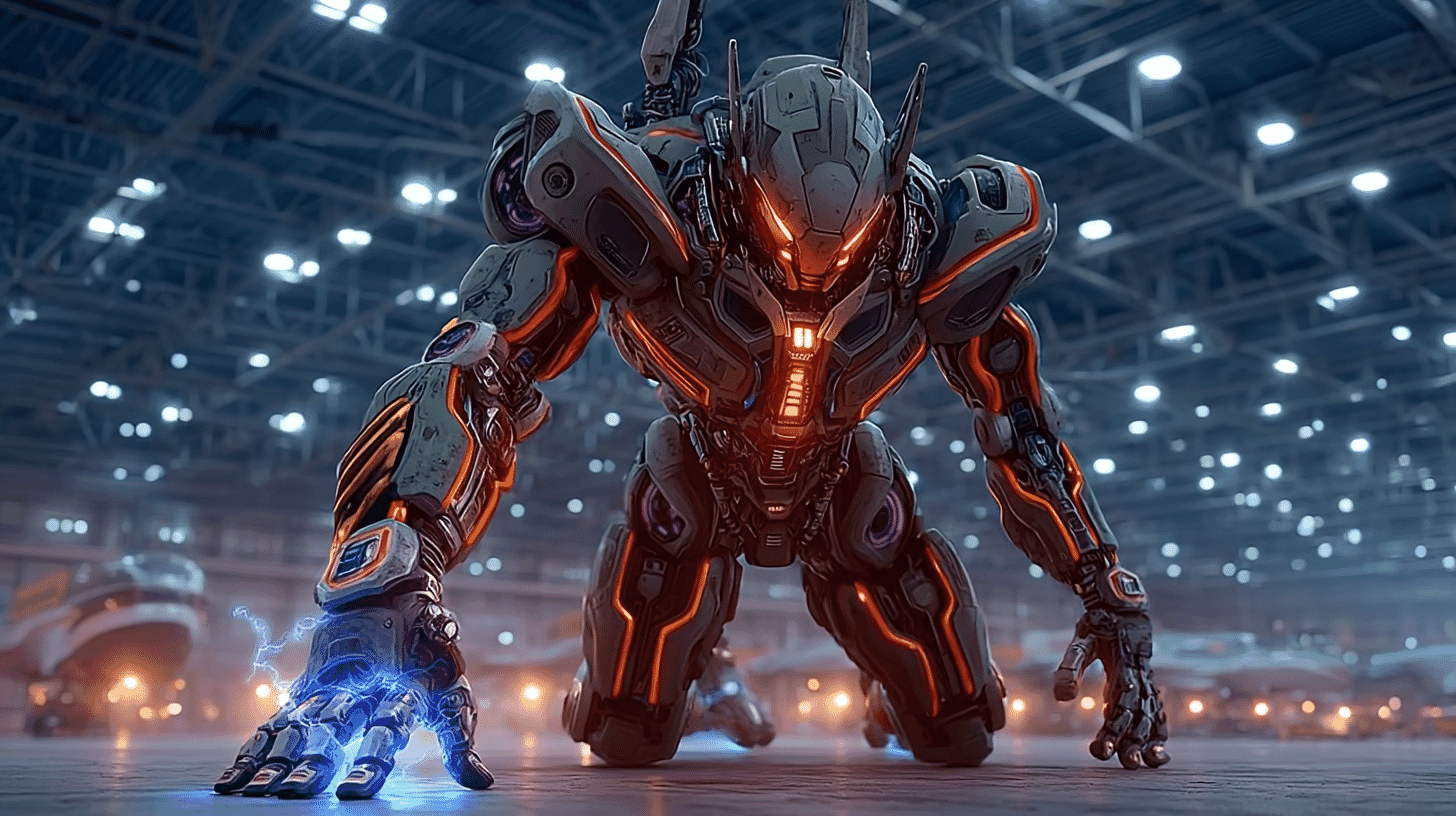
At Japan IT Week 2026, running April 8–10 at Tokyo Big Sight, a robotics startup called Jinki Ittai (meaning "human-machine unity") will publicly debut a new collaborative robot called the Jinki Bilateral Arm. Based in Kusatsu, Shiga Prefecture, the company has spent years developing robots designed to free humans from dangerous and grueling physical labor.
The Bilateral Arm's signature feature is something called bilateral control. Most remotely operated robots work in one direction, the operator sends commands, and the robot moves accordingly. But with bilateral control, force information flows both ways. When the robot arm grips a heavy object, the operator feels the weight and resistance in their own hands. When it touches something fragile, the operator senses that delicacy through the control interface.
The system uses two collaborative robots in tandem: one as the "worker" (the robot doing the task) and one as the "operator" (the device the human moves). Torque sensors on each joint detect force data and relay it in both directions, allowing the operator to manipulate the robot as naturally as extending their own body.
What Makes Bilateral Control Special
At the heart of Jinki Ittai's technology is what they call Power-Amplifying Bilateral Control. A human applies a small amount of force to the operator arm, and that force is amplified many times over on the worker arm side. Yet the system still transmits subtle resistance and tactile feedback to the operator in real time.
The key innovation is their proprietary control algorithm called Proxy-Based Admittance Control (PABC). High-output electric actuators, the motors that move robot arms, have traditionally struggled with fine-tuned force adjustment. PABC solves this problem, enabling seamless control ranging from massive lifting power to a gentle touch. In the company's demonstrations, its machines have handled 40 kg (88-pound) loads while staying safe enough to high-five a human hand.
Dr. Kanaoka, the company's CEO, describes their mission as eliminating "physical drudgery" from the world. Rather than replacing human workers with autonomous machines, Jinki Ittai aims to amplify human capability, turning workers into something like real-life mech pilots.
Fast-Track to the Factory Floor
One of the Bilateral Arm's most strategic aspects is its business model. Until now, Jinki Ittai built fully custom prototype machines like the Reishiki Jinki series. These Proof of Concept (PoC) robots demonstrated incredible capability but required extensive development time.
The Bilateral Arm takes a different approach: implementing Jinki Ittai's proprietary force control software onto off-the-shelf collaborative robots. The debut unit pairs two collaborative robots from Korea's Doosan Robotics with Jinki Ittai's system. Beyond torque sensors on every joint, no special hardware is involved. Leveraging existing hardware cuts the time and cost of getting into real-world settings.
The company also plans to offer the system as RaaS (Robotics as a Service), a subscription model that lowers the barrier for small and mid-sized manufacturers. Target applications include cramped factory spaces where conventional industrial robots can't fit, high-mix low-volume production lines that resist full automation, high-temperature handling operations, and cleanroom tasks requiring lengthy entry preparation.
Partnering with the World's #1 Industrial PC Maker
The debut takes place inside the booth of Advantech, a Taiwanese company that commands 42.5% of the global industrial PC market.
The two companies have begun discussions on collaboration in control, and both describe this exhibition as a first step toward a broader business and technology partnership. By combining Advantech's edge computing hardware and AI capabilities with Jinki Ittai's force control robotics, the partnership aims to enable more sophisticated real-time robot control in factories and construction sites, with no cloud latency to slow things down.
The Macross Director's First Real Robot
Beyond the Bilateral Arm's live demonstration, Japan IT Week will also feature a static display of something truly eye-catching: the Ichireishiki Jinki (Model 10 Jinki) ver.1.0, a humanoid heavy machine.
Its designer? Shoji Kawamori, the legendary anime director behind Super Dimension Fortress Macross, Aquarion, and dozens of other mecha franchises. Kawamori has spent over four decades designing transforming robots for science fiction, but this marks his first time designing a real, functioning machine. He has said designing actual machines was what he originally wanted to do, calling this project the fulfillment of a 40-year dream.
The Ichireishiki Jinki's standout feature is its variable configuration: it can switch between a humanoid mode (two arms, two legs) and a four-arm mode, where the legs transform into additional working arms. This is pure Kawamori, the same kind of elegant transformation he pioneered in the Valkyrie fighters of Macross, now applied to a real-world industrial machine.
The design project is a three-way collaboration: product designer Kota Nezu of znug design (known for the companion robot LOVOT) directs, Kawamori's design is incorporated, and Jinki Ittai's mechanical engineer Masaya Nomura translates the concepts into working mechanisms.
Japan's "Third Way" in the Global Humanoid Race
The global humanoid robot field is currently dominated by two philosophies. First, the full autonomy approach championed by companies like Boston Dynamics, where AI makes decisions and the robot operates independently. Second, the AI-driven worker model pursued by Tesla's Optimus, China's AGIBOT, and Unitree, humanoids designed to eventually perform factory and household tasks with minimal human input.
Jinki Ittai represents a distinctly different path: human-operated force-controlled robots. Dr. Kanaoka has stated clearly that current AI technology cannot fully replicate the judgments humans make during complex physical tasks. The human remains the decision-maker and operator; the robot serves as a powerful extension of the human body. AI plays a supporting role rather than taking the lead.
This philosophy reflects a deeply Japanese concept, "jinki ittai" (人機一体), literally the unity of human and machine. Rather than waiting for fully autonomous robots that may be years or decades away, this approach delivers practical solutions today by combining human intuition with robotic strength.
The strategy is already proving itself. Jinki Ittai's Reishiki Jinki ver.2.0 has been commercialized as a Multi-Function Railway Heavy Machine, productized by Japan Signal and in active service on JR West's rail lines, performing nighttime maintenance on overhead electrical equipment that previously required crews to work in dangerous conditions. Kanaoka traces the company's origins to the Fukushima nuclear accident after the 2011 earthquake, and the conviction that robots should have made it unnecessary for people to go in at all.
Exhibition Details
The Bilateral Arm live demo and Ichireishiki Jinki static display will be at the Advantech booth at the Embedded/Edge/IoT Development EXPO within Japan IT Week 2026 Spring, held at Tokyo Big Sight from April 8 to 10, 2026.
The company followed up at SusHi Tech Tokyo 2026 from April 27 to 29, debuting a dual-arm version of the Bilateral Arm and opening recruitment for test users at real work sites.
Japan is a global powerhouse in industrial robotics, yet some argue it has fallen behind the US and China in the humanoid race. Jinki Ittai's approach offers a counterargument: maybe the future isn't robots replacing human judgment but amplifying it. In your country, should robots operate on their own, or should humans always be in the loop? We'd love to hear your perspective.







Global Discussion
15 comments