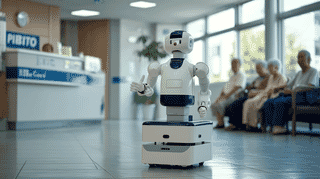
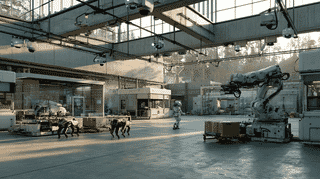
Kawasaki's four-legged Home LEO prototype is meant to live with older people and notice falls, not do chores. What it says about Japan's stalled care workforce of 2.126 million, and what is still missing.
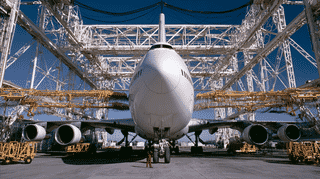
Washing a jet at Narita still takes eight people and six hours of night work. JAL is bringing in the AW3, a Swedish robot, in service by the end of 2026. Japan once had a car wash for jumbo jets; now it buys.
ZEALS opened orders for D1, a 129.3 cm Japanese humanoid, from 5 million yen (about $32,000). Why the company calls it semi-domestic rather than fully Japanese, and why 100 units and 10,000 hours is a modest goal.
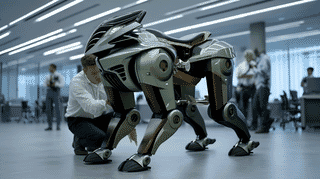
At a July 28, 2026 briefing, Kawasaki said its four-legged CORLEO has no steering or brakes planned. Force sensors in the stirrups become the controls, NVIDIA physics engines build a virtual off-road course, and the rider becomes part of the machine.
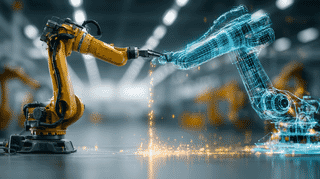
FANUC, Yaskawa and Kawasaki are teaming up with Fujitsu and NVIDIA to bring Physical AI to factories, warehouses and hospitals. What each firm is really after, how they plan to bridge simulation and real machines, and whether Japan can keep its lead against US and Chinese humanoid makers.
Kushiro Airport in Hokkaido is the first in Japan to fully deploy WOLF-GUARD, a self-driving version of the famous Monster Wolf robot. In trials, the Monster Wolf cut small-animal intrusions by about 60 percent. Here's how the red-eyed, howling patroller works, and how it compares with the falcons, border collies and radar used at airports abroad.
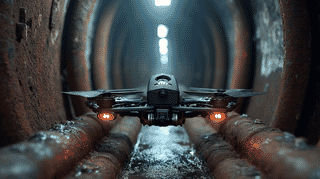
Japan's Rangle Pro hovers hands-free in pipes and sewers where GPS dies. A racing team turned its autonomous-control tech into an inspection drone taking on DJI.
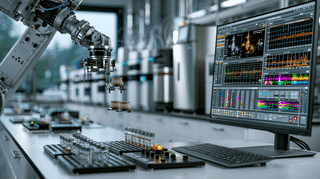
Toyota, Shinshu University and 11 partners are building a self-driving lab where robots run experiments and AI picks what to try next. Here is how Japan's closed-loop materials push compares with Berkeley's A-Lab and China's robot chemist.
Waseda University and NTU Singapore gave a live cockroach a tiny diving suit that lets it work underwater for up to three hours. A genuine rescue breakthrough wrapped in the least reassuring messenger imaginable.
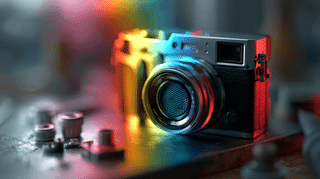
Photo blur is usually a mistake to avoid. But a University of Osaka team uses the shape of that blur to read how far away objects are, recovering depth from a single camera with help from a physics-guided AI. Errors stay within about a centimeter at four meters, with uses in robotics and inspection.
A Hirosaki University team made a hydrogel that is 70% water yet bounces like a superball. Swapping one end group from methoxy to hydroxyl raised its stiffness about twentyfold, pointing toward artificial cartilage and underwater cushioning.
Sony is ending Japan sales of its aibo robot dog (ERS-1000), then said it isn't quitting and teased a next-gen model. Here is the panic, the history of AIBO funerals, and Sony's physical-AI plan.
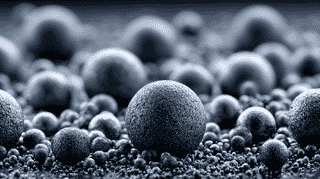
Sinfonia Technology, better known for semiconductor robots, has paired a cold crucible melting furnace with a disk atomizer to make highly spherical powder from high-melting metals like titanium and molybdenum. A look at the unglamorous powder that feeds metal 3D printing, and Japan's stake in it.
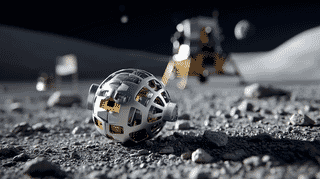
New image analysis confirms Japan's 228-gram transformable robot SORA-Q (LEV-2) moved about 0.13m and turned 180 degrees on the Moon entirely on its own, earning a Science Robotics cover. Built with help from a toy maker, the palm-sized machine opens a new path for small-scale exploration aimed at caves, steep slopes and, eventually, Mars.
JAMSTEC's D-ARK project filmed the first bioluminescence ever recorded inside a deep-sea cave: a glowing new zoanthid, Corallizoanthus aureus, at 385 meters off Okinawa's Daito Islands. A look at the strange ecosystem hiding in unexplored submarine karst.
Tohoku University spinoff Space Quarters has demonstrated its DAIQ orbital assembly robot system on a ground model, showing three kinds of small robots cooperating to pick, place, and weld building panels into a larger structure. We look at how it compares to NASA's cancelled OSAM-1 and DARPA's NOM4D, and what makes Japan's robotics approach distinct.
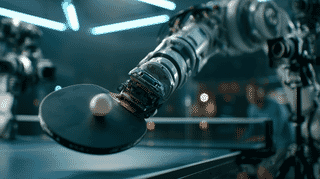
Sony AI's autonomous robot Ace beat elite table tennis players and made the cover of Nature. From its Gran Turismo Sophy roots to the fast-ball wall that stumped DeepMind and a 20.2-millisecond reaction loop, here's how Sony's robot reached elite-competitive level in a real, physical sport.
Kawasaki Heavy Industries, maker of jets, bullet trains and motorcycles, has opened a physical AI development hub in Silicon Valley, teaming up with NVIDIA, Analog Devices, Microsoft and Fujitsu. We unpack why a 130-year-old industrial giant is betting on AI that acts in the real world, and where Japan stands in the US-China robotics race.
Fujitsu's new Kozuchi Physical OS isn't trying to build a smarter robot brain. It's trying to make the whole physical space intelligent. Here's how its edge-plus-sovereign-cloud design differs from NVIDIA Cosmos and Google DeepMind's Gemini Robotics — and how it fits into Japan's $126B Physical AI ambition.
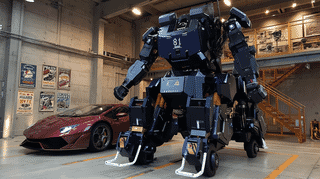
Tsubame Industries' Archax is a 4.5-meter, 3.5-ton piloted robot that transforms between robot and vehicle modes, priced at 400 million yen. What that buys, the CTO who engineered Yokohama's moving life-size Gundam, the Shoji Kawamori special edition, and how Unitree's $650,000 GD01 changed the competitive picture in May 2026.