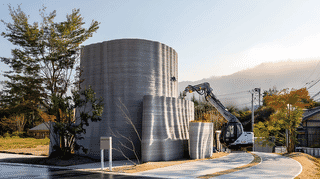
Japan's first two-story 3D-printed house "Stealth House" has been completed in Miyagi Prefecture, built by startups KIZUKI and ONOCOM with 20+ collaborating companies. As Japan's construction industry faces a severe labor shortage with 200,000+ fewer workers since 1997, multiple firms including Serendix and Lib Work are accelerating 3D concrete printing technology. We compare with U.S. giant ICON, explore Japan's strict building code compliance, and examine cost advantages.
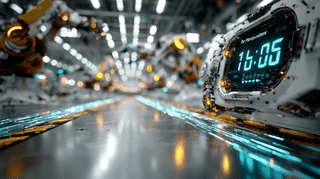
Murata Manufacturing, SoftBank, and CC-Link Partner Association achieved the world's first TSN over 5G connectivity demonstration by a telecom operator, reaching an average time synchronization accuracy of 122 nanoseconds, over 7x better than the international standard requires. A major step toward wireless smart factories and Physical AI.
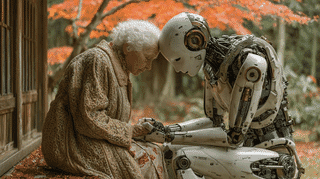
AGIBOT, the world's top humanoid robot shipper from China, has established a Japanese subsidiary for full-scale market entry. Having shipped over 5,100 units globally in 2025 with 39% market share, the company claims the humanoid market will surpass the auto industry. We examine how Japan — an industrial robotics powerhouse — now trails China and the US in humanoid development, and explore adoption potential in Japan's labor-starved manufacturing and elderly care sectors.
The "joints" (actuators) that humanoid robots need over 50 of per unit are the key to industry dominance. These critical components account for up to 60% of manufacturing costs, and two Japanese companies, Harmonic Drive Systems and Nabtesco, dominate the high-precision reducer market, each leading its own reducer type. As the market grows at 80% annually and mega-corporations from the US, China, and Korea enter the race, can Japan defend its "joint hegemony"?
No batteries. Just 280 grams of rubber. A Japanese bone-setter turned entrepreneur created "futto," a walking support device using rubber tubes as artificial muscles. Built with hardware store materials by a three-person family company, it now has peer-reviewed backing, a distribution deal with France Bed, and sales abroad. Here's how this $220 device answers a problem every aging society shares.
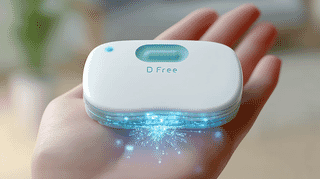
Japan-born IoT wearable "DFree" uses ultrasound to predict urination timing and has won the Grand Prize for Developmental Support Tools at BabyTech Awards 2025-26. How the 20-gram device works, why the judges picked it, how it came to be covered by Japan's long-term care insurance, and what it means for elderly care and children with disabilities.
Osaka-based Satosen's liquid metal stretchable circuit board has been officially adopted by ATR-Promotions for biosignal measurement electrodes. With self-healing wiring that withstands over 250,000 stretch cycles, this technology opens doors for wearable devices, flexible displays, and soft robotics.
AVITA, led by world-renowned roboticist Hiroshi Ishiguro, has acquired all shares of android robot developer A-Lab, marking a full-scale entry into Physical AI. With A-Lab's track record including androids for Expo 2025, AVITA aims to evolve from CG avatars to physical robots. As the U.S. and China lead the humanoid market, this move signals Japan's push to reclaim its robotics legacy.
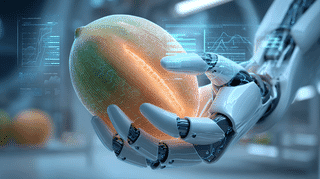
Shibaura Institute of Technology's "InSIGHT Grip" is a non-destructive inspection technology that estimates internal quality simply by gripping objects with a robot hand. With a low-cost, sensor-free design, it promises applications from fruit sorting in agriculture to industrial deterioration detection.
Kawasaki Heavy Industries is developing CORLEO, a four-legged personal mobility vehicle powered by hydrogen. After achieving 1.2 billion social media impressions at Osaka Expo 2025, the company targets deployment at Riyadh Expo 2030 and commercial sales by 2035. Discover the futuristic robot horse and global reactions.
At CES 2026 Bosch demonstrated sensors that give robots a delicate sense of touch, combining its BMP585 pressure sensor with an inertial measurement unit so that even the brush of a feather is detected. A look at the frontier of humanoid touch and a MEMS sensor market projected to reach 19.2 billion dollars by 2030.
Hitachi's Physical AI strategy targets a roughly $125 billion market by 2030. Learn how Japan's manufacturing giant is using AI to preserve skilled workers' tacit knowledge and address labor shortages in social infrastructure.
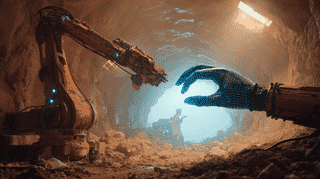
Exploring the automated explosive loading system developed by Obayashi Corporation and Keio University using Real Haptics technology. A task that once required 5 workers in dangerous conditions can now be performed remotely by 1 operator from 50 meters away. This revolutionary haptic feedback technology dramatically improves safety and efficiency at construction sites.
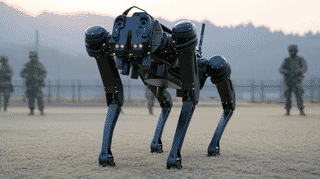
In January 2026, quadruped robot dogs made their debut at Japan's annual parachute training exercise, capturing public attention. Explore the capabilities of the Ghost Robotics Vision 60, its disaster relief applications during the Noto earthquake, and how Japan's Self-Defense Forces are modernizing amid personnel shortages. How does your country view military robotics?
Japanese VR startup Diver-X has acquired the business license for the force feedback device EXOS. Combined with its ContactGlove haptics, the aim reaches beyond VR and the metaverse into robot teleoperation and Physical AI. A look at the frontier of Japanese haptics.
ATR, Kyoto University, and AIST have shown a humanoid robot slaloming on a skateboard. How its Cyborg AI works, why the task maps onto disaster response and construction sites, and where the project sits against US and Chinese rivals.