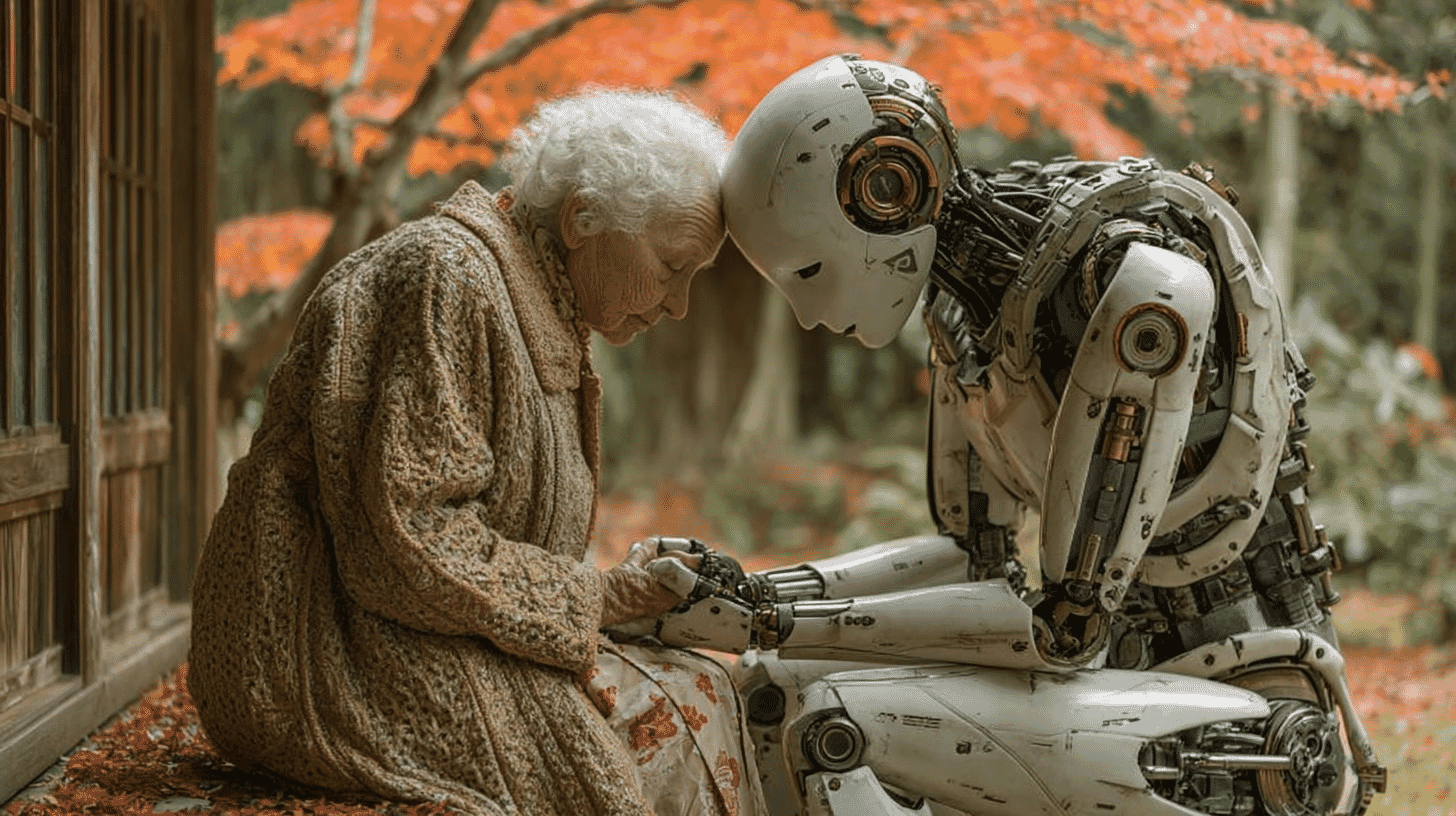
Japan once led the world in humanoid robotics, but today Tesla's Optimus, Figure AI, and China's Unitree dominate the headlines, and Japan's "Robot Kingdom" reputation has begun to fade. Now AVITA, led by world-famous roboticist Hiroshi Ishiguro, has made a bold move: acquiring A-Lab, a pioneer in lifelike android development, to enter the emerging frontier of "Physical AI." From digital avatars to real-world robots, is Japan staging a comeback?
AVITA Acquires Full Ownership of A-Lab
On February 13, 2026, AVITA Inc. announced the acquisition of all shares in A-Lab Inc., a company specializing in the development of android robots.
AVITA is a startup founded in 2021 by Hiroshi Ishiguro, an Osaka University professor and one of the world's most celebrated roboticists, named among the "100 Living Geniuses" in 2007. The company has been developing CG avatar-based solutions, including the remote customer service platform "AVACOM" and role-playing training service "Avatre," partnering with major Japanese corporations like CyberAgent and SMBC Group.
A-Lab, established in 2011, has been Japan's go-to company for creating hyper-realistic android robots. Working closely with Professor Ishiguro's research, A-Lab has produced androids of celebrities and public figures, and most notably created the android robots displayed at the Signature Pavilion "Future of Life" at the 2025 Osaka-Kansai World Expo. Headquartered in Tokyo's Chiyoda ward, the company runs a development center at the Nokodai Tama-Koganei Venture Port incubation facility in Koganei, western Tokyo.
With this acquisition, AVITA is expanding from CG avatars into humanoid robots and Physical AI. According to the press release, collaborations with major domestic companies and globally leading humanoid developers have already been confirmed.
What Is Physical AI?
"Physical AI" refers to artificial intelligence that acts in the real, physical world, not just on screens. While ChatGPT writes text and answers questions digitally, Physical AI operates through robot "bodies" that can grasp objects, interact face-to-face with people, and perform tasks in factories and public spaces.
The term gained mainstream attention when NVIDIA CEO Jensen Huang called it "the next big wave" during his CES 2025 keynote. The overall AI market is projected to reach approximately $827 billion by 2030, but the humanoid robot segment is expected to see even more dramatic growth, from roughly $7.8 billion in 2025 to $181.9 billion by 2035.
AVITA's vision, "Virtualize the Real World", sits squarely in this trend. By combining the AI conversation technology refined through CG avatars with A-Lab's robotics expertise, the company aims to create services that bridge the gap between digital and physical interactions.
Japan's Humanoid Legacy: Glory and Growing Pains
Humanoid robotics started in Japan. Waseda University's "WABOT-1" in 1973 was the world's first full-scale humanoid, and Honda's ASIMO later became a global icon for bipedal walking technology. SoftBank's Pepper succeeded commercially as an emotion-sensing communication robot, and Professor Ishiguro himself gained worldwide attention with his "Geminoid", an android replica of himself, and the autonomous conversational android "ERICA."
But the landscape has shifted dramatically. At CES 2025, when NVIDIA's CEO appeared on stage with 14 humanoid robots from around the world, not a single one was Japanese. In the U.S., Tesla's Optimus and Figure AI's Figure 02 are already running factory trials. In China, Unitree is selling humanoids for as little as $16,000, and over 150 Chinese companies have entered humanoid development, some backed by massive state funding.
Japan's Ministry of Economy, Trade and Industry (METI) has taken notice, launching an "AI Robotics Study Group" in October 2025 to map out the humanoid supply chain and develop a national roadmap. While Japan commands roughly 45% of the global industrial robot market, it has fallen behind the U.S. and China in the humanoid sector, particularly in AI foundation models and venture funding.
Japan Fights Back: From KyoHA to AVITA
The Kyoto Humanoid Association (KyoHA), formed in August 2025, was founded by Murata Manufacturing, Waseda University, Tmsuk, and SRE Holdings, with later participants including the Okinawa Institute of Science and Technology (OIST), Mabuchi Motor, KYB, and NOK. The consortium aims to complete a prototype by 2026 and achieve commercialization by 2029.
Kawasaki Heavy Industries continues developing its disaster-response humanoid "Kaleido" alongside the slim-profile "Friends" and quadruped robot "Bex." Sony has unveiled ultra-lightweight actuators for humanoid arms, and Fujitsu announced "Kozuchi Physical AI 1.0" in partnership with NVIDIA.
AVITA's acquisition of A-Lab occupies a unique position in this resurgence. While other players focus on industrial applications, AVITA brings Professor Ishiguro's decades of expertise in human-like communication androids, a distinct competitive advantage in hospitality, customer service, entertainment, and social interaction.
What Comes Next: AVITA Physical AI NIGHT 2026
AVITA held "AVITA Physical AI NIGHT 2026" on March 26, 2026, an evening built around a talk by CEO Ishiguro on where humanoid and Physical AI development stands and where the company is taking it.
Update: Concrete partnerships followed quickly after the acquisition. On February 19, 2026, AVITA joined Inoki Genki Factory and SMBC Value Creation to launch the "Android Inoki Project," with the humanoid due to be unveiled about a year later. The next day, AVITA began working with China's Booster Robotics on humanoids running Physical AI. (Added August 2026)
The humanoid robot market could reach $4.7 trillion by 2050, according to Morgan Stanley. Japan retains real strengths in precision components and manufacturing know-how from its industrial robotics base, but has lagged in AI model development and startup funding. Whether companies like AVITA, combining academic expertise with startup agility, can close that gap remains the key question.
Japan faces a demographic crisis: its working-age population is shrinking, and by 2030, the manufacturing sector alone could face a shortage of approximately one million workers. Humanoid robots are no longer just a technology story, they're becoming central to Japan's economic survival strategy.
In your country, how far along is humanoid robot development? Do you think robots will become part of your everyday life or workplace?
References
- https://prtimes.jp/main/html/rd/p/000000076.000085375.html
- https://avita.co.jp/
- https://www.a-lab-japan.co.jp/
- https://www.mri.co.jp/knowledge/column/20250609.html
- https://www.deloitte.com/jp/ja/services/consulting/perspectives/humanoid-robot-market.html
- https://www.meti.go.jp/shingikai/mono_info_service/ai_robotics/pdf/20251008_2.pdf







Global Discussion
15 comments