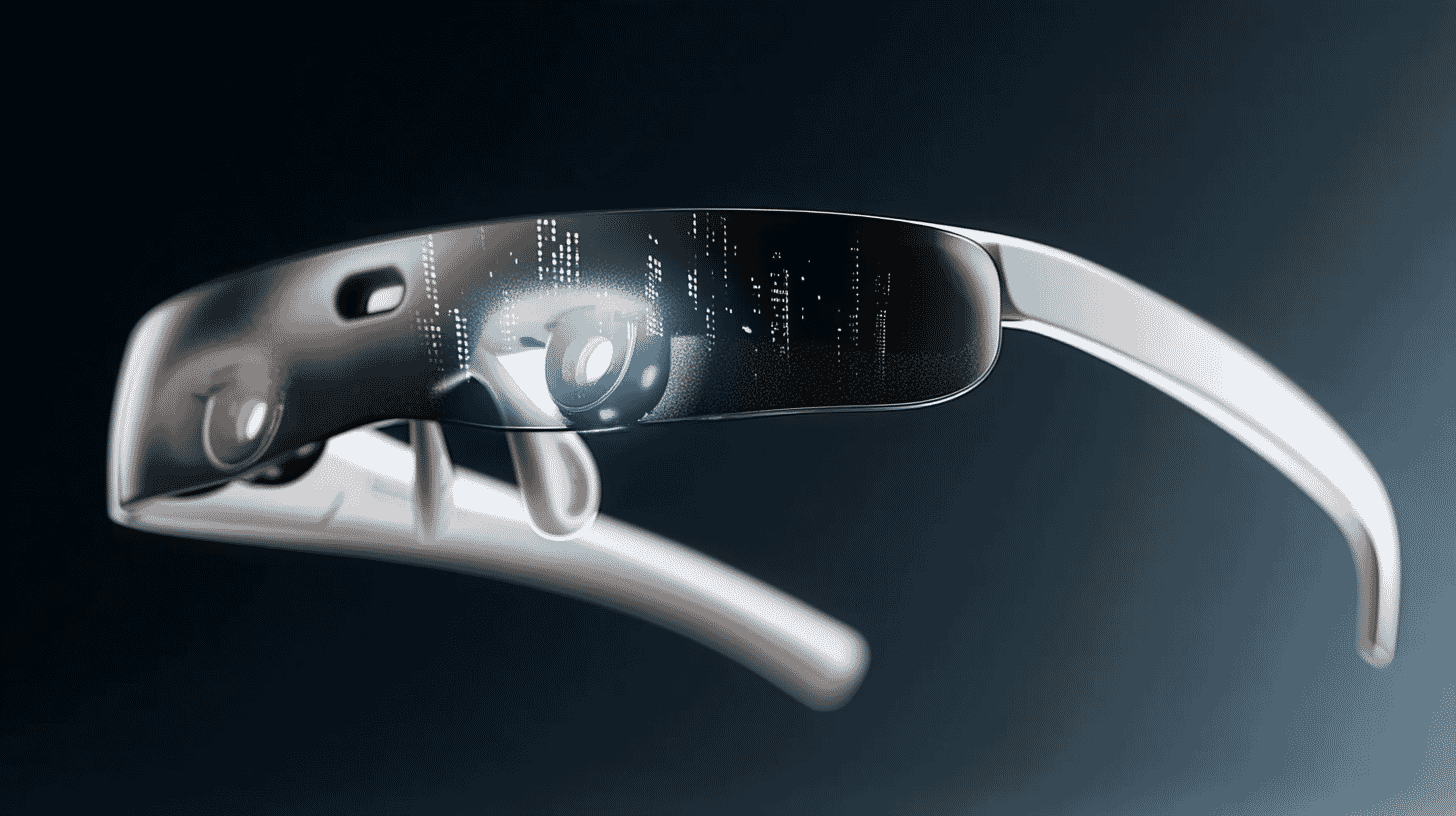
Imagine putting on a pair of glasses that instantly brings everything into focus, whether you're reading your phone up close or gazing at a distant mountain. A Japanese startup has made it real using "liquid lenses" that change shape with electricity. Here's how this breakthrough technology could end the era of juggling multiple pairs of glasses.
The Universal Problem: Glasses That Don't Quite Work
Blurry phone screens. Squinting at road signs. Holding newspapers at arm's length, the struggle with out-of-focus vision is a universal human experience. According to the World Health Organization, approximately 2.2 billion people worldwide live with some form of vision impairment, and presbyopia (age-related farsightedness) alone affects an estimated 1.8 billion people globally.
Traditional glasses use fixed lenses to correct vision: concave lenses for myopia (nearsightedness) and convex lenses for farsightedness and presbyopia. But a single fixed lens can only cover a limited range of distances. Progressive lenses attempt to solve this by blending multiple focal points into one lens, but they come with a narrow field of view and edge distortion, and roughly 10% of wearers reportedly never fully adapt to them.
A Japanese startup called ViXion has taken a radically different approach to this centuries-old problem, using "liquid lenses" that change shape on the fly.
What Are Liquid Lenses?: Technology That Mimics the Human Eye
At the core of ViXion's eyewear is the liquid lens. This is a fundamentally different approach from conventional glass or plastic lenses.
The human eye contains a natural lens called the crystalline lens. Tiny muscles around it (the ciliary muscles) change its thickness to shift focus between near and far objects, a process called "accommodation." As we age, this lens hardens and loses flexibility, making it difficult to focus on close objects. This is presbyopia, and it's why people start needing reading glasses in their 40s.
Liquid lenses recreate this biological mechanism artificially. The lens is filled with a polymer-based fluid, and when an electrical voltage is applied, the lens shape changes almost instantaneously. When it bulges outward, nearby objects come into focus; when it flattens, distant objects become clear. It's essentially an "electronic crystalline lens."
Unlike traditional camera autofocus systems that physically move lens elements back and forth with motors, liquid lenses have no moving mechanical parts. They're silent, near-instantaneous, and compact enough to fit into eyeglass frames.
The Birth of ViXion: A HOYA Spinoff with a Vision
ViXion's story begins with HOYA Corporation, one of Japan's leading optical lens manufacturers.
In 2018, while still part of HOYA, the development team created the MW10 HiKARI, a specialized device designed to help people with night blindness or reduced vision in low-light conditions. The expertise in optical technology and wearable device design gained from this project became the foundation for something bigger.
In 2021, the team spun off as ViXion Inc. (headquartered in Chuo-ku, Tokyo), with the corporate purpose of "expanding life's possibilities through technology." The name ViXion combines "Vision" and "ViX" (a play on "fix" or "extend"), reflecting the company's mission to enhance how people see the world.
In 2023, ViXion launched its first product, the ViXion01 autofocus eyewear, through crowdfunding. The campaign raised ¥400 million (approximately $2.6 million), among the largest hardware crowdfunding totals recorded in Japan. The device's futuristic design was crafted by world-renowned design firm nendo, led by Oki Sato, who has been featured in Newsweek's "100 Japanese People the World Respects."
The follow-up model, the ViXion01S, was announced in late 2024 and launched through another crowdfunding campaign, bringing the cumulative total to over ¥550 million (about $3.6 million). As of April 2025, the ViXion01S became available through major electronics retailers across Japan including Bic Camera, Yodobashi Camera, and Amazon.
ViXion01S: What 33 Grams of Innovation Can Do
Here's how the ViXion01S works in practice:
A distance sensor mounted on the front of the frame continuously measures the distance to whatever object the wearer is looking at. Based on this real-time data, voltage is applied to the internal liquid lenses, changing their shape and adjusting focus accordingly. This entire process happens so rapidly that users describe the experience as feeling almost like natural vision.
Key specifications include:
- Weight: 33g (without outer frame) / 47g (with outer frame)
- Focal range: 5cm to infinity
- Battery life: Up to approximately 15 hours continuous use
- Interpupillary distance: 55mm–73mm
- Connectivity: Bluetooth 5.4
- Charging: USB Type-C, approximately 3 hours to full charge
Compared to the original ViXion01, the 01S is about 40% lighter, runs 1.5 times longer on a single charge, and features a brand-new design that's much closer to conventional glasses. The biggest upgrade is a detachable "outer frame" that lets users customize their lenses, adding astigmatism correction, polarized lenses, or blue light filtering according to their individual needs.
The original ViXion01 has been repriced at ¥80,000 before tax (approximately $530), while the ViXion01S retails for ¥88,000 including tax (about $580). Both models can be experienced and purchased at electronics stores nationwide in Japan. The ViXion01S also took the top Minister for Internal Affairs and Communications Award at CEATEC AWARD 2024, Japan's premier digital-innovation showcase, and placed in the Good Design Award Top 100 the same year.
On February 14, 2026, TV Tokyo's "Breakthrough: Next-Generation Pioneers" profiled Toshiharu Utsumi, ViXion's chief innovation officer, walking through how voltage deforms the liquid and shifts focus regardless of distance. The episode also covered the team's work beyond presbyopia, on preventing myopia in children and young adults, a group whose rates have climbed alongside screen use.
Update: ViXion announced a third model, the ViXion2, on March 17, 2026, and released it on April 17. It is the first in the series sold through general retail channels, priced at ¥110,000 including tax (¥100,000 before tax at list). A wider 9mm lens diameter expands the field of view to roughly 2.4 times that of the ViXion01S. The body weighs about 40g (54g with the outer frame), runs up to about 15 hours, and covers an interpupillary distance of 53.5 to 75mm. The original ViXion01 is now sold while stocks last. In May 2025, ViXion also raised capital from Spotlight, a joint venture between Nippon Television and Hakuhodo.
The Global Race for Autofocus Glasses
ViXion isn't the only player chasing this vision. The competition is heating up worldwide:
IXI (Finland): Founded in Espoo in 2021 by former Nokia and Microsoft engineers, IXI raised $36.5 million in Series A funding in April 2025 with backing from Amazon's Alexa Fund, and has since passed $40 million in total. Its lenses pair liquid crystal layers with eye tracking to detect where the wearer is looking and adjust accordingly. The 22-gram prototype drew attention at CES 2026. The company plans to launch in Europe first, once it clears regulatory approval there, and to pursue FDA clearance for the United States afterward.
Stanford University (USA): Stanford researchers developed "autofocal" glasses combining fluid-filled lenses with eye-tracking cameras. In tests with 56 presbyopia subjects, wearers preferred autofocals over progressive lenses for reading speed and clarity. The current prototype is still bulky (resembling VR goggles), but miniaturization is underway.
University of Utah (USA): Their approach uses glycerin-filled lenses with piezoelectric actuators that change the lens curvature based on infrared distance measurements.
Laclarée (France): Dr. Bruno Berge, inventor of the original Varioptic liquid lens used in industrial cameras, founded Laclarée to apply electrowetting technology to autofocus glasses. Their system uses no mechanical parts and operates silently.
What sets ViXion apart from these competitors is that it has already achieved mass production and retail availability. While most rivals remain in the prototype or development stage, ViXion's products are being sold in stores across Japan, making it arguably the world's first commercially available autofocus eyewear.
The Future of Vision Correction: The Next 700 Years of Eyeglasses
The history of glasses stretches back to 13th-century Italy, yet the fundamental principle, using fixed lenses to bend light, has barely changed in the 700 years since. Liquid lenses could break that plateau.
Current challenges include expanding the field of view (the lens diameter in ViXion's devices is still relatively small, creating a binocular-like viewing experience), further design refinement, and price reduction. It's also worth noting that ViXion's products are not currently classified as medical devices, they're positioned as "vision support" devices rather than "vision correction."
Technology is moving quickly, though. The convergence of liquid crystals, metalenses (ultrathin lenses using metasurface technology), and AI-powered gaze analysis suggests that within just a few years, autofocus glasses indistinguishable from ordinary eyewear could become reality.
For the 2.2 billion people worldwide struggling with impaired vision, this Japanese-born technology is offering a new possibility. The day when glasses stop being something you "switch between" and become something that "adapts to you" may be closer than we think.
In Japan, liquid lens autofocus glasses are generating enormous excitement as a potential revolution in vision correction. How does your country approach innovation in eyewear and vision technology? We'd love to hear your perspective, what does the future of glasses look like where you live?
References
- https://vixion.jp/vixion01s/
- https://vixion.jp/vixion01/
- https://prtimes.jp/main/html/rd/p/000000091.000105928.html
- https://xtrend.nikkei.com/atcl/contents/watch/00013/02515/
- https://greenfunding.jp/lab/projects/8556/activities/41580
- https://neuroscience.stanford.edu/news/stanford-develops-autofocals-glasses-track-your-eyes-focus-what-you-see
- https://ixieyewear.com
- https://www.dezeen.com/2025/11/18/auto-focus-glasses-ixi/








Global Discussion
14 comments