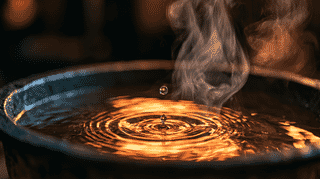
Desalination makes about 35 trillion liters of fresh water a year and discards roughly 50 trillion liters of brine. A Tokyo lab drips it onto molten tin and recovers magnesium oxide, 280 times concentrated.
Hafnium keeps advanced chips and jet engines running, yet the world makes about 71 tonnes a year, nearly all of it in France and the United States. An Osaka chemical maker now wants a share of it by 2028.
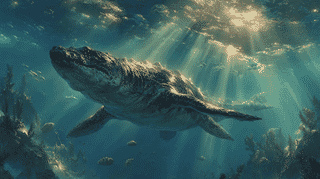
A mosasaur fossil collected in Kaizuka, Osaka and stored for 35 years has been reanalyzed. A premaxilla bone was confirmed for the first time in Japan, and the specimen may be a new species of Prognathodon, the heavy-jawed group nicknamed the T. rex of the seas.
Japan has rewritten its seed law to add ten years to breeders' rights and let officials block exports even before a variety is registered. We unpack the bill enacted on July 17, 2026, the suspected leak of Ehime's premium citrus to China, and why the 2020 version left a hole that fruit pirates walked right through.
Japan discards 650,000 tons of small electronics a year, yet recovers only a little over a tenth of it. The rest mostly leaks abroad through an untracked invisible flow. On June 5, 2026, the Environment Ministry picked six pilots enlisting movers and couriers to keep the metals home.
Dysprosium and terbium, essential to EV magnets, were China's one unbroken monopoly. In 2025, Australia's Lynas, backed by Japan since 2011, produced them outside China for the first time. What it means, and what it doesn't.
JX Advanced Metals, maker of roughly 60% of the world's sputtering targets, is investing about 23 billion yen to expand its Hitachinaka plant by 1.6x and selling its Chilean copper mine stake to Lundin Mining for $215 million, redirecting the cash into chip materials. A look at a 120-year-old miner remaking itself as an advanced-materials company.
At the APEC trade ministers meeting in Suzhou, China, Japan's industry minister demanded that exporting countries rectify arbitrary rare earth curbs. A look at the slow squeeze on Japan, its roots in a Taiwan remark, and Tokyo's exit strategy.
Brazilian Foreign Minister Mauro Vieira visited Japan on May 17–19 for the inaugural Japan-Brazil Foreign Ministers' Strategic Dialogue. Here's what oil-dependent Tokyo wants from South America's resource giant amid the Hormuz crisis.
Japan's ruling LDP has asked the government to build a dedicated rare earth mining vessel for ~100 billion yen ($640M) at Minamitorishima, handing the proposal to Prime Minister Takaichi on June 12, 2026. Why JAMSTEC's Chikyu isn't enough, the roadmap from the February 2027 demonstration test to FY2028 industrialization, and how Japan's approach compares with the US, EU and Australia.
Japan's vacuum equipment leader ULVAC is reshoring production of vacuum melting furnaces for rare earth magnets, with orders from US and European manufacturers projected to roughly triple. With over 70% global share in continuous vacuum furnaces, Japan's equipment dominance becomes a geopolitical asset.