At the G7 finance ministers' expanded meeting on April 17, 2026 in Washington, members aligned on strengthening critical mineral supply chains. Japan committed $20M each to the Asian and Inter-American Development Banks, marking a pivot to the resource-country funding phase. From the Japan-EU BRT proposal to the Kananaskis CMAP, C$6.4B (~US$4.6B) in unlocked projects, and now MDB funding, progress is real. But China still processes 90% of rare earths. A sober assessment of whether 'slow but steady' is actually fast enough.
In spring 2026, Japan and the United States began building a three-layered rare earth alliance: Treasury Secretary Bessent's May visit, Mitsubishi Materials' stake in US recycler ReElement, and Proterial's breakthrough heavy-rare-earth-free magnet. Here is what this quiet realignment means for the global critical minerals map.
The Hormuz Strait blockade has cut off Japan's naphtha supply, forcing TOTO to halt bathtub orders and LIXIL to declare delivery dates unknown. Insulation up 40%, paint up 80%, pipes up 20%; housing materials are skyrocketing across the board. We analyze Japan's structural vulnerability of depending on the Middle East for 90% of its crude oil, with comparative data from other countries.
Nine months after the Japan-EU BRT proposal, the rare earth landscape has transformed: 55-nation pricing agreements, an EU center modeled on Japan's JOGMEC, and $1.3B US funding. But can the West truly break China's grip?
China's carrier Liaoning conducted flight operations near Minamitorishima — Japan's remote rare earth island. With Beijing tightening export controls in retaliation for PM Takaichi's Taiwan remarks, and a US-Japan rare earth partnership signed at the March 2026 summit, this is no longer just about minerals. It's a geopolitical power game with South China Sea parallels.
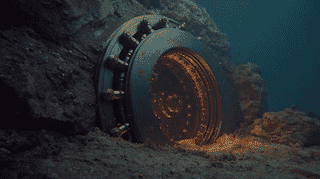
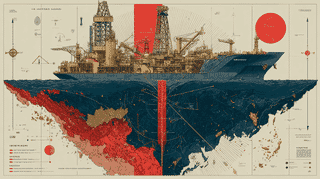
Japan Research Institute proposes an Ocean Industrial Complex combining deep-sea robotics, rare earth mining, and blue carbon. With a successful trial extraction of rare earth mud from 6,000m depth and breakthrough underwater wireless tech, Japan's ocean strategy is becoming reality.
In March 2026, Japan and the US signed an MOC on deep-sea mineral development. But overseas coverage missed the real story: Japan's successful 6,000m rare-earth mud retrieval, China's dual-use export ban, and 14 years of research that made this moment possible.
Itochu Corporation launches a joint venture with America's largest e-recycler ERI to tap Japan's urban mines for rare metals. With Chinese lithium giants also eyeing the market, we break down the business battle over Japan's hidden treasure trove of 6,800 tons of gold and 60,000 tons of silver.
Chiba Prefecture sits atop an estimated 500-year supply of iodine—the key material in Japan-invented perovskite solar cells. If combined, they could form a fully domestic energy cycle. We break down the potential and the hurdles standing in the way.
Japan achieved a world-first by extracting rare earth mud from 6,000m deep near Minamitorishima in January 2026. Explore the latest on Japan's seabed mineral resource development, commercialization roadmap, environmental challenges, and what it means for global critical mineral supply chains.
Yamaguchi University researchers discovered four new rare earth-containing minerals at Gunma Prefecture's Mokurasawa Mine. Amid Japan's push to reduce China dependence, this discovery holds both scientific significance and strategic implications for resource security.