Japan may write a study of nuclear-powered submarines into its security documents. Why nuclear propulsion is not nuclear arms, why the barrier is a 1965 legal reading, and what Australia, Korea and Brazil show.
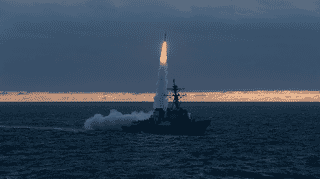
On July 29, 2026, the destroyer Chokai fired a Tomahawk over the Pacific, a first for Japan. What 400 cruise missiles with a 1,600 km reach mean for a country built around defense-only doctrine.
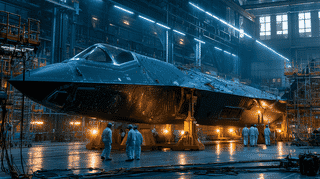
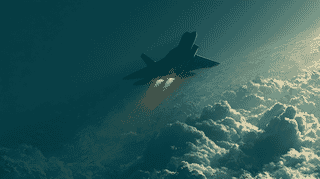
Japan, the UK and Italy's GCAP fighter demonstrator is 75% built, and reporters have finally seen it. A third longer than a Typhoon, with weapons bays reportedly double the F-35's capacity, its sheer size reveals the program's priorities: range and payload for the Pacific. How it compares to America's F-47 and Europe's collapsed FCAS.
After a year of budget drama, Britain published its delayed Defence Investment Plan on June 30, committing about 8.6 billion pounds to the GCAP sixth-generation fighter and extending the Japan-UK-Italy contract to end-2027. Why Japan was the anxious partner, why an outgoing prime minister signed it, and what the bet on building a fighter without America really means.
On June 26, 2026, Japan's Diet passed a law renaming the Air Self-Defense Force as the Aerospace Self-Defense Force, the first rename of an SDF branch since 1954. A new 880-strong Space Operations Command will track satellites and threats in orbit. Here is what changes, and why now.
To hunters abroad, Howa is a rifle brand. Back in Japan, the same company holds about 90% of the road-sweeper market, makes airport soundproof windows and subway floodgates, and shares a root with Toyota. Meet Howa Machinery.
Japan's navy just put 45,000 personnel on SAP ERP for logistics. The US Army got there in 2018, Germany in 2011. Inside Japan's late arrival, its siloed legacy systems, and whether Fujitsu can deliver.
On May 18, 2026, the full content of Japan's LDP proposal for revising its three security documents was revealed. Early deployment of interceptor drones, sustained warfighting capability lasting 'at least a year,' early-warning drones over the Pacific, next-generation submarines with long-range missiles: here's what Japan's future defense posture looks like, shaped by Ukraine war lessons and China deterrence.
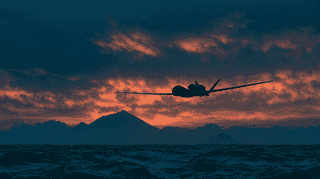
Saab Technologies Japan has named Akira Ukaji as its first Japanese country manager and representative director. The Swedish defense giant is positioning its GlobalEye AEW&C aircraft as the successor to Japan's aging E-767 fleet, with industry sources targeting a 2035 replacement. After Japan's April 21 abolition of the 'Five Categories' export rule, can a non-US contender finally crack Japan's airborne early warning market?
On May 5, 2026, Defense Ministers Koizumi and Teodoro met in Manila to launch a working group for transferring used Abukuma-class destroyer escorts to the Philippines: the first concrete test of Japan's new lethal weapons export rules.
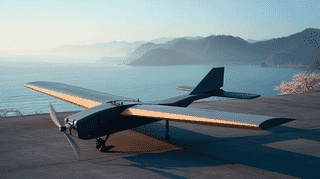
JISDA (Japan Integrated Security Design Agency) has launched the Shiraha, a wooden fixed-wing drone costing just 70,000 yen (about 440 USD). Built on three years of field research within 20 km of Ukraine's front line, it targets Japan's training-attrition gap. How it differs from AirKamuy's cardboard drone and why Japan's defense mindset is finally shifting.
On April 21, 2026, Japan's Takaichi cabinet revised the Three Principles on Defense Equipment Transfer, officially allowing exports of lethal weapons including warships and missiles. A deep dive into what Japan's 'pacifist nation' turning point actually means.
Japan plans to transfer operation of its next Antarctic icebreaker from the Maritime Self-Defense Force to research agency JAMSTEC after the current Shirase retires around 2034. A look at Japan's 70-year Antarctic legacy and what the shift means.
Japan and Australia signed the New FFM joint development contract, worth up to AUD 20 billion. We unpack the quasi-alliance behind this de facto warship export, and the Takaichi government's push to scrap the 'Five Categories' and allow lethal weapon exports.
China's carrier Liaoning conducted flight operations near Minamitorishima — Japan's remote rare earth island. With Beijing tightening export controls in retaliation for PM Takaichi's Taiwan remarks, and a US-Japan rare earth partnership signed at the March 2026 summit, this is no longer just about minerals. It's a geopolitical power game with South China Sea parallels.
As drone warfare extends to the seas, Japan leads the world in autonomous ship technology. From the MEGURI 2040 project to combat-support USV development and lessons from Ukraine, explore the future of maritime security.
Trump told nations to 'go get your own oil.' Japan imports 93% of its crude from the Middle East — so what would a serious Japanese oil retrieval fleet actually look like? From helicopter carriers to world-class minesweepers, we assemble a fantasy task force, explore the legal hurdles, and see how the internet reacted to this wild thought experiment.
Fujitsu has developed and delivered the world's first 1-megapixel dual-band T2SL infrared sensor to Japan's defense agency, detecting temperature differences below 0.05°C. The technology, how it compares with Teledyne FLIR and L3Harris, and where Japan's dual-use defense tech strategy actually stands.
Japan's government is considering nationalizing defense equipment factories to secure warfighting sustainability. Learn about this historic post-WWII policy shift driven by Ukraine war lessons and rising security threats.
Japan Coast Guard's new 3,500-ton patrol ship "Suruga" launched on Feb 18, 2026. Built at $108M with twin 40mm guns and 25+ knot speed, this 8th Miyako-class vessel strengthens Japan's response to China's growing maritime assertiveness around the Senkaku Islands.