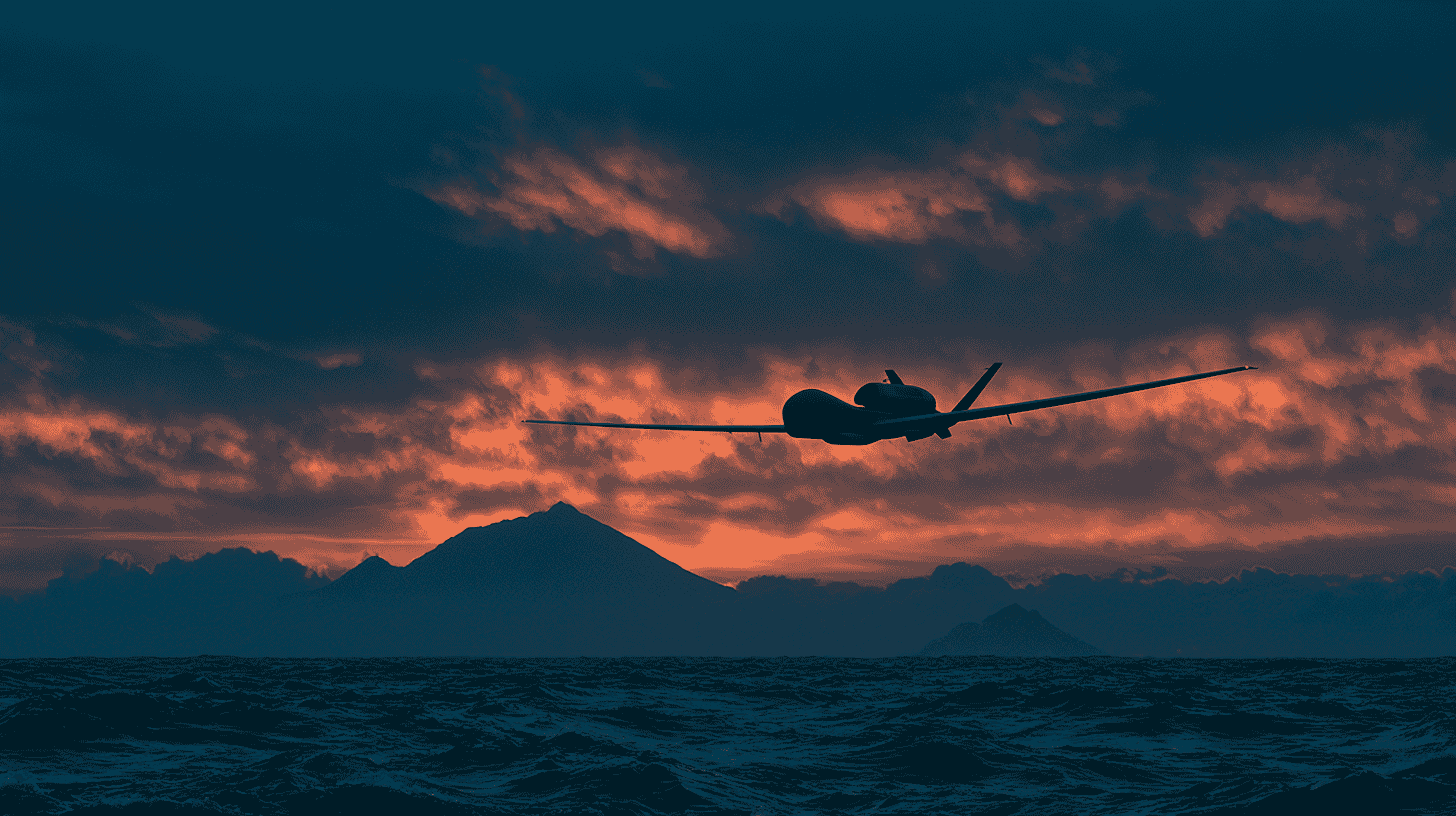
🛡️ Japan's defense is heading somewhere it has never been before. A proposal draft revealed on May 18, 2026 by the ruling Liberal Democratic Party sketches a future built around interceptor drones, high-power energy weapons, Pacific surveillance, and submarines that can launch long-range missiles. The trigger? Lessons from Ukraine, and an increasingly assertive China. Here's what Tokyo is actually planning, and what it deliberately left out.
💡 This is the latest in our defense series. Earlier pieces traced Japan's debate over nationalizing defense factories, the abolition of the "five categories" export rule under PM Takaichi, unmanned surface vessels for maritime defense, and the U.S.-China race over loyal wingman drones. Today's article focuses on what the LDP's draft proposal would actually do.
What the proposal draft says, in plain language
On May 18, 2026, Japan's main news wires reported that the full contents of the LDP's draft proposal for revising the three security documents had been confirmed. Those three documents (the National Security Strategy, the National Defense Strategy, and the Defense Buildup Program) are scheduled to be revised by the end of 2026, the first overhaul since the 2022 rewrite that pushed defense spending toward 2% of GDP.
The draft is striking for how concrete it is. It names specific capabilities the LDP wants the government to commit to:
- Interceptor drones to defend against incoming drone swarms
- High-power energy weapons (lasers and microwave systems) for air defense
- A guaranteed "at least one year" sustained warfighting capability: enough ammunition, fuel, and spare parts to keep fighting that long without resupply
- Next-generation propulsion submarines that can carry long-range missiles for counterstrike
It also calls for new "situation categories" to cover economic disruption (the kind of crisis Japan would face if, say, the Strait of Hormuz were blockaded), and for stronger sea-lane defense.
Two things are notably absent. The draft does not name a specific defense spending target or how it would be funded, both had been points of internal disagreement. And it walks back PM Sanae Takaichi's earlier interest in revisiting Japan's Three Non-Nuclear Principles. Instead, the language settles on "further ensuring the credibility of extended deterrence, centered on U.S.-provided nuclear deterrence." In other words: keep relying on the American nuclear umbrella, and don't reopen the non-nuclear debate now.
Why interceptor drones? The Ukraine lesson, applied to Japan
The proposal's emphasis on interceptor drones reflects a hard reality the war in Ukraine has hammered home for every defense ministry watching: when cheap drones attack in waves, shooting them down with multimillion-dollar missiles is a losing economic proposition.
Iran's Shahed-136 attack drones cost an estimated few tens of thousands of dollars. Patriot interceptors used to shoot them down can run into the millions per round. Run that math over a long war, and the defender goes bankrupt before the attacker runs out of drones.
Japan has been quietly catching on. In March 2026, Tokyo-listed Terra Drone announced a strategic investment in Ukrainian counter-drone startup Amazing Drones. The product of that partnership, the Terra A1 interceptor, has a range of about 32 km, tops out around 300 km/h, and according to its makers can be built for roughly $2,500–$3,000 per unit. In April 2026, Terra A1s entered combat use in Ukraine against Russian Shaheds. In May, Japan's Acquisition, Technology and Logistics Agency placed an order with Terra Drone worth roughly $736,000 for 300 domestically-produced training UAVs.
The LDP draft, in other words, is pushing the government to scale this kind of capability up, not as a side project, but as a core pillar of Japan's air defense. Defense Ministry plans for fiscal 2026 already allocate around $640 million to the "SHIELD" concept, an umbrella program built around unmanned air, surface, and underwater systems, with the broader unmanned defense category sitting at roughly $1.77 billion. Counter-drone interceptors are part of that picture.
The same logic explains the call for high-power energy weapons. Lasers and high-power microwaves promise something missiles can't: nearly unlimited "shots" at the cost of electricity, rather than a finite stock of expensive interceptors. Japan's defense industry has been working on prototype directed-energy systems for years, but the proposal pushes for "early deployment", not "further study."
The Pacific blind spot, and the drone that may fill it
The second big shift the proposal sketches is geographic: Japan's defense planning has long leaned westward, toward the East China Sea, Taiwan, and the Korean Peninsula. The Pacific side (the broad ocean east of Japan, with its scattered islands stretching toward Guam) has been called a "blank zone" in surveillance terms.
That blank zone matters more every year. China's military strategy talks about a "second island chain" stretching from Japan's Izu and Ogasawara Islands down to Guam and Papua New Guinea. Beijing wants the ability to deny U.S. forces operating from Guam access to waters inside that line in a Taiwan contingency. To do that, China needs to see what's happening in the Pacific. So does Japan, if it wants to deter or respond.
A separate Yomiuri Shimbun report on May 18 detailed how the government is moving to plug that gap. The plan, as currently reported, has three pieces:
- Acquire unmanned aircraft carrying early-warning radar ("flying radar sites") that can patrol the Pacific for long durations. The leading candidate is the MQ-9B SeaGuardian, the same family of unmanned aircraft Japan's Coast Guard has been operating since 2022 and the Maritime Self-Defense Force has been testing since 2023.
- Deploy mobile (vehicle-mounted) air defense and surveillance radars to Iwo Jima and Chichijima in the Ogasawara island chain. Existing fixed radar on Iwo Jima would be converted to mobile.
- Use airstrips on Iwo Jima and Minamitori-shima to launch and recover the unmanned early-warning aircraft.
The strategic logic is straightforward. Manned early-warning aircraft are expensive, demand large crews, and burn out quickly under continuous operation. Unmanned ones can stay aloft for many hours, watch a much larger slice of ocean, and don't put pilots at risk. The manufacturer credits SeaGuardian with more than 30 hours of endurance, enough to cover the Pacific approaches to Japan's home islands from a forward base.
Why this matters in real terms: on December 6, 2025, over international waters southeast of Okinawa, a J-15 launched from the Chinese carrier Liaoning locked fire-control radar onto Air Self-Defense Force F-15s twice, once for about three minutes and once for roughly thirty. Japan's Defense Ministry made the incident public the next day and protested it as behavior "beyond what is necessary for safe flight." In May–June 2025, two Chinese aircraft carriers operated in the western Pacific simultaneously for the first time. The U.S. Department of Defense's annual report on Chinese military power, released in December 2025, assesses that the PLA Navy aims to build six more carriers by 2035 for a fleet of nine, and that its ground-based sensors can probably already track ships and aircraft as far out as the second island chain.
Japan's response, as the proposal suggests, is to push its own sensor reach east, and to do it with unmanned platforms because there is no realistic way to staff manned coverage at that scale.
Next-gen submarines and counterstrike
The third concrete element of the proposal is on the offensive side of the ledger.
Japan has been building "counterstrike capability" (the ability to hit enemy missile bases before or during an attack) since the 2022 security strategy revision. That meant buying U.S. Tomahawk land-attack cruise missiles, accelerating domestic Type 12 cruise missile upgrades, and developing hypersonic systems. Most of these are launched from ships, aircraft, or ground vehicles. The LDP draft now wants to extend the option to submarines with "next-generation propulsion".
"Next-generation propulsion" is doing a lot of work in that phrase. It is generally read as covering air-independent propulsion (AIP), advanced lithium-ion battery boats, fuel cells, and, implicitly, the possibility of nuclear propulsion. Japan has never fielded a nuclear-powered submarine. The country's commercial maritime nuclear research, going back to the experimental ship Mutsu in the 1970s, ended in failure. Even discussing nuclear propulsion was politically unthinkable for decades.
What changed? Two things. First, Australia's AUKUS deal, under which Canberra is acquiring nuclear-powered (not nuclear-armed) submarines from the U.S. and U.K., broke a regional taboo. Second, conventional submarines have to surface periodically; long-range missile submarines patrolling far from base benefit enormously from the ability to stay submerged for weeks or months. The phrasing in the proposal stops short of saying "nuclear-powered," but it deliberately leaves the door open.
What the proposal does not say, and why that matters
For all its specificity on capabilities, the draft is silent on two questions that will determine whether any of this actually happens.
Spending levels. The 2022 strategy set a target of 2% of GDP for defense and defense-adjacent spending by fiscal 2027, but the Takaichi government added roughly 1.1 trillion yen in a fiscal 2025 supplementary budget and says the level was reached two years early. Some inside the LDP had pushed to write a higher figure, 2.5% or 3%, into the new documents. Trump-era pressure from Washington has reinforced that push. The draft punts: no number, no schedule, no fresh financial commitment.
Funding sources. Where the additional money would come from has been debated for years. Tobacco-tax hikes, corporate-tax surcharges, and special bonds have all been floated. The draft says nothing concrete here either.
This is not an accident. Inside the LDP, security hawks want bigger numbers; fiscal conservatives and politically nervous lawmakers worry about how a tax-funded buildup will land with voters. The draft papers over that split by listing capabilities everyone agrees Japan needs and leaving the bills to be argued later. It is, in that sense, less a roadmap than a wish list with a credible spine.
What comes next
The LDP's Security Affairs Investigation Committee, headed by former Defense Minister Yasukazu Hamada, left the draft to Hamada at its May 25 meeting, and the party's General Council approved the proposal on June 9 before it went to the government. The Takaichi cabinet will then use it to draft the actual revised security documents, with the cabinet approving the final versions by year-end. Some elements (interceptor drone procurement, SeaGuardian-type unmanned early-warning aircraft, radar deployments to the Ogasawara islands) can move forward in the fiscal 2027 budget request, which the Defense Ministry will submit in late August. Others, like next-generation submarines and serious deployment of energy weapons, are decade-scale projects.
Read together with the export reform that lifted the "five categories" restriction in April 2026 and the ongoing debate over government ownership of defense production facilities, a picture emerges. Japan is not just spending more on defense. It is changing how it defends itself: cheaper interceptors instead of multimillion-dollar missiles, unmanned eyes instead of crewed aircraft, capabilities oriented as much eastward (toward the Pacific) as westward (toward East Asia), and a defense industrial base reorganized to keep producing through a year of sustained combat.
That is a different Japan than the one most readers outside East Asia have grown up imagining, a Japan that explicitly plans to fight on, not just to deter.
Update (July 2026): the LDP General Council approved the proposal on June 9, 2026, with drone-based missile interception, sustained warfighting capability, and the use of space and AI written in as its pillars.
In your country, how is your defense posture changing in response to drones, AI, and a more crowded ocean? Are you seeing the same shift toward unmanned systems and longer wars, or a different debate altogether?
References
- https://news.yahoo.co.jp/articles/f8b2ea1eaf0501eb8ac34abddde92a196d13387e
- https://news.yahoo.co.jp/articles/070513ff127663466d23afa648c6322ff9c5f5ba
- https://www.kochinews.co.jp/article/detail/1004478
- https://kyivindependent.com/japan-breaks-into-ukraines-drone-market-for-first-time-as-tokyo-confronts-regional-threats/
- https://www.japantimes.co.jp/news/2026/04/22/japan/japan-firm-drone-ukraine-deployed/
- https://www.mod.go.jp/j/press/wp/wp2025/html/n130202000.html
- https://www.jiji.com/jc/v8?id=20250620seikaiweb
- https://www.jimin.jp/news/information/213306.html
- https://www.nids.mod.go.jp/publication/commentary/commentary410.html
- https://news.usni.org/2025/12/24/china-wants-nine-aircraft-carriers-by-2035-says-new-pentagon-report








Global Discussion
5 comments