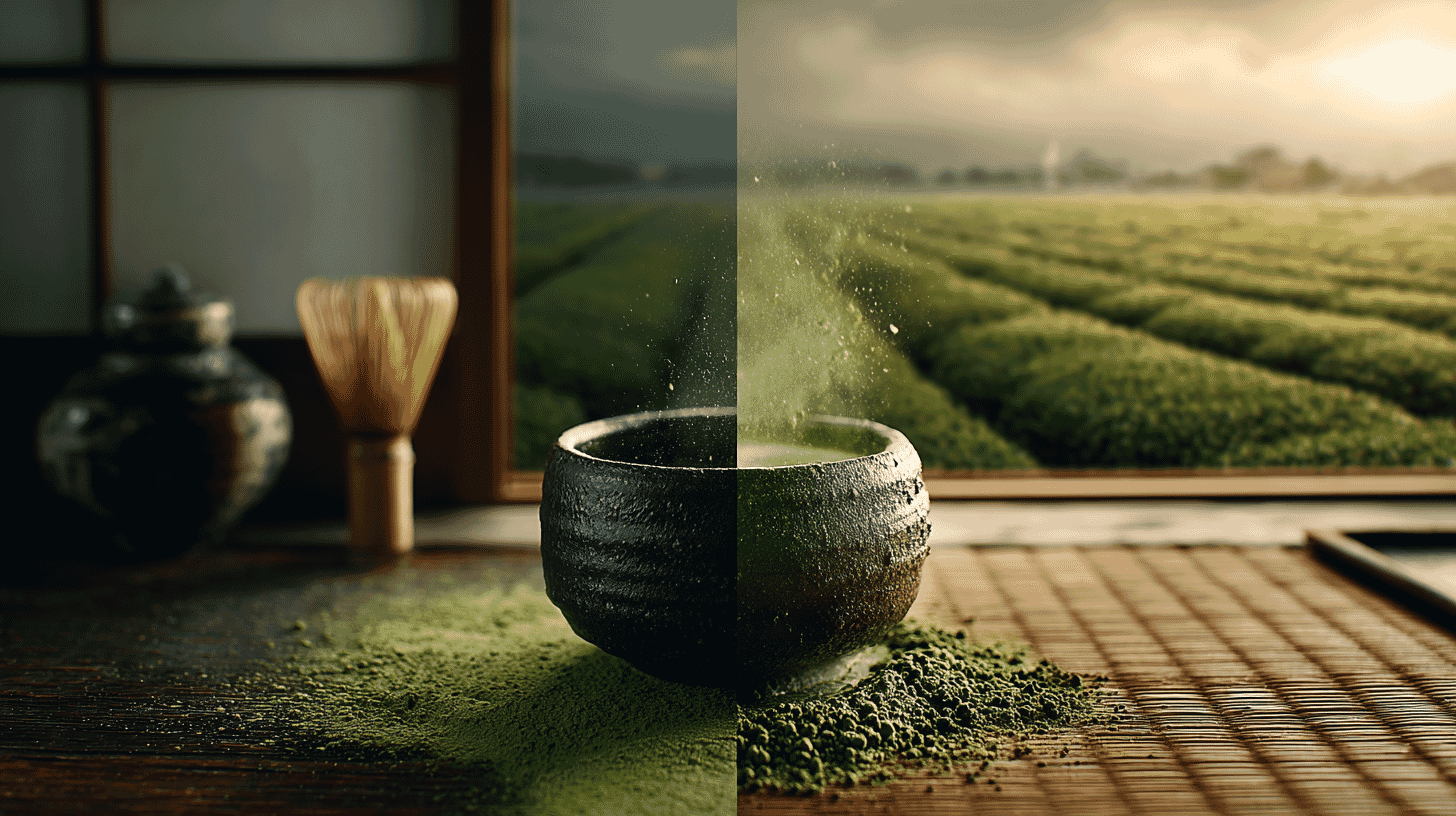
In 2008, Starbucks rolled out matcha latte at stores around the world. Seventeen years later, the price of Japanese tea has tripled in a single year and China produces roughly 5,000 tons of matcha annually, matching Japan's output. On May 5, 2026, 38 of Japan's major tea companies issued an emergency joint statement. Here is the industry structure behind that crisis, in numbers: a demand explosion, a supply wall, and the rise of Chinese matcha.
The 2008 Inflection Point: How Starbucks Flipped the Switch
Matcha was originally an "indoor" industry, powder whisked in a tea room, consumed where it was made. The moment it crossed over into a global beverage category, industry insiders agree, was 2008.
Ryo Iwamoto, representative director of the non-profit International Matcha Association (IMA), told Business Insider Japan: "The situation completely changed when Starbucks rolled out matcha latte globally in 2008." Matcha that had been produced and consumed within Japan was suddenly riding the platform of every Starbucks store on Earth.
What had been niche global exposure became a daily menu item in cities worldwide under the name "Matcha Latte." Blue Bottle followed, then cafe chains across Asia. Over the past five years, matcha items have proliferated across global beverage retail.
Then, starting in summer 2025, demand spiked. In Iwamoto's account, "the price of summer- and autumn-harvested tea jumped 2.5 to 3 times in a single year." That shock is what triggered the emergency joint statement.
The 7.3% Bottleneck: Why Japan's Tea Supply Can't Just Scale
Why can't Japan simply make more? Look at the production structure and the answer becomes clear.
The raw material for matcha is a specialized tea leaf called tencha. For 20 to 28 days before harvest, the entire field is covered with shading material that blocks roughly 80% of sunlight. The picked leaves are steamed, dried flat without rolling, then stripped of veins and stems, and only then stone-ground into matcha. Because there is no rolling step, tencha needs a dedicated tencha furnace rather than a regular processing line.
Japan's domestic tencha production roughly doubled from 2,736 tons in 2020 to 5,336 tons in 2024. Even so, tencha represents only about 7.3% of Japan's total tea output of roughly 75,000 tons. The rest is sencha, bancha and gyokuro, none of which can be redirected to matcha.
Converting to tencha requires shading materials, a tencha furnace and stone-grinding equipment, with initial capital expenditure of $1.3 to $1.9 million (200 to 300 million yen). No farm stands that up overnight.
There is also a biological ceiling. Shaded cultivation stresses the tea bush; push the harvest too hard and fields degrade within a few years. Tripling production next year is not physically available.
The Major Producing Regions Are Already Near Their Limits
The traditional global supply for what the world calls Matcha comes from three Japanese regions: Uji in Kyoto, Nishio in Aichi and, more recently, Kagoshima. Here is how much room each has left.
Kyoto's Uji is the 800-year-old prestige brand and dominates premium tea-ceremony matcha worldwide. But Kyoto's total tea field area is only about 1,500 hectares. Tencha auction prices in Uji have risen roughly fourfold over the past five years. Long-established houses like Marukyu Koyamaen and Ippodo have made purchase limits and sales restrictions a permanent feature. There is essentially no room left to expand.
Aichi's Nishio holds a strong position in industrial-grade matcha for confectionery and beverages. Tellingly, the Nishio-based major Aiya started its own cultivation operation in Wuyi County, Zhejiang Province, China back in 2005, building a roughly 330,000-square-meter shaded tea field. A Japanese tea house with centuries of tradition decided more than 20 years ago that domestic supply alone would not meet demand.
Kagoshima overtook Kyoto in tencha output a few years ago and in 2024 surpassed Shizuoka in total raw-tea production for the first time on record, becoming Japan's leading tea prefecture. In March 2025, JA Group Kagoshima announced a $170 million (26 billion yen) plan for the prefecture's largest matcha processing facility, with annual capacity of 300 tons. Completion is targeted for November 2027, which does nothing for the gap right now.
The bottom line: existing Japanese supply is running close to its operational ceiling.
Why a Latte Chain Might Just Drop Matcha Entirely
Rising prices look like good news for producers. But Iwamoto warns this is exactly what could destroy the supply chain.
In the foodservice industry, beverage cost ratios are typically held within 15 to 20% of the menu price. For a $4 matcha latte, that means the raw cost ceiling is roughly $0.60 to $0.80. If matcha prices double or triple, that ratio breaks.
A cafe chain then has four options: raise prices and accept churn, use less matcha per drink, drop the menu item, or switch to a cheaper ingredient. The fourth is exactly what is propelling the rise of Chinese matcha.
Push prices past a certain line and global cafe chains may simultaneously walk away from Japanese matcha. By the time Japanese producers finish scaling up, the demand could already be gone. That's the nightmare scenario being discussed in seriousness across the industry.
China Now Produces 5,000 Tons, Equal to Japan
The crisis is being accelerated by China's ascent.
According to Iwamoto, China's matcha production has already reached approximately 5,000 tons annually, roughly the same as Japan. Pricing is one-third to one-half of Japanese matcha.
The center of Chinese matcha production is Tongren City, Guizhou Province. In 2017 the city attracted a large dedicated matcha facility, and by 2024 Tongren alone reportedly produced over 1,200 tons, with output value reaching 300 million yuan (roughly $42 million).
The customer list matters. Tongren's matcha is already supplied to Starbucks, the Japanese restaurant giant Zensho Holdings, and the Chinese hot-pot chain Haidilao. In the first half of 2025, Tongren shipped its first 4 tons to Japan, with another 6 tons planned. "Chinese matcha imported into Japan" is no longer hypothetical.
The Quality Question: How Does Chinese Matcha Actually Compare?
"Chinese matcha" is often discussed as one thing. In reality there are several quality tiers.
Tier 1, Powdered green tea sold as matcha. No shaded cultivation. Sencha or longjing tea simply ground to powder. Color is dull, taste is bitter and astringent. Cheap. A significant share of overseas "matcha-flavored" desserts uses this category.
Tier 2, Light shading + Japanese-style processing. Shading shortened to around 10 days, costs kept down, but approximating tencha. Compliant with China's national standard GB/T 34778-2017.
Tier 3, Full Japanese-style processing. 20 to 28 days of shading, dedicated tencha furnaces, stone grinding, Japanese technology fully applied. Top producers in Tongren and Aiya's own Chinese operation fall into this tier.
The quality gap is measurably narrowing. A January 2025 sensory and metabolite study published in Foods (MDPI, PMC11720590) compared matcha from Shizuoka, Japan with samples from four Chinese regions. Composite quality scores were: Shizuoka 93.5, Enshi (Hubei) 90.7, Wuyi (Fujian) 89.1, Tongren (Guizhou) 86.5, Hangzhou 86.2. Note the methodology used the Chinese national standard, a 3-minute boiling-water steep, very different from how matcha is normally prepared. Still, Enshi closed within 2.8 points of Shizuoka.
Iwamoto frames it carefully: "For straight matcha drunk in a tea room, Chinese product hasn't caught up to Japanese quality. But in the matcha latte market, mixed with milk and sugar, consumers can't tell the difference. Some even prefer the rougher Chinese product because it punches through the milk."
Translation: in the largest segment of the global market, matcha lattes, matcha sweets, matcha-flavored everything, Chinese matcha has already arrived at "good enough." The segment where Japanese product retains a clear edge, premium ceremonial matcha, is, in market terms, tiny.
The Definition Vacuum That Erodes Japanese Brand Value
What complicates everything is that no internationally binding definition of "Matcha" exists.
In Japan, the Japan Tea Central Public Interest Incorporated Association defines matcha as "tencha ground to a fine powder using a stone mill." ISO has recently adopted a similar definition. But ISO definitions aren't binding. Across overseas markets, anything from green-colored powder to powdered-green-tea blends with other plants gets sold as "Matcha."
For consumers, this means routinely "thinking they're drinking Japanese matcha but actually drinking Chinese," or "ordering a matcha latte that's really powdered green tea." Behind the brand glow of the global boom, the quality and value perception of authentic Japanese matcha is being quietly eroded.
The 1.5- to 2-Year Window
On May 5, 2026, IMA and 38 of Japan's major tea companies issued their emergency joint statement, asking every actor in the matcha value chain to honor four basic principles: fair trade, alignment between quality and price, sustainable business conditions, and responsibility to the market as a whole.
What Iwamoto keeps emphasizing is the timeline. "If anything, we have only about 1.5 to 2 years to put the entire framework in place." Like wagyu beef and sake before it, every local Japanese product that has matured into a global industry has gone through a phase of regulatory chaos and brand dilution. Unless Japan moves now to establish international definitions, grading systems, and traceability, and proves to the world that fair price and proper quality go together, matcha risks sliding from "Japanese cultural industry" into "country-of-origin-doesn't-matter commodity."
This boom moment is exactly the inflection point. Before pure celebration that Japanese matcha has become a globally beloved beverage, the question is whether Japan can design how it gets loved. The window for that answer is closing faster than the volume numbers suggest.
That matcha latte at the cafe down the street from you, is the actual matcha inside Japanese, or Chinese? Has your country experienced something similar: a traditional ingredient becoming globally popular, then having its domestic structure shaken by that very success? We'd love to hear what's happened in your country.
References
- Will Starbucks-Driven "Matcha Boom" Break the Market? Why Japan's 38 Major Tea Companies Issued a Joint Emergency Statement (Business Insider Japan, in Japanese)
- International Matcha Association
- https://36kr.jp/366941/
- https://www.pref.aichi.jp/uploaded/attachment/494664.pdf
- PMC11720590 (Foods/MDPI, January 2025)
- National Federation of Tea Producers' Cooperatives (Japan)






Global Discussion
15 comments