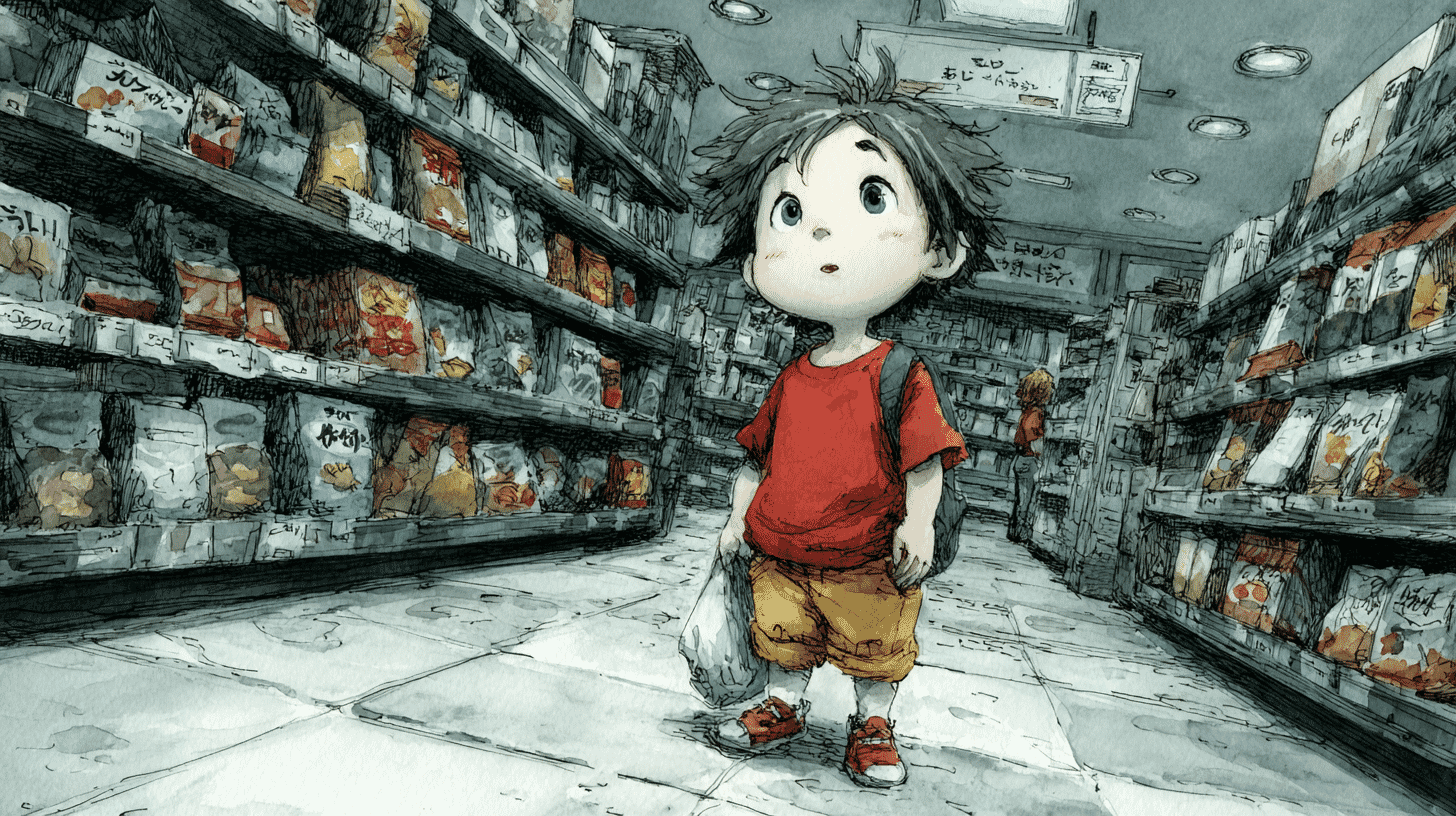
🛒 Color is starting to disappear from Japan's supermarket shelves. On May 12, 2026, Calbee, the company behind Japan's most iconic potato chips and rice-flour shrimp crackers, announced that 14 of its flagship snack packages will switch to black-and-white monochrome printing. The reason: ink supply from the Middle East has become unstable. Behind a single bag of chips lies a long, fragile chain: crude oil to naphtha to solvents to ink to packaging, and the squeeze is now visible to every Japanese shopper.
What Calbee Just Announced
Calbee Inc., the Tokyo-headquartered snack giant, announced on May 12, 2026 that it would switch 14 flagship products to monochrome 2-color "petroleum raw material-saving packages." The move was reported in unison by Yomiuri Online, Nikkei, TBS NEWS DIG, and NHK.
The 14 affected products include the company's signature Potato Chips Lightly Salted (Usushio Aji) and Potato Chips Consomme Punch, the long-running rice-flour shrimp cracker Kappa Ebisen, the firm-cut variant Kataage Potato Lightly Salted, and the breakfast cereal Frugra (Fruit Granola).
Switchover begins with shipments from May 25. The transition will be gradual: products in colorful packaging will be sold through until inventory runs out, then replaced with the monochrome versions. The duration is undetermined. There's no end date.
The contents themselves, chip quality, flavor, weight, are unchanged. What changes is only the bag. Calbee's official statement: "We are responding flexibly and nimbly to changes in the business environment, including geopolitical risk."
Why Color Is the First Thing to Go
Normal package printing uses the CMYK process, four inks (cyan, magenta, yellow, black) layered to produce vivid colors. Compressing to 2-color black and white dramatically reduces ink consumption. The point of Calbee's move isn't "saving" in an aesthetic or environmental sense. It's a defensive operational call: if raw material supply can't reliably support full-color printing, cut the colors before you have to cut shipments.
The key bottleneck is naphtha, the petroleum derivative that feeds the entire industrial chemistry chain.
Naphtha is a light fraction obtained from refining crude oil. It's then "cracked" into ethylene, propylene, toluene and other petrochemical building blocks, which become solvents, resins, and pigments. Those, in turn, become printing ink.
According to Nikkei, the US-Israel strikes on Iran sent crude oil prices surging, and the resulting naphtha shortage has produced persistent tight supply of the solvents and resins that make up printing ink.
The chain looks like this:
Middle East crude oil → naphtha at the refinery → cracked into ethylene/toluene → solvents, resins, pigments synthesized → printing ink manufactured → food packaging printed
If any one link breaks, the final result is the same: "we can't print the bags." A substantial share of Japan's naphtha imports passes through the Strait of Hormuz, putting the country directly in the line of fire when the strait closes.
As of May 11, Japan's Ministry of Economy, Trade and Industry (METI) had received over 2,300 inquiries about supply "bottlenecks," of which roughly 1,500 concerned difficulty procuring solvents like thinner and lubricants, the very inputs that ink manufacturers also depend on.
This Isn't a Sudden Event: It's Been Building for Months
Calbee's monochrome packaging looks like a surprise announcement, but it's actually the latest in a months-long cascade.
On March 17, 2026, Yamayoshi Confectionery (Saitama Prefecture), maker of the cult-favorite wasabi-flavored potato chip Wasabeef, temporarily halted production because it couldn't source the heavy oil used to heat its frying boilers. By March 23, the company had opened new procurement routes and resumed production, but the episode was the first concrete case of "Middle East tensions stopping a Japanese snack factory."
Then came the broader cascade. In March, regular gasoline hit a record national average of ¥190.8/L (about $1.21/L at ¥157.5/USD). Major Japanese shipping company NYK Line halted Hormuz Strait transits. From April onward, Japan began diversifying crude procurement at a frantic pace: an exceptional intake of Russian "Sakhalin-2" crude despite G7 sanctions (using the so-called Sakhalin exception extended through June 2026), additional purchases of Mexican Maya crude, and on May 12, the same day Calbee announced its monochrome packaging, the first-ever shipment of Azerbaijani crude arrived at Negishi refinery in Yokohama via the BTC pipeline.
And in food packaging specifically, Nikkei reports that Itoham Yonekyu Holdings, one of Japan's largest ham and processed meat companies, is also considering similar package simplification. This is not Calbee's lone problem. It's an early signal of a broader industry response.
The Hidden Vulnerability of Japan's Ink Industry
Japan's printing ink industry is structurally fragile.
Domestic ink supply is dominated by Dai Nippon Printing (DNP), Toyo Ink SC Holdings, and Sakata Inx, all of which depend heavily on petroleum-derived solvents and resins. According to industry analysis by Ink World magazine, petroleum-based ink prices have risen roughly 15–25% on crude oil volatility alone.
Sustainable alternatives (water-based inks, soy-based inks, UV-curable inks) are gaining global share. But for food packaging films like PET and polyethylene, factors like adhesion, print speed, and cost still prevent full substitution. The transition is underway but incomplete.
In other words, Calbee's move reads not just as a crisis response but as a confession: Japan's food packaging didn't transition to sustainable inks in time, and the only remaining defense was to reduce ink usage itself.
Western Food Giants Are Bracing Too, But Haven't Cut Colors Yet
Calbee isn't alone in feeling the squeeze. Industry publication Packaging Dive reported in April 2026 that:
- Lamb Weston CEO Mike Smith warned on the April 1 earnings call that the Iran conflict will bring "more volatility in packaging."
- Lindt & Sprüngli CFO Martin Hug said on March 10 the Swiss chocolatier foresees a "ripple effect" from fuel and logistics costs feeding into "packaging material costs over the medium term."
- Smithfield Foods CEO Shane Smith said on March 24 the company was watching "potential headwinds" affecting its resin-based packaging.
So global food brands are bracing for cost pressure. But none of them has yet taken the visible, public step of cutting colors from packaging. That move, concrete, theatrical, almost defiant, is currently a Japanese first.
Industry analysis from Packaging-Gateway lists the standard playbook for packaging crunches: dual sourcing, regional supply diversification, pack simplification, and stronger safety stocks. Calbee's monochrome pivot is the most visually dramatic implementation of "pack simplification" the world has seen yet.
Echoes of 1973, and What's Different
Anyone in Japan over 50 remembers the 1973 oil shock. When OPEC raised crude prices during the Yom Kippur War, Japanese housewives stormed supermarkets for toilet paper. Toilet paper isn't a petroleum product, but the fear that "things will run out" warped consumer behavior.
Fifty-three years later, in 2026, the actual petroleum product, printing ink, is genuinely running short, and color is draining from snack bags. Two things are different from 1973:
First, no panic. After Calbee's announcement, Japanese social media reactions skewed toward "kinda has retro appeal," "actually looks chic," and "premium-looking somehow." No hoarding. Either Japanese society has grown numb to crisis, or the clear signal "the contents don't change" landed correctly.
Second, the supply chain is visible. Ordinary consumers are now Googling "what is naphtha" and posting explainer threads on X. The opaque chain from Middle East crude to convenience store shelf has become a piece of public knowledge.
What Does "Black and White" Actually Mean?
Reading Calbee's move as corporate communication, there are at least three frames:
(1) Pure risk hedge, supply continuity over aesthetics. Marketing or environmental claims are secondary.
(2) Accidental marketing, monochrome bags stand out on shelves. Social media virality is essentially free PR.
(3) Setting up an eco-pivot, laying tracks toward a future "petroleum-free packaging" claim once the crisis passes.
Calbee itself has not pushed any sustainability messaging. The official name, "petroleum raw material-saving package", emphasizes resource saving over environmental virtue. The framing is firmly "temporary crisis response."
But if monochrome packaging persists, or if other manufacturers follow, this could mark an inflection point for Japan's broader packaging culture. The EU's PPWR (Packaging and Packaging Waste Regulation) and widening PFAS bans are already pushing global food packaging toward simplification. Japan may end up joining that trend by accident, pulled in by a Middle East crisis rather than pushed by regulators.
What's It Like in Your Country?
Black-and-white potato chip bags sound like a joke, but they're a serious symbol of how thin the threads in our global supply chain really are. A few thousand kilometers of tanker travel, a refinery in Asia, an ink factory, a printing press, a shelf at a 7-Eleven: they're connected by one fragile rope. Cut it anywhere, and color disappears.
Has your country's packaging supply ever been hit by geopolitical risk? Are there products you've noticed on shelves that look "different" lately? In Japan, more snacks may go monochrome in the months ahead. How are food makers in your country responding to a world where the Middle East crisis can show up in your snack aisle?
References
- https://news.yahoo.co.jp/articles/19b03cf9b86b7e4a171f0f14ad1e57b3fbe3f719
- https://www.yomiuri.co.jp/economy/20260511-GYT1T00264/
- https://www.nikkei.com/article/DGXZQOUC118M20R10C26A5000000/
- https://news.yahoo.co.jp/articles/ea6bd3cd48a0ec440e35ef57fc32c825ab276ba8
- https://www.packagingdive.com/news/adapting-packaging-supply-chains-iran-war-tariffs/816956/
- https://www.packaging-gateway.com/features/packaging-crunch-hits-food-and-beverage-sector/





Global Discussion
14 comments