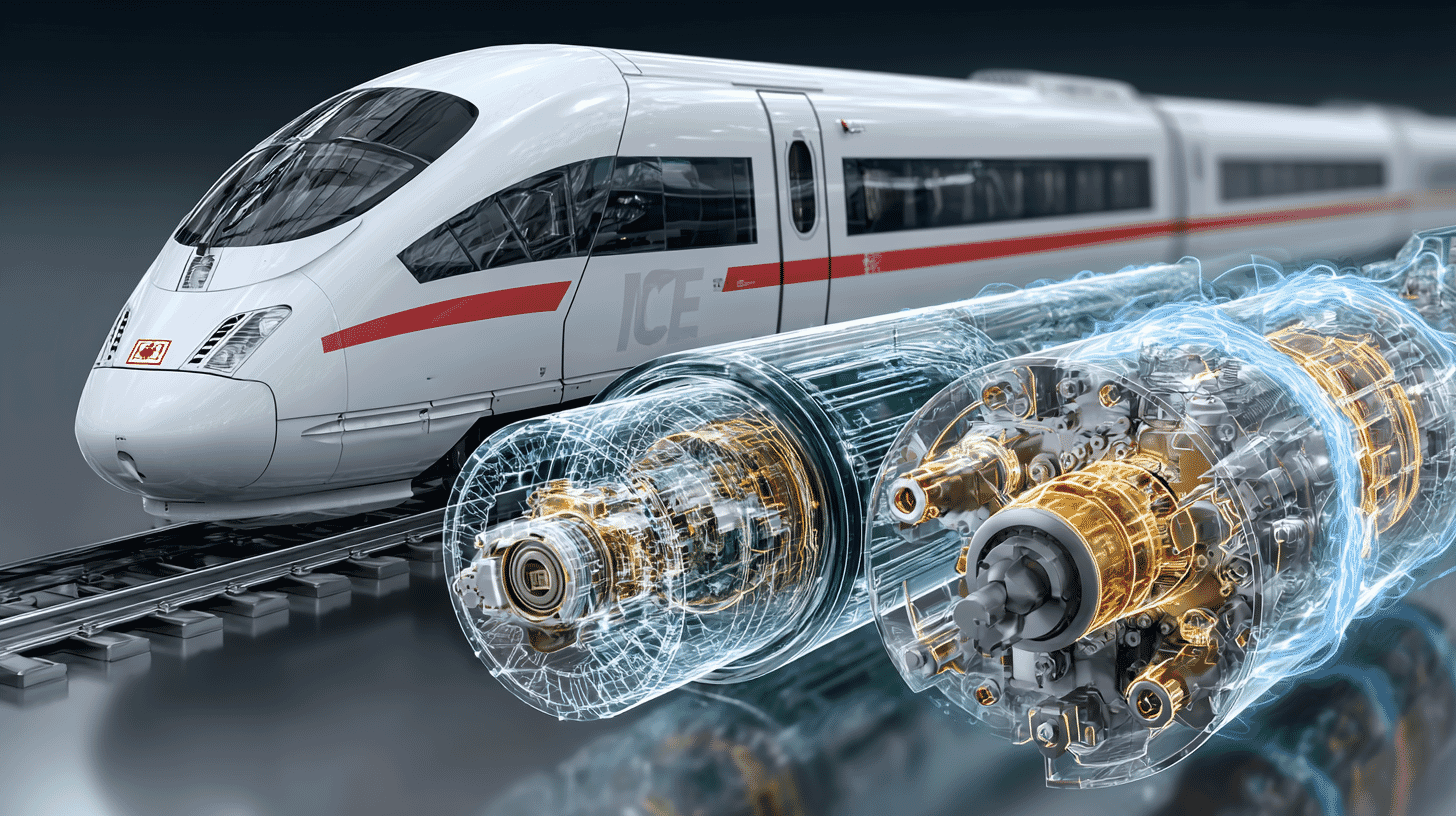
Cool certain materials far enough and their electrical resistance vanishes entirely. That phenomenon, superconductivity, is now rewriting the future of energy and transport. Fusion power, 500 km/h maglev trains, hydrogen aircraft that emit no CO₂: the key to all of them is high-temperature superconducting (HTS) tape. Japan's Fujikura is scaling production up to eightfold, aiming to become one of the world's largest suppliers.
What Is Superconductivity? The "Magic Wire" Explained
When certain metals or compounds are cooled to extremely low temperatures, their electrical resistance vanishes completely. Unlike ordinary copper wire, which generates heat and wastes energy when carrying current, superconducting wire loses nothing. It can carry enormous currents without overheating, generating magnetic fields thousands of times stronger than conventional electromagnets.
There are two main types. Traditional "low-temperature superconductors" (LTS) require cooling to -269°C (-452°F) using expensive liquid helium. The newer "high-temperature superconductors" (HTS) work at around -196°C (-321°F), cool enough to use relatively affordable liquid nitrogen. Yes, -196°C still sounds frigid, but in the superconductor world, it counts as "warm."
The dominant HTS material today is called REBCO (Rare-Earth Barium Copper Oxide). Fujikura's tape uses rare earth elements such as gadolinium and europium, layered into thin tape-like structures on metal substrates. Think of it as a multi-layer sandwich where each layer serves a specific function, with the superconducting layer as the key ingredient.
Fujikura's Big Bet: Scaling Production Up to 8x
Fujikura, a major Japanese cable and electronics manufacturer, is making an aggressive push into HTS wire production.
In fiscal 2024, the company committed roughly $38 million to lift capacity at its Sakura plant (Chiba Prefecture) to 3-4x previous levels by fiscal 2027. Then on February 9, 2026, it announced an additional $35 million investment to roughly double that expanded capacity again, for an eventual 6-8x current levels. Combined investment exceeds $73 million, with the company declaring its intention to achieve "world-class production scale" for HTS wire.
Reactor developers are targeting magnetic-confinement fusion plants in the 2030s, which points to sustained demand over the medium and long term.
Fujikura has already woven itself deeply into the global fusion ecosystem. It has invested in Commonwealth Fusion Systems (CFS), the world's largest private fusion company based in Massachusetts, and in Kyoto Fusioneering, a Kyoto University spinoff. It signed a framework supply agreement with UKIFS (UK Industrial Fusion Solutions) for the British STEP fusion reactor program. In Japan, the startup Helical Fusion sources its tape from Fujikura and announced an additional procurement of 20 km of HTS tape in 2026. Full-scale deliveries of rare-earth HTS tape to CFS are already under way.
Regarding rare earth supply risks, a concern given China's tightening export controls, Fujikura's CEO Naoki Okada has stated that the quantities used are "extremely small" but that the company is securing inventory and diversifying suppliers as a precaution.
The Global Fusion Race: CFS vs. Japan
Fusion energy works by replicating how the Sun produces energy: forcing hydrogen atoms to fuse together at temperatures exceeding 100 million degrees Celsius. The fuel comes from seawater, it produces no CO₂, and unlike nuclear fission, there's virtually no risk of meltdown. If it works, it means nearly limitless clean energy.
The frontrunner is Commonwealth Fusion Systems, a 2018 spinoff from MIT's Plasma Science and Fusion Center. CFS has raised nearly $3 billion from investors including Google and Nvidia. Its experimental reactor SPARC, under construction in Devens, Massachusetts, aims to demonstrate net energy, producing more power than it consumes, in 2027.
SPARC's breakthrough technology is its HTS magnets. In 2021, CFS demonstrated a 20-tesla large-bore magnet, a world-record-class achievement for magnets of that scale. In September 2025, the U.S. Department of Energy validated CFS's production toroidal field (TF) magnets through its Milestone-Based Fusion Development Program, awarding the company $8 million, the largest payout in the program's history. By January 2026, CFS installed SPARC's first TF magnet and plans to complete all 18 by summer 2026.
CFS employs a novel magnet architecture called NINT (Non-Insulated, Non-Twisted). Unlike conventional superconducting magnets that wrap wire in insulating material, NINT places bare HTS tape in spiral grooves within steel plates. Because HTS tape has dramatically higher conductivity than the surrounding metal, current naturally follows the superconducting pathway. The result: stronger, more compact magnets that can be manufactured at scale.
Japan's fusion players take a different approach. Helical Fusion, drawing on over 70 years of research at the National Institute for Fusion Science (NIFS) in Gifu Prefecture, is developing a helical-type reactor that uses spiral-shaped HTS magnets to confine plasma. NIFS's Large Helical Device (LHD) achieved the world's first continuous plasma operation exceeding 3,000 seconds back in 2004, a track record that gives Helical Fusion a solid technical foundation.
Japan's distinctive advantage lies in its vertically integrated supply chain: Fujikura produces the wire, Toshiba and Sumitomo Electric provide application expertise, national research institutes contribute decades of operational experience, and multiple startups are commercializing different aspects of the technology. Few countries can match this depth.
Superconducting Motors: Revolutionizing Air and Ground
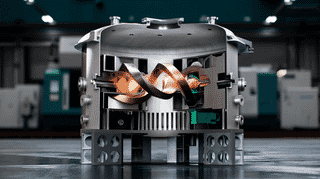
HTS applications extend well beyond fusion. Toshiba Energy Systems developed a 2-megawatt superconducting motor prototype in 2022 that weighs less than one-tenth of a conventional motor with the same output. Imagine replacing a motor the size of a small room with one you can carry on a truck, while maintaining the same power.
Airbus, the world's largest aircraft manufacturer, took notice. In October 2024, Toshiba and Airbus announced a joint research program to develop superconducting motors for hydrogen-powered aircraft. Airbus plans to develop a demonstration aircraft around 2030, targeting commercial hydrogen aviation by the 2040s.
The synergy between superconducting motors and hydrogen aircraft is elegant: liquid hydrogen fuel must be stored at -253°C (-423°F), and that extreme cold can directly cool the HTS motor coils, eliminating the need for a separate cooling system. It's a natural engineering fit that dramatically improves overall efficiency.
Toyota is also exploring superconductivity for automobiles. In November 2025, at the final round of the Super Taikyu endurance racing series, Toyota demonstrated a liquid hydrogen-powered GR Corolla equipped with a superconducting motor. The motor leverages the extreme cold of liquid hydrogen to achieve superconductivity, allowing the fuel pump to be miniaturized and placed inside the fuel tank itself. This doubled tank capacity from 150 to 300 liters, significantly extending range.
According to Professor Taketsune Nakamura of Kyoto University, who collaborated on the project, the motor is made from "commercially available superconducting wire", suggesting the technology is closer to practical application than many realize.
Maglev: Breaking Free from Helium
Japan's superconducting maglev, the only superconducting magnetic levitation train in the world approaching commercial deployment, is also undergoing an HTS transformation.
The Chuo Shinkansen maglev, designed to connect Tokyo and Nagoya at 500 km/h (311 mph), originally relied on low-temperature superconducting magnets requiring liquid helium cooled to -269°C. Japan imports all its liquid helium, and prices have surged roughly 20% since 2022, reaching about $88 per kilogram. Supply disruption would directly threaten train operations.
JR Central (JR Tokai), the maglev operator, has spent years developing HTS magnets using bismuth-based superconducting materials that operate without liquid helium. By 2025, the company completed its target mileage for testing HTS magnets, and Japan's Ministry of Land, Infrastructure, Transport, and Tourism certified that the technology has achieved "a certain level of technical feasibility for commercial line use."
The engineering team has also overcome "quench", a feared phenomenon where superconductivity suddenly collapses, confirming the HTS magnets are robust enough for daily revenue service. The lead engineer at JR Central's Yamanashi test facility expressed confidence: "We've reached the point where we believe this will work."
Eliminating liquid helium means simpler cooling systems, lower operating costs, and freedom from a volatile imported commodity, a triple win for the maglev program.
Japan's HTS Supply Chain: A Global Asset
In the global HTS landscape, Japan's supply chain stands out for its unusual depth and breadth.
Wire production: Fujikura leads in REBCO tape for fusion applications, supplying CFS, UKIFS, and Helical Fusion. Sumitomo Electric produces world-class bismuth-based HTS wire (DI-BSCCO), used in maglev and other applications. Furukawa Electric, through its U.S. subsidiary SuperPower, supplies REBCO wire to the North American market.
Application technology: Toshiba is a global leader in superconducting motors. JR Central operates the world's only superconducting maglev test line. Toyota is pioneering automotive superconductor applications. Helical Fusion and Kyoto Fusioneering are advancing fusion-specific technologies.
This end-to-end ecosystem, from raw materials and wire fabrication to motors, magnets, and full system demonstrations, is virtually unmatched globally. As fusion commercialization accelerates, the bottleneck will shift from physics breakthroughs to industrial-scale supply of HTS wire. A single fusion reactor requires tens of thousands of kilometers of superconducting tape. With dozens of fusion projects planned worldwide, current global production capacity is far from sufficient.
Fujikura's aggressive investment is a bet that this "superconductor gold rush" is imminent, and that the companies controlling the supply chain will shape the clean energy future.
The Bottom Line
High-temperature superconductivity is a cross-cutting foundation technology that touches every major 21st-century energy and transportation challenge: fusion power, ultra-high-speed rail, aviation decarbonization, and hydrogen mobility. Japan holds world-leading positions across the entire value chain, from wire manufacturing to motor design to system-level demonstration.
Three decades of patient, often unglamorous materials research is now converging with the global push for carbon neutrality and unlimited clean energy. Whether Japan's "materials power" can translate into sustained industrial leadership in this superconductor boom, or whether others will leapfrog with faster commercialization, remains the defining question.
In Japan, superconductor technology is being applied everywhere from fusion reactors and maglev trains to hydrogen aircraft and cars. What clean energy or next-generation transportation technologies are getting attention in your country? Had you heard of HTS wire before? Share your thoughts in the comments!
References
- https://xtech.nikkei.com/atcl/nxt/column/18/03533/030400001/
- https://xtech.nikkei.com/atcl/nxt/column/18/03533/030500002/
- https://www.nikkei.com/article/DGXZQOUC094BB0Z00C26A2000000/
- https://www.jaif.or.jp/journal/japan/32315.html
- https://www.fujikura.co.jp/news/pressrelease/20250522ukifs.html
- https://cfs.energy/technology/
- https://cfs.energy/news-and-media/us-department-of-energy-validates-commonwealth-fusion-systems-completion-of-magnet-tech/
- https://techcrunch.com/2026/01/06/commonwealth-fusion-systems-installs-reactor-magnet-lands-deal-with-nvidia/
- https://newswitch.jp/p/43293
- https://newswitch.jp/p/39430
- https://toyotatimes.jp/newscast/157.html








Global Discussion
12 comments