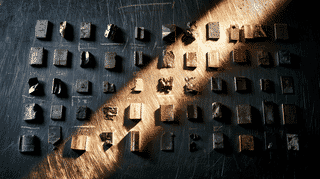
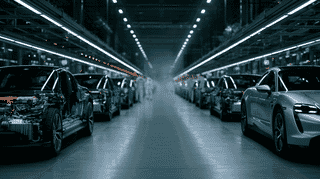
Toyota's CTO credits development speed to an overwhelming number of failures. Murata built a 35 billion yen MLCC lab that manufactures nothing. A smaller metals firm gets the same room through internal rules.
Toyota, NTT and Tokyu are among roughly 1,600 Japanese employers paying for an AI dating app for single staff. The workplace is trying to buy back a matchmaking role it lost over fifty years.
Prelude, Supra, Primera, Pajero: Japanese carmakers keep reviving retired nameplates. Four forces explain it, from trademark law and the EV-era heritage premium to a 1988 US import rule still moving prices in Japan.
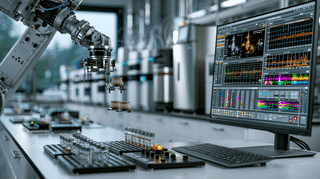
Toyota, Shinshu University and 11 partners are building a self-driving lab where robots run experiments and AI picks what to try next. Here is how Japan's closed-loop materials push compares with Berkeley's A-Lab and China's robot chemist.
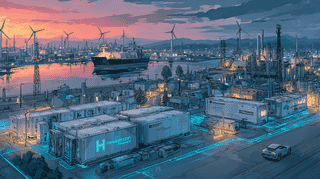
Mitsubishi Gas Chemical has signed an MOU with Australia's Gold Hydrogen to study green methanol made from natural hydrogen in South Australia. Here is why a Tokyo chemical maker is going to the wellhead abroad, what the Toyota-ENEOS consortium is really buying, and how the global race for natural hydrogen is splitting along national lines.
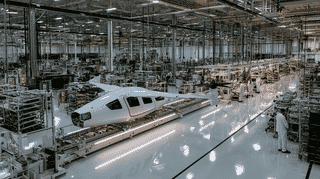
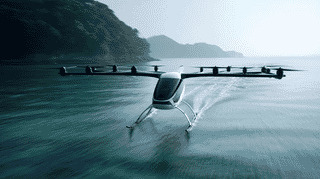
Toyota and America's Joby Aviation are setting up a California joint venture to mass-produce eVTOL air taxis, with Toyota holding 51% and Joby 49%. Now that the flying is largely solved, the race hinges on whether anyone can build these aircraft cheaply and at scale. Here is why Toyota's production system is the bet, how China pulled ahead, and why Europe's pure-play startups collapsed.
Japan's SKYDRIVE eVTOL flew stably at 100 km/h, a speed that sounds modest but marks a key step toward type certification. We unpack why a compact, wingless multirotor is a deliberate bet, and how Japan stacks up against China's already-flying EHang and US rivals Joby and Archer.
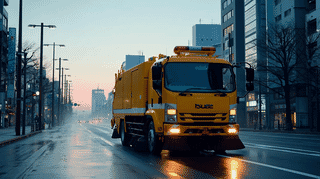
To hunters abroad, Howa is a rifle brand. Back in Japan, the same company holds about 90% of the road-sweeper market, makes airport soundproof windows and subway floodgates, and shares a root with Toyota. Meet Howa Machinery.
In May 2026 Toyota canceled the Lexus LF-ZC, its next-gen EV—but it killed the car, not the tech. Why investment in gigacasting and solid-state batteries continues, compared with Tesla's own gigacasting retreat.
China's Chery and Japan's Autobacs are among five companies behind EMTA, a new kei-class EV brand planned for 2027. Why Japan's open market looks nothing like the US or EU.
Mazda launched the third-generation CX-5 in Japan on May 21, 2026, starting at 3.3 million yen (around $20,800). With 5 million sold globally, this redesigned SUV is Mazda's bet on hybrids and combustion as the EV boom cools, and how it stacks up against Toyota RAV4, Honda CR-V, Tesla, and BYD.
Why a Nissan deep in restructuring picked Red Hat for its next-generation in-vehicle OS. We unpack the trap of in-house software development that cost Volkswagen's CARIAD 14 billion euros, and the path Nissan chose to avoid it.
TSMC's Japanese subsidiary JASM posted a quarterly profit of NT$951 million (about $30 million / ¥4.78 billion) in Q1 2026, the first time the Kumamoto fab has been in the black since mass production began in December 2024. We unpack what the 14-month turnaround means against the backdrop of Japan's ¥1.23 trillion in subsidies, the Sony-Denso-Toyota partnership, TSMC's Arizona and Dresden expansions, and Rapidus's high-stakes 2nm bet.
Honda reported a 423.9 billion yen net loss for the year to March 2026, its first since listing in 1957, alongside 1.58 trillion yen in EV-related charges, most of them non-cash. The same day it unveiled a turnaround plan: 15 new hybrids by FY2029 and a 1.4 trillion yen operating profit target. We set it against Toyota's multi-pathway bet, the Tesla and BYD lead changes of 2026, and Hyundai-Kia's quiet rise.
An in-depth look at Japan's Hydrogen Arterial Plan (Suiso Daidomyaku Koso), unveiled by METI in April 2026. Six priority regions connected by arterial highways will receive concentrated investment of 15 trillion yen by 2040, with Toyota and Chiyoda starting mass production of electrolyzers in 2029. How Japan's strategy compares with the US IRA and the EU Hydrogen Bank.
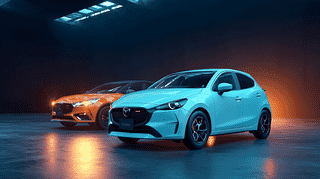
Mazda will end domestic production of its signature compact car Mazda2 (formerly Demio) at the end of August 2026. We explore the 30-year legacy of the car that saved Mazda from bankruptcy in the 1990s, and what this means for Japan's shrinking compact car market.
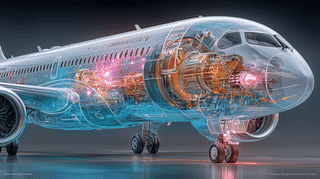
Toshiba Energy Systems, Airbus, and Toyota are racing to commercialize superconducting motors that promise 10x the power density of conventional motors. Dubbed the 'ultimate motor,' the technology enables hydrogen aircraft and hydrogen-engine cars while leveraging Japan's decades of niche superconductor expertise. As eVTOL startups falter, why is Japan's aviation motor technology suddenly central to the global decarbonization race?
On April 25, 2026, Denso announced plans to withdraw its $8.2 billion acquisition proposal for Rohm. Rohm chose the three-way alliance with Toshiba and Mitsubishi Electric, while Denso pivots to actively explore partnerships with third parties. We analyze the conclusion of Japan's 50-day power semiconductor reshuffle and what's next for Toyota Group's chip in-house strategy.
Waymo and Toyota have agreed to explore bringing L4 robotaxi technology to personally owned vehicles. We unpack how Waymo's sensor-heavy approach differs from Tesla's camera-only FSD and China's Baidu Apollo, and what this means for Toyota's strategic direction.
In the world's 3rd largest auto market, Japanese brands hold 50% share. We break down Maruti Suzuki's 40% dominance, the rise of Tata and Mahindra, and how Japanese makers are navigating India's EV transition.