🔫 If you own a bolt-action hunting rifle, you may well find the name "Howa" stamped on it somewhere. What most shooters don't know: the same company that built their rifle also keeps Japan's streets clean, its airport neighborhoods quiet, and its subways from flooding. One firm, scattered across a half-dozen industries that have almost nothing to do with each other.
The name shooters already know
For hunters and target shooters in the US, Canada, and the UK, Howa is a rifle brand. The Howa Model 1500, a bolt-action rifle sold through distributors like Legacy Sports International in the States and Highland Outdoors in Britain, has a solid reputation as an affordable, accurate workhorse.
At home, Howa is Japan's only manufacturer of the standard infantry rifle carried by the Self-Defense Forces. It built the Type 64, then the Type 89, and most recently the Type 20, adopted by the Ministry of Defense in 2020. In a country that makes very few firearms, Howa is effectively the firearm company.
So far, so on-brand. Then it gets strange.
Back home, it sweeps the streets
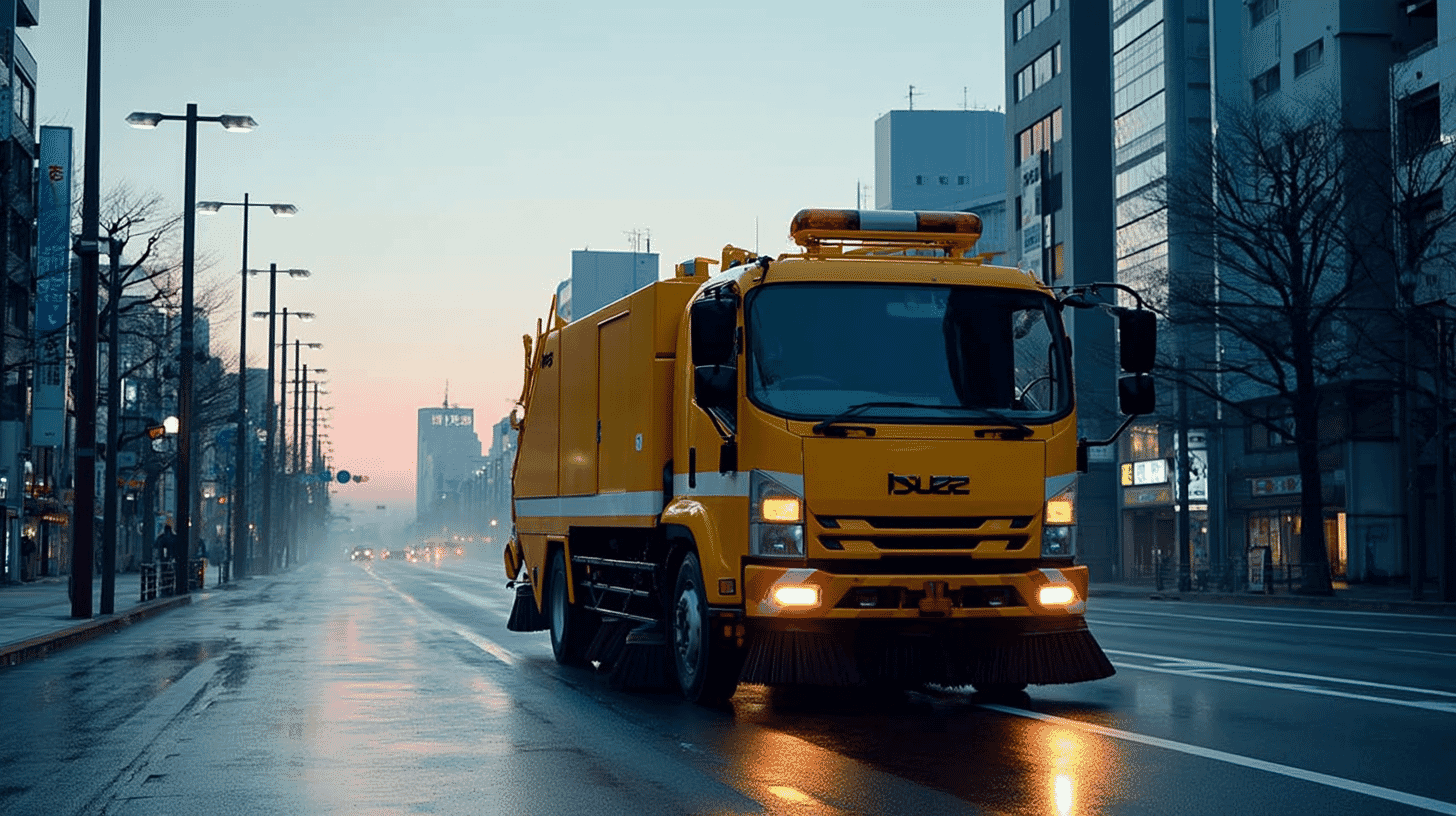
Howa holds roughly 90% of Japan's market for road sweepers, the slow trucks with rotating brushes that scrub highways, national routes, and residential streets before most people are awake. Nine out of ten of them, made by the rifle company.
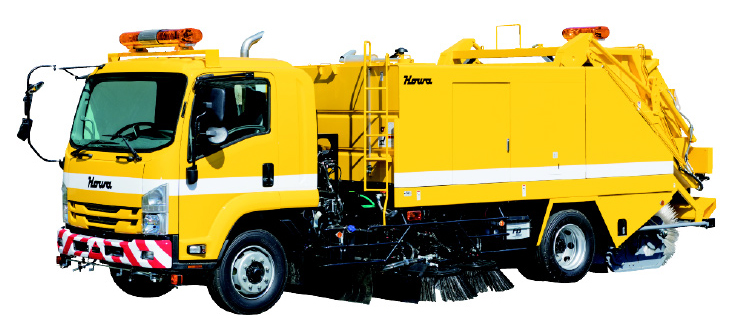
Source: Howa Machinery
The sweepers do more than tidy up. Howa's machines are pulled into disaster zones to clear mud after floods and to shovel volcanic ash off roads after eruptions, the kind of unglamorous cleanup that keeps a country running. It's about as far from a battlefield as industrial machinery gets.
And the windows. And the floodgates.
Once you start looking, Howa is everywhere in Japanese daily life, just never with its name showing.
Live near an airport or a base? The soundproof window sashes muffling the jet noise may well be Howa's; the company has been building aluminum soundproof sashes since 1965. Ride the Tokyo subway? The waterproof doors and panels designed to seal off stations and underground malls when a typhoon floods the city are a Howa product line too. The company even makes electromagnetic-shielding doors for rooms that need to block signal leaks.
And in the factories that build Japan's cars and electronics, Howa's machine tools and lathe chucks have been doing precision metalwork for decades. Its Kiwami line of compact machining centers is the flagship there.
Guns, sweepers, windows, floodgates, factory tools. How does one company end up here?
The Toyota in its family tree
The answer runs back more than a century, to a name every car owner knows.
In 1907, a company called Toyoda Shiki Shokki, the Toyoda-Type Loom Works, was founded to manufacture the power looms invented by Sakichi Toyoda. If that name sounds familiar, it should: Sakichi is the inventor and industrialist regarded as the founder of the Toyota group. Backed by businessmen in Tokyo, Osaka, and Nagoya at Mitsui's urging, the new firm took over the factory and staff of Sakichi's own trading company, and Sakichi became its first managing director and chief engineer. Caught between running a business and doing research, he resigned the post in 1910. The loom works he founded later, Toyoda Automatic Loom Works, is the one that eventually gave the world Toyota cars.
That 1907 loom company is Howa. Its name still carries a trace of that origin; the first character of "Howa" is the same one used in "Toyoda." Over the decades it kept reinventing itself: cast steel in the mid-1930s, then weapons and machine tools through Showa Heavy Industries, a subsidiary set up in 1936. That subsidiary was absorbed in 1941, making the parent Howa Heavy Industries, which became Howa Machinery in 1945. After that came a steady sprawl into chucks, building materials, hunting rifles, machining centers, and cleaning vehicles. A loom maker that spent a hundred years saying yes to whatever precise metalwork the country needed next.
Why Japan is full of companies like this
Howa is an extreme example of something common in Japan: the "hidden champion," a mid-sized firm that dominates a narrow market almost nobody thinks about. Germany has the same thing with its Mittelstand. These companies rarely advertise, rarely make headlines, and are often the only real supplier in their niche, which is exactly why a single firm can end up making 90% of a country's street sweepers without anyone noticing.
What makes Howa unusual isn't dominating one niche; it's holding so many unrelated ones at once while staying invisible in all of them. The rifle on a hunter's rack in Texas and the brush truck cleaning a street in Osaka carry the same corporate DNA, and almost no one on either end knows.
Next time a street sweeper rolls past, or you walk through a subway built to hold back a flood, it's worth asking: who actually makes the boring, essential machines your country runs on? And would you ever recognize their name?





Global Discussion
0 comments