Japan may write a study of nuclear-powered submarines into its security documents. Why nuclear propulsion is not nuclear arms, why the barrier is a 1965 legal reading, and what Australia, Korea and Brazil show.
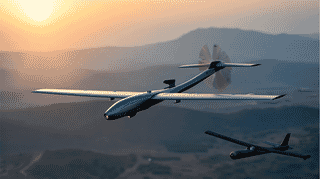
Japan signed a mass-production contract for the Terra B1 interceptor drone on August 25, 2026, three months after opening the tender. Three foreign entries were tested too; only the Japanese aircraft got a contract.
After reports that Rakuten would help Helsing sell its HX-2 drone to Japan's Defense Ministry, three shops left Rakuten Ichiba. Strike drone or interceptor, and how far does a seller answer for the mall's other business?
Underwater, only sound carries far, so the ocean is still read by a handful of specialists. NEC has a Japanese defence contract to build a self-supervised underwater acoustic foundation model by fiscal 2027.
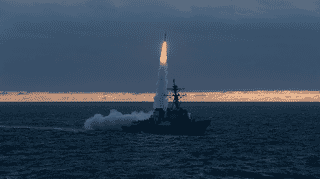
On July 29, 2026, the destroyer Chokai fired a Tomahawk over the Pacific, a first for Japan. What 400 cruise missiles with a 1,600 km reach mean for a country built around defense-only doctrine.
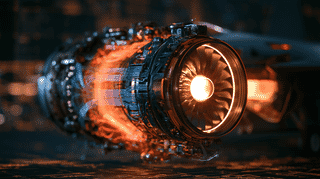
Rolls-Royce, IHI and Avio Aero say the GCAP engine demonstrator is close to final design approval after more than 100 component tests, with ground running next. Sixth-generation fighter engines are judged on electrical power and heat, not just thrust. What Japan brought, and why co-designing an engine breaks with the F-2 era.
Loss-making mobile-game studio KLab has signed an MOU to bring an undisclosed partner's counter-drone system to the UAE. Inside a game company's pivot, UAE royal money, and Japan's neutral-broker play.
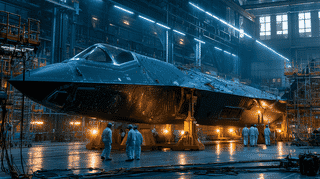
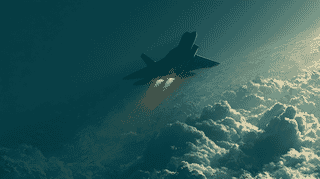
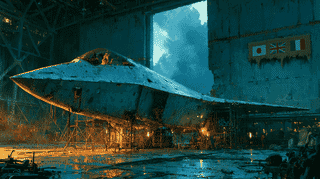
Japan, the UK and Italy's GCAP fighter demonstrator is 75% built, and reporters have finally seen it. A third longer than a Typhoon, with weapons bays reportedly double the F-35's capacity, its sheer size reveals the program's priorities: range and payload for the Pacific. How it compares to America's F-47 and Europe's collapsed FCAS.
After a year of budget drama, Britain published its delayed Defence Investment Plan on June 30, committing about 8.6 billion pounds to the GCAP sixth-generation fighter and extending the Japan-UK-Italy contract to end-2027. Why Japan was the anxious partner, why an outgoing prime minister signed it, and what the bet on building a fighter without America really means.
On June 26, 2026, Japan's Diet passed a law renaming the Air Self-Defense Force as the Aerospace Self-Defense Force, the first rename of an SDF branch since 1954. A new 880-strong Space Operations Command will track satellites and threats in orbit. Here is what changes, and why now.
First Rheinmetall, then Anduril: in a single month, foreign arms makers signaled they want to build in Japan. We map the three routes they are taking, the April export-rule change that opened the door, and the identity shift Japan is now choosing.
Japan, the UK, and Italy are building the GCAP sixth-gen fighter, but lead partner Britain is in political and fiscal chaos after PM Starmer's resignation, with the contract keeping it alive expiring June 30. Why Tokyo is the anxious one, plus the queue of countries like Canada lining up to join.
To hunters abroad, Howa is a rifle brand. Back in Japan, the same company holds about 90% of the road-sweeper market, makes airport soundproof windows and subway floodgates, and shares a root with Toyota. Meet Howa Machinery.
Germany's largest arms maker, Rheinmetall, is eyeing its first production base in Japan. Who is the company behind the guns on the Leopard 2 and Japan's Type 90 tank, how did the Ukraine war transform it, and why does it now want to export from Japan?
Japan's Terra Drone has taken controlling stakes in WinnyLab and Amazing Drones, two Ukrainian firms whose interceptor drones have downed Shahed attack drones in combat. Here's why moving from investor to owner matters, and how the cheap, 3D-printed interceptors are rewriting the cost of air defense.
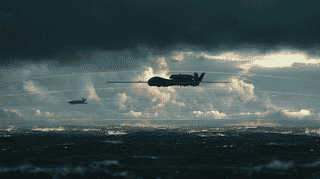
Japan's Defense Ministry has quietly hired Space Compass to study a homegrown stratospheric platform. Roughly 20 km up, between airliners and satellites, the US, UK, China and India are already racing for a sensor that never blinks. Here is the military picture of the near-space contest.
Japan's navy just put 45,000 personnel on SAP ERP for logistics. The US Army got there in 2018, Germany in 2011. Inside Japan's late arrival, its siloed legacy systems, and whether Fujitsu can deliver.
On May 18, 2026, the full content of Japan's LDP proposal for revising its three security documents was revealed. Early deployment of interceptor drones, sustained warfighting capability lasting 'at least a year,' early-warning drones over the Pacific, next-generation submarines with long-range missiles: here's what Japan's future defense posture looks like, shaped by Ukraine war lessons and China deterrence.
Japan's Environment Ministry confirmed PFAS contamination above national limits at 629 sites across 26 prefectures in fiscal 2024, including locations near U.S. military bases, factories, and Self-Defense Force facilities. A UN special rapporteur has voiced 'most serious concern,' while Japan's standards lag far behind those of the U.S. and EU.
Terra Drone has unveiled flight footage of its fixed-wing interceptor drone Terra A2 — 75km range, 312km/h top speed, 40-minute endurance. CEO Toru Tokushige outlined the layered air defense vision in a United24 Media interview. Inside the modern methods of stopping Shahed-type kamikaze drones and the new air defense economics being shaped by a Japanese startup.