Japan's government is considering nationalizing defense equipment factories to secure warfighting sustainability. Learn about this historic post-WWII policy shift driven by Ukraine war lessons and rising security threats.
Japan's top drone company Terra Drone has announced its full-scale entry into the defense equipment market, establishing U.S. subsidiary 'Terra Defense.' The move comes amid Japan's record defense spending, the SHIELD coastal defense initiative, and growing global demand for military drones post-Ukraine.
As the yen approaches 160 to the dollar, the Hormuz Strait blockade has triggered an oil price surge, delivering a devastating double blow to Japan's energy-import-dependent economy. Analysis of record gasoline prices, structural vulnerabilities, and comparisons with South Korea and Germany.
Japanese space startup Synspective successfully launched its 8th StriX SAR satellite via Rocket Lab's Electron rocket from New Zealand. The company is building a 30-satellite constellation and holds a role in a 283.1 billion yen Japanese defense program, competing with Finland's ICEYE and America's Capella Space in the global SAR market.
With the Strait of Hormuz shut in all but name, the IEA's 32 members unanimously approved a record 400-million-barrel coordinated release on March 11, 2026. Japan carried 80 million of it and began draining national reserves on March 26. Where those 254 days went, and what July's re-escalation means.
Japan's government has asked Japan Display Inc. (JDI) to run a $13 billion advanced display factory in the US — part of a $550 billion investment deal to ease Trump tariffs. We break down the defense angle, China dependency risks, and what it means for a company that's been on life support for years.
China's Commerce Ministry banned dual-use exports to 20 Japanese defense entities including Mitsubishi Shipbuilding, Kawasaki Heavy's aerospace arm, IHI Aerospace and JAXA, while adding 20 more firms such as Subaru and TDK to a watch list. Seen as a response to PM Takaichi's Taiwan remarks, the move puts rare earth and semiconductor material supply chains at risk. The list was expanded again in June 2026.
A field-by-field breakdown of the 17 strategic sectors PM Takaichi named in her February 20, 2026 policy speech: AI and semiconductors, fusion, content, defense and the rest, with current standing, plans and key players, plus the public-private investment roadmap released in June 2026 that runs to over 370 trillion yen through fiscal 2040.
Trump ordered the Pentagon and other agencies to release files on UFOs and extraterrestrial life, days after Obama said aliens are real. What the Pentagon actually posted in May 2026, and how Japan's own UFO culture, from Junichi Yaoi to Junichiro Nirasawa, reacted.
Japan's Ministry of Defense has signed a landmark $1.8 billion contract for a satellite constellation project. A special purpose company "TriSat Constellation," formed by Mitsubishi Electric, SKY Perfect JSAT, and Mitsui, will lead the effort alongside domestic space startups like Synspective and iQPS. A deep dive into Japan's pivotal shift in space defense strategy.
Japan is running its largest postwar industrial policy: over 10 trillion yen for semiconductors and AI through fiscal 2030, defense at 2% of GDP two years early, and 20 trillion yen in GX transition bonds. Rapidus at 2nm, TSMC Kumamoto's shift to 3nm, 14 niche global leaders, and where it stood in mid-2026.
Japan Coast Guard's new 3,500-ton patrol ship "Suruga" launched on Feb 18, 2026. Built at $108M with twin 40mm guns and 25+ knot speed, this 8th Miyako-class vessel strengthens Japan's response to China's growing maritime assertiveness around the Senkaku Islands.
The Chinese vessel seized in Japan's EEZ used a "tiger net", a devastating method with 1cm mesh that strips the ocean bare, including juvenile fish. Explore how this "sea vacuum cleaner" works and why IUU fishing by Chinese fleets threatens oceans from South America to Africa.
On February 12, 2026, a Chinese tiger-net fishing boat was seized in Japan's EEZ off the Goto Islands and its captain arrested after ignoring an order to stop. It is the first Chinese vessel seized since 2022, and the captain was released the same day.
Japan's Space Data Inc. and CYPHIC, the country's only electronic warfare startup, have launched a strategic partnership combining digital twin technology with anti-GPS spoofing capabilities. A deep look at how Japanese defense tech startups are tackling modern electronic warfare threats.
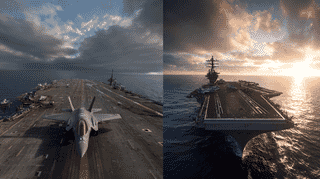
Aircraft carrier flight decks come in two main types: ski-jump ramps and catapult systems. Japan's JS Kaga uses neither. Here is the engineering behind CATOBAR and STOVL carriers, why Kaga was converted the way it was for the F-35B, and what each nation's deck shape reveals about its defense strategy.
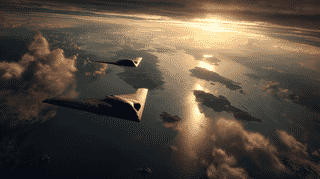
The US CCA program, China's loyal wingmen, and Japan's GCAP-linked combat drones. As nations race to develop AI-powered unmanned combat aircraft, we examine where Mitsubishi Heavy Industries and Kawasaki Heavy Industries stand, and the structural challenges Japan's defense industry must overcome.
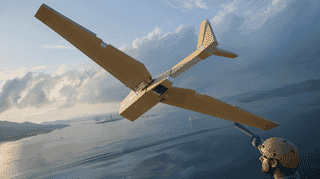
Japanese startup AirKamuy has developed a cardboard military drone priced at just $2,000—one-tenth the cost of conventional fixed-wing UAVs. The AirKamuy 150 assembles in 5 minutes, flies at 120 km/h for 2 hours, and is attracting attention from Japan's Ministry of Defense and Coast Guard. How is this disruptive innovation reshaping defense technology?
Japan's Air Self-Defense Force scrambles over 700 times annually at $38,000 per hour. With China's drones increasing and F-15s aging, can the UK-Italy-Japan GCAP sixth-gen fighter solve the crisis? An in-depth look at Japan's air defense challenges.
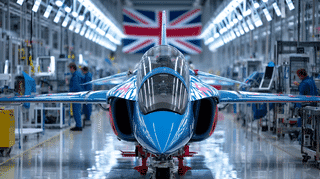
UK aerospace startup Aeralis is developing a modular jet trainer that could succeed Japan's aging T-4 aircraft. With interchangeable components enabling basic to advanced training in one platform, and potential ties to GCAP cooperation, this innovative British design may transform pilot training worldwide.