On May 8, 2026, the US Department of War launched war.gov/UFO and released 162 UAP files in one go—including a football-shaped object filmed near Japan by Indo-Pacific Command in January 2023, Apollo 12 and 17 lunar surface photos, and orange orbs agents compared to the 'Eye of Sauron'. We break down what is actually in the release and how Japan is reacting, from yakisoba puns to distraction-theory skepticism.
Saab Technologies Japan has named Akira Ukaji as its first Japanese country manager and representative director. The Swedish defense giant is positioning its GlobalEye AEW&C aircraft as the successor to Japan's aging E-767 fleet, with industry sources targeting a 2035 replacement. After Japan's April 21 abolition of the 'Five Categories' export rule, can a non-US contender finally crack Japan's airborne early warning market?
On May 5, 2026, Defense Ministers Koizumi and Teodoro met in Manila to launch a working group for transferring used Abukuma-class destroyer escorts to the Philippines: the first concrete test of Japan's new lethal weapons export rules.
On May 4 in Canberra, PM Takaichi and PM Albanese signed five joint documents including the Economic Security Joint Declaration. Six critical mineral projects backed by $1.2B. How Japan's approach differs from the US IRA and EU CRMA, and what it means for global supply chains.
Two months into the de facto closure of the Strait of Hormuz, Japan took its first Russian crude cargo since the blockade began. Taiyo Oil bought Sakhalin-2 barrels on a spot contract at the request of Japan's energy agency, and the tanker reached Imabari on May 4. How the "Sakhalin exception" to the G7 and EU price cap works, how Germany, South Korea and India have played the same shock differently, and what it all reveals about Japan's structural exposure.
Japan's government blocked Korean PE firm MBK Partners' $1.7 billion takeover of Makino Milling Machine, the first-ever stop order under the revised FEFTA since 2017. Why did a non-classified machine tool maker trigger national security alarms? We break down both sides of the overreach-versus-reasonable debate.
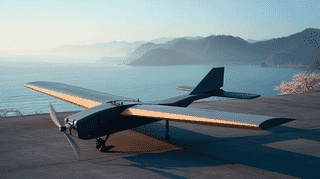
JISDA (Japan Integrated Security Design Agency) has launched the Shiraha, a wooden fixed-wing drone costing just 70,000 yen (about 440 USD). Built on three years of field research within 20 km of Ukraine's front line, it targets Japan's training-attrition gap. How it differs from AirKamuy's cardboard drone and why Japan's defense mindset is finally shifting.
On April 21, 2026, Japan's Takaichi cabinet revised the Three Principles on Defense Equipment Transfer, officially allowing exports of lethal weapons including warships and missiles. A deep dive into what Japan's 'pacifist nation' turning point actually means.
How does Fujitsu's dual-band T2SL infrared sensor stack up against existing products? We break performance down into three axes, resolution, sensitivity, and wavelength, and go head-to-head with FLIR, Raytheon, L3Harris, Northrop Grumman, and Sweden's IRnova. Plus the commercial rollout roadmap from FY2026.
Japan and Australia signed the New FFM joint development contract, worth up to AUD 20 billion. We unpack the quasi-alliance behind this de facto warship export, and the Takaichi government's push to scrap the 'Five Categories' and allow lethal weapon exports.
Japan's National Intelligence Council Bill marks the country's biggest postwar intelligence reform. But similar PM-led intelligence bodies overseas have produced both spectacular successes (foiling the 2006 transatlantic bombing plot) and deep abuses: Korea's KCIA election interference, NSA mass surveillance, GCHQ's legal loopholes, BND monitoring German politicians for the NSA. What lessons should Tokyo draw?
The Hormuz Strait blockade has cut off Japan's naphtha supply, forcing TOTO to halt bathtub orders and LIXIL to declare delivery dates unknown. Insulation up 40%, paint up 80%, pipes up 20%; housing materials are skyrocketing across the board. We analyze Japan's structural vulnerability of depending on the Middle East for 90% of its crude oil, with comparative data from other countries.
Nine months after the Japan-EU BRT proposal, the rare earth landscape has transformed: 55-nation pricing agreements, an EU center modeled on Japan's JOGMEC, and $1.3B US funding. But can the West truly break China's grip?
China's carrier Liaoning conducted flight operations near Minamitorishima — Japan's remote rare earth island. With Beijing tightening export controls in retaliation for PM Takaichi's Taiwan remarks, and a US-Japan rare earth partnership signed at the March 2026 summit, this is no longer just about minerals. It's a geopolitical power game with South China Sea parallels.
In March 2026, Japan and the US signed an MOC on deep-sea mineral development. But overseas coverage missed the real story: Japan's successful 6,000m rare-earth mud retrieval, China's dual-use export ban, and 14 years of research that made this moment possible.
Japan's FY2026 budget of ¥122.3 trillion ($766B) passed on April 7, the largest ever. With defense spending at $56B, social security at $245B, and debt servicing costs exceeding $196B for the first time, can Japan sustain its finances with a 230% debt-to-GDP ratio as interest rates rise? We compare with G7 peers.
Astroscale and France's Exotrail sign a deal for satellite deorbiting missions, with President Macron and PM Takaichi visiting Astroscale's Tokyo HQ. The partnership targets space debris removal technology by 2030 amid a booming orbital servicing market.
As drone warfare extends to the seas, Japan leads the world in autonomous ship technology. From the MEGURI 2040 project to combat-support USV development and lessons from Ukraine, explore the future of maritime security.
Trump told nations to 'go get your own oil.' Japan imports 93% of its crude from the Middle East — so what would a serious Japanese oil retrieval fleet actually look like? From helicopter carriers to world-class minesweepers, we assemble a fantasy task force, explore the legal hurdles, and see how the internet reacted to this wild thought experiment.
Fujitsu has developed and delivered the world's first 1-megapixel dual-band T2SL infrared sensor to Japan's defense agency, detecting temperature differences below 0.05°C. The technology, how it compares with Teledyne FLIR and L3Harris, and where Japan's dual-use defense tech strategy actually stands.