
In February 2026, a Japanese drilling ship pulled mud from 6,000 meters below the Pacific Ocean, and proved that rare earths can be mined from the deep sea. One month later, Japan and the US signed a pact to develop those resources together. International media covered the deal as a diplomatic headline. But the real story, 14 years of obsessive research, a Chinese export ban that spooked Japan's industrial base, and the technical breakthrough that made it all converge, barely made the news abroad. Here's what you missed.
Four Documents, Not One
When Prime Minister Sanae Takaichi met President Trump in Washington on March 19, 2026, they didn't just sign a single memorandum. The summit produced four separate documents on critical minerals.
The first was a joint statement positioning critical mineral supply chains as a pillar of economic security. The second was an "Action Plan for Critical Minerals Supply Chain Resilience," committing both governments to coordinate strategic stockpiling, joint R&D, and mineral location data sharing.
The third was a joint fact sheet naming 13 specific projects backed by Japanese and American companies, including Mitsubishi Materials' investment in a rare earth recycling venture in Indiana, Mitsubishi Corporation's copper mining partnership, and Sumitomo Metal Mining's refining collaborations.
The fourth, and most significant for this story, was the Memorandum of Cooperation (MOC) on deep-sea mineral resource development, signed between Japan's Ministry of Economy, Trade and Industry (METI) and the US Department of Commerce. It establishes a bilateral working group targeting rare-earth mud and manganese nodules near Minamitorishima Island, a tiny Japanese outpost about 1,200 miles southeast of Tokyo.
The Breakthrough That Made It Real
Overseas coverage focused on the political handshake. But what made this MOC possible was a technical milestone that Japan had been chasing for over a decade.
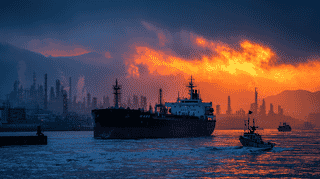
On January 12, 2026, JAMSTEC's deep-sea drilling vessel Chikyu (meaning "Earth") departed Shimizu Port in Shizuoka Prefecture for Minamitorishima. Its mission: test a mining system at the ocean floor, nearly 6,000 meters down, deeper than Mount Kilimanjaro is tall.
In February, JAMSTEC and the Cabinet Office announced success. Using a "closed-circulation system," the Chikyu lowered pipes through 500+ atmospheres of pressure, agitated the rare-earth-rich mud into a slurry, and pumped it continuously to the surface. It was the first time anyone had demonstrated this technology at such depths.
Japan's Minister of Education and Science called it potentially "a major step forward for our country at the world's cutting edge." The next test, planned for February 2027, aims to extract 350 tons of mud per day.
14 Years in the Making
This wasn't a sudden breakthrough. It was the culmination of a patient, methodical campaign that traces back to 2011, when Professor Yasuhiro Kato at the University of Tokyo published research showing rare-earth-rich mud existed on the deep ocean floor. In 2013, his team confirmed ultra-high-concentration deposits within Japan's Exclusive Economic Zone (EEZ) around Minamitorishima.
The Japanese government made it a national project. The Cabinet Office's SIP program (Strategic Innovation Promotion Program) has supported the effort across three phases spanning 14 years. A single research voyage costs around $1 million. The University of Tokyo set up a public fundraising campaign, rare for a resource development project, asking ordinary citizens to help fund voyages.
The numbers are staggering. The EEZ around Minamitorishima contains an estimated 16 million tons of rare-earth resources, enough to supply Japan's domestic demand for hundreds of years. In June 2024, a detailed survey also found 230 million tons of manganese nodules spread across more than 10,000 km² of seabed, containing 610,000 tons of cobalt (75 years' worth of Japan's annual consumption).
China's Pressure: The January 6 Shock
Then came the geopolitical catalyst.
On January 6, 2026, China's Ministry of Commerce announced an immediate ban on exporting dual-use goods to Japan. The move was widely seen as retaliation for PM Takaichi's November 2025 statement in parliament that a Taiwan conflict could constitute an "existential crisis" for Japan, language implying Japan might exercise collective self-defense.
The ban was deliberately vague. No specific product list was published; enforcement was left to Chinese customs officials' discretion. This ambiguity amplified anxiety across Japanese industry.
Japan's Nomura Research Institute estimated that a three-month halt in rare earth imports from China would cost Japan roughly $4.4 billion. A full year would inflict $17.3 billion in losses, about 0.43% of GDP. Mizuho Research warned of widespread damage to auto manufacturing and electronics.
Japan has reduced its overall rare earth dependence on China from 90% (during the 2010 Senkaku crisis) to about 60%. But for heavy rare earths like dysprosium and terbium, essential for EV motors and military applications, dependence remains nearly 100%.
Adding to the tension, in June 2025, China's aircraft carrier Liaoning temporarily entered the EEZ around Minamitorishima. Analysts suggested it may have been intended to signal disapproval of Japan's rare-earth exploration activities.
Corporate Moves: Building an Alternative Supply Chain
Japanese companies aren't waiting for government timelines.
Mitsubishi Materials is exploring investment in a US rare-earth venture in Indiana focused on recycling and refining. In April 2026, the company also opened a "Resource Circulation Division" at its US subsidiary, establishing a Chicago office to develop secondary-source refining, extracting critical minerals from electronic waste and copper scrap rather than virgin ore.
Mitsui & Co. is participating in lithium and copper joint development projects. The summit's fact sheet listed 13 specific corporate collaborations.
A notable market development: Australia's Lynas Rare Earths has set a minimum price floor of $110 per kilogram for NdPr (neodymium-praseodymium) in its supply contract with Japan, a mechanism explicitly designed to withstand Chinese price dumping.
The Challenges Nobody Wants to Talk About
For all the excitement, serious obstacles remain.
Minamitorishima is roughly 1,200 miles from mainland Japan. Extracting mud from 6,000 meters below the surface and transporting it back to shore for refining involves enormous costs. JAMSTEC has acknowledged that even if industrialization succeeds, domestic production would initially cover less than 10% of Japan's rare earth needs. This is not a silver bullet for China dependence, at least not yet.
Environmental concerns add complexity. A 2024 scientific paper revealed the "dark oxygen" phenomenon, evidence that manganese nodules on the deep seabed may generate oxygen without sunlight. If the resource itself plays a role in deep-sea ecosystems, removing it could have consequences we don't yet understand. Japan's Nippon Foundation has launched a joint investigation with research institutions in Scotland and the US to study this.
Japan is positioning itself as environmentally responsible. The SIP program conducted a two-year environmental baseline survey, far exceeding the one-year minimum required by the International Seabed Authority, and has published four ISO standards related to deep-sea mining. The goal is to establish a "Japan Model" for sustainable deep-sea resource development.
What Comes Next
The MOC is not a legally binding treaty. Implementation requires budget appropriation, corporate investment decisions, and potentially US congressional approval. A change in administration on either side could shift priorities.
But the convergence of Japan's technical breakthrough, China's coercive export controls, and the Trump administration's mineral security agenda created a narrow window that both sides seized. Japan brings 14 years of deep-sea research and the only proven rare-earth mud extraction technology. The US brings capital, refining capacity, and geopolitical weight.
In Japan, the Minamitorishima project is seen as both a source of national pride and a sober reminder of vulnerability. People here remember the 2010 rare earth crisis vividly. The debate isn't whether to pursue deep-sea mining, it's how fast, and at what cost.
How does your country handle critical mineral supply risks? Is deep-sea mining part of the conversation where you live? We'd love to hear your perspective.
References
- https://japan.kantei.go.jp/105/diplomatic/202603/20usa.html
- https://scienceportal.jst.go.jp/newsflash/20260206_n01/
- https://ene-fro.com/article/ef489_a1/
- https://www.nri.com/jp/media/column/kiuchi/20260107.html
- https://www.mizuho-rt.co.jp/business/research/report/2026-0006/index.html
- https://utf.u-tokyo.ac.jp/project/pjt124
- https://www.spf.org/opri/global-data/opri/perspectives/prsp_036_2025_kobayashi.pdf







Global Discussion
15 comments