Sukunaarchaeum has the smallest archaeal genome yet found: about 238,000 base pairs and 189 genes, with almost no metabolism. Smaller bacterial genomes exist, and the peer-reviewed abstract drops the cell-or-virus label.
Divers in Shiretoko have long called it Ikuone. Now Clione ikuoi is the sixth sea angel species, and the third from Japanese waters in 10 years. A misread set of feeding arms had kept it in the wrong genus.
Meta's 7,000 km US-France cable Petal targets 1 petabit per second in 2029, built by NEC and Sumitomo. Labs reach 19 cores, so why two? Repeater power.
Underwater, only sound carries far, so the ocean is still read by a handful of specialists. NEC has a Japanese defence contract to build a self-supervised underwater acoustic foundation model by fiscal 2027.
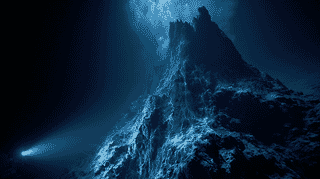
A bacterium at Okinawa's deep-sea vents grows on electric current alone, building itself from CO2. JAMSTEC has caught electrosynthesis happening in the wild.
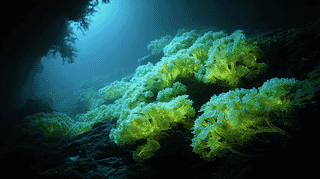
JAMSTEC's D-ARK project filmed the first bioluminescence ever recorded inside a deep-sea cave: a glowing new zoanthid, Corallizoanthus aureus, at 385 meters off Okinawa's Daito Islands. A look at the strange ecosystem hiding in unexplored submarine karst.
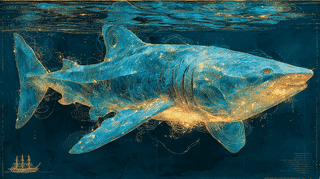
A University of Tokyo-led team has produced the first high-precision genome of the Greenland shark, the longest-lived vertebrate. Changes in a linker histone and the ferritin gene offer the first real clues to its ~400-year lifespan, and to human aging.
A Japanese research team from the University of Tokyo, JAMSTEC, and the National Institute of Polar Research has produced the first direct observational evidence that warm-water microbes carried into the Arctic Ocean are altering its nitrogen and phosphorus cycles. Aboard the R/V Mirai between 2015 and 2020, they tracked how UCYN-A2, a nitrogen-fixing organism normally associated with subtropical seas, surged into the Arctic basin during the early ice-melt year of 2017, and why that matters for the world's most rapidly warming ocean.
Japan's Coast Guard has released free Minecraft world data recreating Japan's surrounding seafloor, including the 10,920m Challenger Deep in the Mariana Trench. Released for Marine Safety Day on May 12, 2026, the world is available for both Java and Bedrock editions.
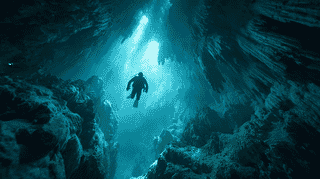
At Inazumi Underwater Cave in Oita Prefecture, professional diver Yuji Ohama (60) and his team reached 97.4m depth on March 20, 2026, likely a Japanese national record for underwater limestone caves. Formed 300 million years ago and submerged by an Aso volcanic eruption 85,000 years ago, the cave's deepest section revealed primordial stalactites and geological strata never seen above ground. We compare this discovery with Mexico's cenotes and Florida's cave systems, and explore Japan's only commercially diveable underwater limestone cave.
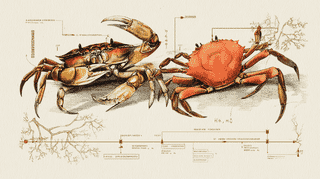
When did crabs start walking sideways? A Japan-US-Taiwan team led by Nagasaki University filmed 50 species and mapped them onto a phylogenetic tree, finding that sideways walking evolved just once around 200 million years ago, published in eLife.
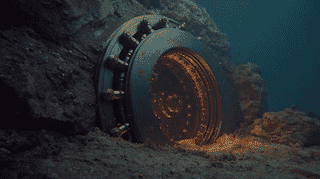
Japan pulled rare earth mud from 6,000m down in February 2026, but the 'Rare Metal King' Shigeo Nakamura says don't commercialize it. His counterintuitive argument: Minami-Torishima's 16 million tons is worth more as a silent deterrent co-held with the US than as a commercial mine. We unpack Nakamura's career, his 'don't mine, but keep the capacity' thesis, and how it compares to the US SPR, Project Vault, and Chinese stockpile strategy.
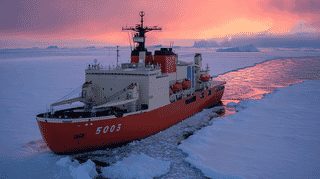
Japan plans to transfer operation of its next Antarctic icebreaker from the Maritime Self-Defense Force to research agency JAMSTEC after the current Shirase retires around 2034. A look at Japan's 70-year Antarctic legacy and what the shift means.
China's carrier Liaoning conducted flight operations near Minamitorishima — Japan's remote rare earth island. With Beijing tightening export controls in retaliation for PM Takaichi's Taiwan remarks, and a US-Japan rare earth partnership signed at the March 2026 summit, this is no longer just about minerals. It's a geopolitical power game with South China Sea parallels.
Japan Research Institute proposes an Ocean Industrial Complex combining deep-sea robotics, rare earth mining, and blue carbon. With a successful trial extraction of rare earth mud from 6,000m depth and breakthrough underwater wireless tech, Japan's ocean strategy is becoming reality.
In March 2026, Japan and the US signed an MOC on deep-sea mineral development. But overseas coverage missed the real story: Japan's successful 6,000m rare-earth mud retrieval, China's dual-use export ban, and 14 years of research that made this moment possible.
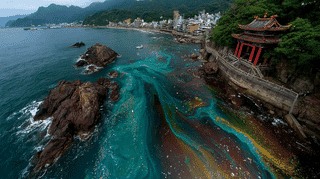
JAMSTEC research reveals microplastic density near Japan is 27 times the global average. An estimated 28,000 tons sink to the deep sea annually, and fishing-related plastic accounts for half of all coastal debris. Plus: the world's first ocean plastic center opening June 2026.
Japan's shipping giant MOL and tech conglomerate Hitachi have agreed to jointly develop floating data centers by converting used ships. Using seawater cooling to slash power costs, needing no land, and deployable in just one year, these maritime server farms offer a creative answer to the AI era's insatiable appetite for computing power.
NTT has developed multi-core optical fiber technology that quadruples submarine cable capacity without changing cable structure. Achieving 192 cores (48 fibers × 4 cores) with deployment targeted for 2029, this Japanese innovation addresses the explosive data demands of the AI era. We explore the technology alongside Big Tech's submarine cable investment race.
ONE PIECE manga has surpassed 600 million copies worldwide! Creator Eiichiro Oda has written down the secret of the One Piece treasure for the very first time and, with help from Japan's JAMSTEC ocean research agency, sealed it 651 meters beneath the sea. The answer will only be revealed when the manga ends. Here's everything you need to know about this extraordinary event.