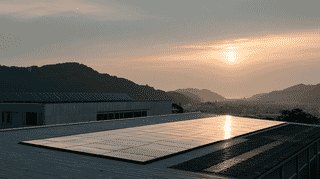
A century-old Japanese packaging company will launch a flexible CIGS solar cell in early 2027, betting that proven, long-life thin-film tech can beat still-maturing perovskite to Japan's weak roofs and walls. The contrarian logic, and the catches.
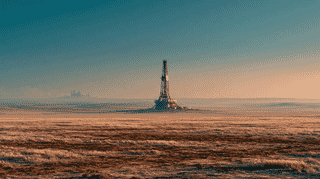
Mitsubishi Gas Chemical has signed an MOU with Australia's Gold Hydrogen to study green methanol made from natural hydrogen in South Australia. Here is why a Tokyo chemical maker is going to the wellhead abroad, what the Toyota-ENEOS consortium is really buying, and how the global race for natural hydrogen is splitting along national lines.
Hamaoka nuclear plant sits right atop the Nankai Trough megaquake zone. Its operator, Chubu Electric, shrank the key seismic-safety figure the plant is built against, and kept altering data even after regulators opened a probe, rewriting 69 of 225 datasets. On July 1 the NRA called it fabrication and a cover-up. The real test isn't the reactor's engineering; it's whether Japan's post-Fukushima watchdog has teeth.
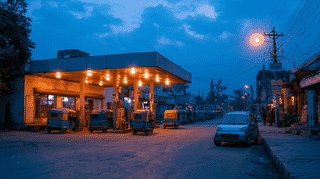
PMs Takaichi and Modi are set to turn cow dung into vehicle fuel and build a 2.5-million CNG-car market in India — a clean-energy deal that doubles as a hedge against China's grip on electric cars.
Muon-catalyzed fusion needs no plasma and no 100-million-degree heat, and it is not 1989's discredited cold fusion. A Japan-led team made the first direct observation of muonic-molecule resonance states, closing a long-standing theory-experiment gap.
Toray's new TSW-K/M/V RO membranes remove over 99.9% of salt and enough boron to run seawater desalination in a single pass, trimming energy, equipment and cost. Here's why it matters worldwide.
Kubota says its existing waste-melting furnaces destroyed three regulated PFAS at over 99.999 percent, with greenhouse-gas markers below detection. We check whether 'destroying forever chemicals' is really the breakthrough it sounds like.
Aquaponics rarely pays as a standalone farm. So how does Aomori's closed-school project plan to make money? By monetizing the cafe, tours, education and welfare work around the tank, backed by public funds.
The University of Tokyo's Kono Lab, with Aisin and ARM Technologies, ran the world's first end-to-end demo storing green hydrogen in a room-temperature, non-flammable liquid, moving it between cities in a simple container, and generating power directly. We unpack the efficiency claims against ammonia and MCH, and how it diverges from US, European and Chinese hydrogen-carrier strategy.
A Japanese radiative cooling film that stays below air temperature in direct sun, with zero electricity. How SPACECOOL dumps heat into space, its 29% energy cut in Saudi trials, and why passive cooling matters as the planet warms.
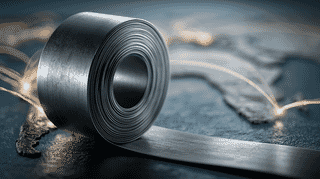
A single fusion reactor needs about 10,000 km of high-temperature superconductor tape, and five years ago almost no one could make that much. Now four Italian physicists at startup Suprema are building Europe's largest tape plant to break in. But the companies that already dominate this wire are mostly Japanese: two of the four global fusion-grade producers are based in Japan. Inside the race over the thin ribbon fusion runs on.