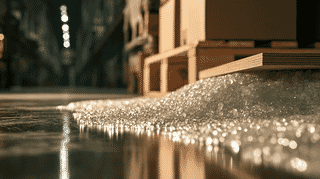
Kanazawa Institute of Technology and sand maker Yamakawa Sangyo scatter sapphire grains across a warehouse floor and let the load slide instead of resisting. The grains cost a few hundred yen per square meter.
From mid-August 2026 SoftBank will fly a 65-metre helium airship from New Mexico across the Pacific and hold it about 20 km above Japan, testing voice, SMS and data from a flying base station that covers up to 200 km across. Commercial service is targeted from 2027. Here is how it differs from satellite direct-to-phone, why Loon died, and the business problem SoftBank has not solved.
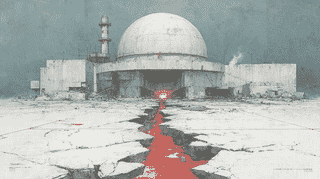
Hamaoka nuclear plant sits right atop the Nankai Trough megaquake zone. Its operator, Chubu Electric, shrank the key seismic-safety figure the plant is built against, and kept altering data even after regulators opened a probe, rewriting 69 of 225 datasets. On July 1 the NRA called it fabrication and a cover-up. The real test isn't the reactor's engineering; it's whether Japan's post-Fukushima watchdog has teeth.
Japan had FIVE earthquakes of intensity 5 or higher in April 2026, including a magnitude 7.7 offshore Sanriku quake. Casualties: zero deaths, zero collapses. How? The 1981 building code, a 21-story 'fortress' built to survive a magnitude 8 hit, and one counterintuitive rule: don't run outside. A humorous look at the world's most earthquake-hardened country.
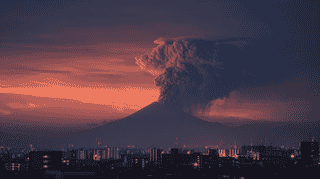
Kyoto University Professor Emeritus Hiroki Kamata warns Mount Fuji is in eruption standby mode, with high risk of being triggered by the Nankai Trough megaquake. NHK Special dramatizes Tokyo blackout scenario from volcanic ash, while Sakurajima continues active eruptions