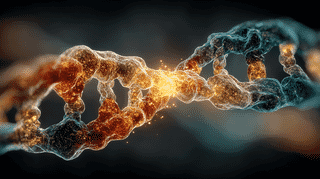
Tohoku University-led researchers built a DNA switch: blue light makes mRNA inside cell-sized capsules, UV stops and cuts it. Why the brake matters, and why pinpoint therapy is still far off.
Cyclo-octasulfur, the yellow sulfur of volcanoes, is made and stored in fat droplets in mouse and human cells. It won't dissolve in water and breaks apart when measured; a chemistry capsule caught it.
Tohoku University, JAMSTEC and Fuji Electric filmed droplets on a geothermal turbine blade spinning at 430 m/s, and what held on stationary walls did not hold here. Japan itself runs just 607 MW of geothermal.
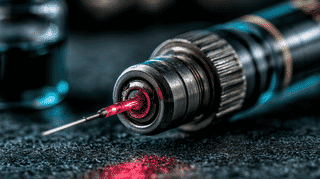
Tohoku University and Air Water went after the two bottlenecks that have kept photothermal cancer therapy in the lab for twenty years. IDP1, an artificial protein designed with AlphaFold, kept nanoparticles circulating for 150.5 minutes against 17.8 for PEG, and a 0.5 mm endoscope that fits inside a 16-gauge needle fired an 808 nm laser from inside the tumor at 28 percent less power. In mice, the tumors were gone within 14 days. How that compares with US trials already running in humans.
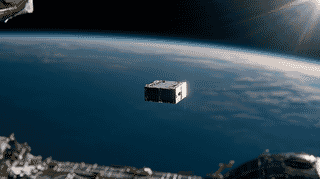
HOKUSHIN-1, a cubesat from three Japanese universities, was deployed from the ISS on June 19. Why it proves deep-space tech in low orbit first, where failure is cheap.
Muon-catalyzed fusion needs no plasma and no 100-million-degree heat, and it is not 1989's discredited cold fusion. A Japan-led team made the first direct observation of muonic-molecule resonance states, closing a long-standing theory-experiment gap.
A Tohoku University team grew rice to the heading stage in soil mimicking the Moon's surface, using fertilizer made from nothing but air and electricity via plasma. The unlikely inspiration? Gundam's beam saber. As NASA pushes toward a lunar base, it could become foundational tech for growing food in space.
A Japanese-led team has resolved the first atomic-level structure of a metabolon, the elusive enzyme cluster that hid from biology for 40 years, revealing a new control principle called the GATE mechanism.
A Japan-US team from Tohoku University and the US NIST built the first working spintronics probabilistic bit (P-bit) on a single silicon substrate using standard chip-fabrication processes. We explain the coin-flip idea, how it differs from quantum computing (room temperature, existing chip lines), and how far it really is from a product.
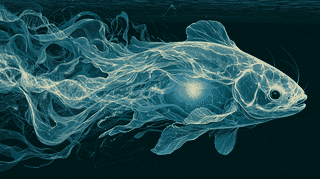
The pygmy sweeper glows blue from its belly, yet a full read of its 625-million-letter genome turns up no gene for the light-making enzyme. A Japanese team has now confirmed, at the genome level, that the fish runs entirely on a protein stolen from its prey, the only known case of its kind, with possible payoffs for oral protein drugs.
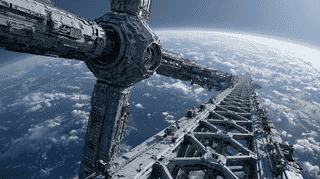
Tohoku University spinoff Space Quarters has demonstrated its DAIQ orbital assembly robot system on a ground model, showing three kinds of small robots cooperating to pick, place, and weld building panels into a larger structure. We look at how it compares to NASA's cancelled OSAM-1 and DARPA's NOM4D, and what makes Japan's robotics approach distinct.
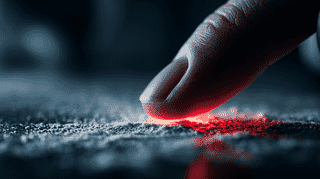
A team in Japan re-engineered zinc oxide, the harmless powder in sunscreen, into a material that emits near-infrared light from a gentle fingertip press. No power, no rare earths. Here's why it matters for medicine, bridges, and the rare-earth standoff.
An Osaka University team has shrunk a key step in magnetic tunnel junction fabrication from hours to about 1.7 seconds using flash-lamp annealing—up to thousands of times faster than conventional methods, with implications for MRAM mass production and flexible sensors.
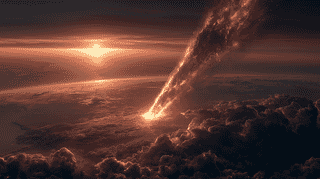
For forty years a black clay layer in a remote Hokkaido stream was East Asia's only K-Pg boundary. In May 2026, a Tohoku University-led team reported it isn't the boundary at all, and that the real record lies about four kilometers northeast.
Tohoku University researchers have proven for the first time that microscopic surface roughness can reduce air drag by up to 43.6%, overturning an 80-year-old fluid mechanics consensus dating back to the 1940s. Here is what this discovery could enable for aircraft, cars, ships, bullet trains, and drones, and how it differs from riblets and golf ball dimples.