Nikkei says NTT Data is in final talks on an Osaka data centre for Anthropic of up to 500 MW. Neither company has commented. Grid power will likely be slow, and a local site would not by itself keep data in Japan.
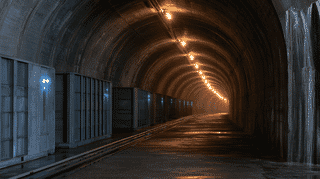
Mitsui Fudosan and partners plan a data center of up to 20 MW in a disused Kobe tunnel that stays 15 to 20°C. What reuse saves, a 2007 precedent, and the open questions on water, power and heat.
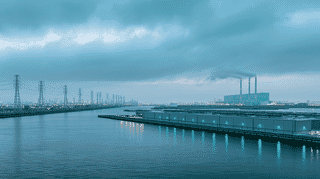
JERA, Dell and RHAELM plan a 400 MW AI data center at JERA's Chiba gas plant, powered without the public grid. Why there, what gas means, and the US case regulators blocked.
Google and Microsoft park cold data on magnetic tape. Shipments dipped in 2025, then jumped 57% in the first quarter of 2026, and the business behind those cartridges belongs to a photo film company.
Navitas sued Renesas on August 10, 2026 over four US patents covering SuperGaN. The CEO who filed it once ran that business inside Renesas, which sued first over trade secrets and holds 39.9 percent of Wolfspeed.
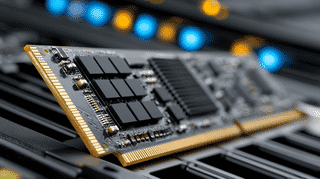
Kioxia's XL1 module pulls flash memory into the memory hierarchy over CXL to ease the DRAM crunch in AI data centers. What it can and cannot do, and why it matters for a country that no longer makes DRAM.
Japan's government just promised over 370 trillion yen ($2.3 trillion) across 17 strategic sectors by 2040. We unpack the suspicious arithmetic: a 6.5x return promised on chips, an undisclosed public-private split, and a deadline conveniently 14 years away.
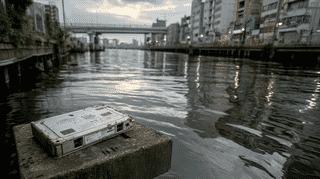
A hard drive on a concrete pillar in a Tokyo canal, rumored to hold trillions of yen in Bitcoin, was finally identified as an enterprise HGST drive. Then, a day after going viral, someone took it. The math, the law, and the vanishing act.
A team led by Japan's QST has shown, for the first time, a magnetic memory that writes with a laser pulse instead of current, and made it work on CoFeB, the alloy already inside commercial chips. Here's how, and why it matters for data-center power.
METI has unveiled Japan's first post-Fukushima numeric target for replacing nuclear reactors: up to 5 by the 2040s, 14 by the 2050s. Behind the decarbonization, energy-security and AI-demand drivers lies a harder question: regulatory capture, the Nuclear Village, and whether the regulator can be trusted.
What is NTT, one of Japan's largest telecom conglomerates, really building behind a decade of re-consolidation and its coming split of Docomo? We lay out the facts, then predict the 'final form' that emerges and the backbone it plans to earn from, comparing it with AT&T's failed media bet, SoftBank's reinvention, and India's Reliance playbook to find the real key to whether it works.
Light travels faster through air than glass. By hollowing out the core, OKI, Lightera and Keio University demonstrated a world-first wideband single-fiber bidirectional link. Commercialized, it could cut network power by up to 90 percent. We unpack the race, where Microsoft is already in via its Lumenisity buy, as AI devours electricity.
Seven months after metal-organic frameworks (MOFs) won the 2025 Nobel Prize in Chemistry, where does the technology actually stand? A status check on Atoco's air-to-water devices, scaled-up carbon capture by Svante and Kobe Steel, China's lead in MOF research output, and why an Atomis executive says a Nobel does not lower the hurdles.
Toshiba reported record net profit of 1.9673 trillion yen (about $12.5 billion) for fiscal 2025, a sevenfold jump driven by gains from selling its stake in Kioxia and a structural surge in transmission and HDD demand from AI data centers. Nearly two years after the JIP-led privatization, what has Japan's biggest private-equity restructuring actually changed? We compare it with Blackstone's Hilton success and the cautionary tale of Toys R Us.
Kioxia forecast a 48-fold jump in Q1 net profit to 869 billion yen ($5.5 billion), making the Japanese NAND maker Japan's single-largest AI beneficiary on a quarterly basis after Toyota. We unpack the US ADS listing plan, the supercycle reshaping NAND prices, the HBM gap with Samsung and SK Hynix, and what it all means for Japan's broader semiconductor revival.
Japan's next-gen supercomputer Fugaku NEXT bets against the cooling consensus: warming water above 30°C to cool AI servers and cutting cooling power by 20%. It may also adopt 'ZAM,' a new memory developed by SoftBank and Intel that stands DRAM chips on edge with magnetic-field coupling. Why Japan is choosing efficiency over the gigawatt-scale arms race that defines US Frontier and El Capitan.
GPU-to-GPU optical interconnects were forecast to arrive around 2033. NVIDIA just pulled them in by five years, putting co-packaged optics into the NVLink switch of its 2028 Feynman generation, and locking in supply with $2 billion investments in each of Lumentum and Coherent. Furukawa Electric is spending 38 billion yen to more than quintuple DFB laser chip capacity; Sumitomo Electric supplies core components for NVIDIA's Quantum-X Photonics switches but was left out of the funding round. Where Japan's optical suppliers stand, and how NTT's IOWN runs on a different clock.
Chinese G.657.A2 optical fiber went from 32 yuan to 240 yuan per fiber-kilometer in a year, a 650% jump. The visible driver is AI data centers; the hidden one is disposable fiber-optic drones on the Ukraine front. China holds 60% of preform capacity, Japan leads on 13,824-core cables, and the US holds the hyperscaler demand.
JBIC and Japan's three megabanks signed $2.221 billion in loans for the first three projects of a $550 billion US investment ceiling, the price Tokyo paid to bring Trump's tariffs down to 15%. The deal, the dollar-funding crunch, and what changed when the Supreme Court ruled IEEPA tariffs unlawful in February 2026.
By fiscal 2034, new data centers and semiconductor fabs will add peak electricity demand equal to seven nuclear reactors in Japan, with roughly 60 percent of capacity clustered around Tokyo and the connection queue backed up. The government's answer is Watt-Bit Integration. Set against Virginia's pricing fix, Ireland's renewables mandate, and Singapore's hard area cap, Japan's regional-distribution-plus-decarbonization bet comes into focus.