A glass strand thinner than a human hair got 7.5 times more expensive in a single year. A quiet scramble for Chinese optical fiber is underway.
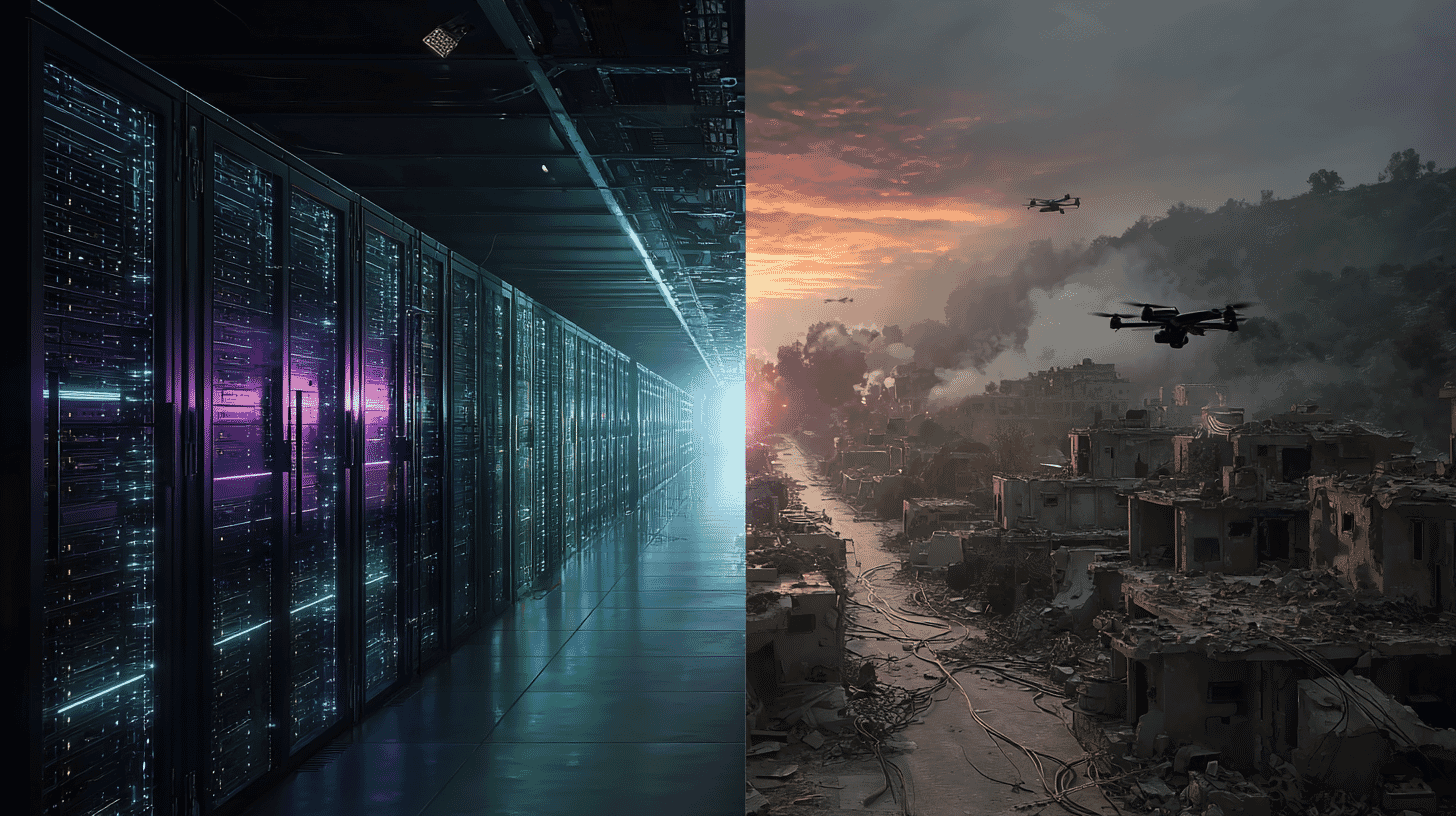
The visible demand is the one everyone talks about: AI data centers, where a single GPU rack can require up to 36 times more fiber connections than a traditional CPU rack. The hidden demand is stranger. On the Ukraine-Russia front, each fiber-optic drone trails 10 to 40 km of glass thread that is never recovered.
On the supply side, China commands 60% of preform production, Japan leads in ultra-multi-core 13,824-fiber cables, and the US holds the hyperscaler demand. Here is that three-way standoff, in numbers.
The 650% Shock Reported by CCTV
On April 18, 2026, China Central Television's finance channel reported a striking data point. G.657.A2, the bend-insensitive grade favoured by AI data centers and military drones, had gone from 32 yuan per fiber-kilometer to 240 yuan in a single year, a 650% increase. That is 7.5 times the price. At mid-2026 rates of roughly 6.8 yuan to the dollar, that's about $4.70 rising to about $35.
It isn't only that grade. Standard G.652.D climbed from around 60 yuan at the end of 2025 to a peak of 115 yuan in early April 2026. Bare G.657.A1 in the US rose 69% from January, and the same product in Europe jumped 130% in two months. CRU's global fiber price index hit a record high in March 2026.
One fiber producer in Jiangsu province reported Q1 production and sales up nearly 5x year on year. Another reported a 35% increase with overseas sales up more than 55%, and an order book running into the first quarter of 2027. The unwritten rules have been rewritten too: deliver first and invoice later used to be standard, and now suppliers want the money up front before anything gets made.
Two demand explosions are driving this anomaly: AI data centers (the visible one) and battlefield consumption of fiber-optic guided drones (the rarely-reported one).
Visible Demand: The "Giant Gulping Mouth" of AI Data Centers
Since the ChatGPT revolution, AI data center construction has accelerated explosively worldwide. And AI-optimized data centers consume optical fiber on an entirely different scale than traditional cloud facilities.
Industry analysis shows that AI-optimized data centers require 5–10x more optical fiber than traditional configurations, and in some cases more than 10x. Drilling deeper, a single GPU rack can require up to 36x more fiber connections than a traditional CPU rack. This stems from AI training workloads generating massive "east-west traffic", server-to-server communication, requiring every GPU to be linked at high speed.
Building a 100,000-GPU cluster requires tens of thousands of fiber-kilometers. Research firm CRU forecasts global optical fiber demand will exceed 650 million fiber-kilometers in 2025 and surpass 800 million in 2026, with a 16.7% supply gap. Data center share of global fiber demand is projected to leap from just 5% in 2024 to 30% by 2027.
The hyperscalers' moves are blatant. Meta signed a supply contract with Corning worth up to $6 billion. Microsoft has announced plans to deploy 15,000 km of hollow-core fiber over two years. Whoever buys early wins, a wartime-style scramble for resources.
Hidden Demand: Disposable Fiber on the Ukrainian Battlefield
The second, more shocking demand driver is the "fiber-optic guided drone" born from the Russia-Ukraine war.
In modern electronic warfare, wireless signals can be jammed easily. So both armies began winding 10–40 km of optical fiber cable around drones, paying it out like fishing line as the drone flies. Because fiber is a physical connection, it's immune to electromagnetic jamming, control signals reach the drone reliably. Fiber-optic FPV attack drones and reconnaissance drones have become essential equipment.
The disturbing part: this fiber is single-use. Once a mission ends, the dozens of kilometers of glass thread dragged behind the drone are abandoned on the battlefield, never to be recovered. Optical fiber, once an enduring infrastructure material, has been transformed into a literal consumable.
Russia consumed approximately 60 million km of optical fiber in 2025, accounting for 10.5% of global consumption, up from less than 1% the year prior. That is enough to span the distance from Earth to the Moon about 158 times, or 79 round trips.
This wartime consumption directly impacts China's supply capacity. In May 2025, Ukrainian drones struck "Optic Fiber Systems," Russia's only domestic fiber plant in Saransk (Republic of Mordovia), halting production. The 4-million-km/year facility remains offline, leaving Russia 100% dependent on Chinese imports. China has not let the moment pass: prices for Russian buyers have been raised 2.5–4x.
Russia alone now accounts for 10.5% of global optical fiber consumption (~60 million km), and Ukraine's consumption adds further on top of that. While Ukraine's exact volume isn't publicly disclosed, the country has approved over 80 domestic fiber-optic drone systems for use to counter Russia's elite "Rubicon" drone unit, and consumption is expanding rapidly. The same tactics have reportedly spread to Myanmar and Mali as well. Taken together, battlefield "disposable" optical fiber demand has reached over 10% of total global demand, an unforeseen structural demand source that has become a co-equal driver of the price surge alongside AI.
Player 1: China, Master of Preforms
Now let's look at the supply side. The upstream "preform", a glass rod from which optical fiber is drawn, accounts for 60–70% of total fiber cost. Expanding preform capacity takes 18 to 24 months, and building a 10,000-tons-per-year facility requires investment exceeding 2 billion yuan, roughly $290 million. Technical and capital barriers are both extreme.
China has staged a remarkable rise in this market. A decade ago, China imported 90% of its preforms; today it produces about 60% of global preform capacity. All three major processes (PCVD, OVD, VAD) have been mastered and scaled to mass production.
China's "Big Four" fiber companies, Yangtze Optical Fibre and Cable (YOFC), Hengtong, Zhongtian Technology, and FiberHome, have consolidated the top 5 of the industry into more than 45% market share. Years of brutal price competition winnowed the field, and Chinese costs are now just 1/5 to 1/6 of overseas rivals.
Overseas expansion is also accelerating. Industry leader YOFC operates 8 manufacturing facilities across 6 countries: Indonesia, South Africa, Brazil, Poland, Germany, and Mexico. Overseas revenue reached 42% of total in H1 2025, approaching the 50% threshold YOFC sees as defining a "globally integrated enterprise."
Player 2: Japan, Leader in Ultra-Multi-Core and AI Infrastructure
While Chinese media frames the story as "China seizes supply leadership," Japan plays an equally decisive role, at the highest end of the AI-grade ultra-multi-core cable segment.
Fujikura (TSE: 5803), a 140-year-old Japanese cable maker, launched the world's first 13,824-core ultra-dense optical fiber cable, "SWR/WTC," in July 2025, with deployments already in overseas hyperscale data centers. The product won the top prize at the 2025 Nikkei Awards for Excellent Products and Services.
Fujikura's rise shows clearly in its stock price. Shares have surged about 14x (1,400%) in two years, with 160% gains in 2025 alone, vastly outperforming the Nikkei 225's 22% rise. In October 2025, the White House designated Fujikura as a key supplier of optical fiber for up to $20 billion (~¥3.1 trillion) of US AI infrastructure under the Japan-US economic cooperation framework. In response, Fujikura announced in March 2026 a capital plan of up to ¥300 billion (~$1.9 billion) to roughly triple its optical fiber capacity at all of its plants in Japan and the US.
Furukawa Electric is another major player. Its group company Lightera began mass production of 13,824-core ultra-dense fiber cables in March 2026, building a dedicated second factory in Kameyama, Mie Prefecture, more than doubling capacity from 2023 levels. Together with Sumitomo Electric Industries, Japan's three majors also lead the world in high-temperature superconductor wire, making them the supply chain backbone across AI, fusion, and other frontier fields.
The 36Kr article claims "Fujikura and Corning have no expansion plans through 2028", but this is outdated information from late 2025. Both Japanese and US firms announced major expansions in 2026.
Player 3: The US, Home of the Hyperscalers
The US is home to Corning, the world's largest optical fiber maker, and more importantly, to the hyperscalers (Microsoft, Meta, Google, AWS) that are the largest fiber consumers on the planet.
At OFC 2026 in March, Corning unveiled multi-core fiber technology that uses up to 75% fewer connectors and reduces cable weight by up to 70%. Its up-to-$6 billion supply deal with Meta epitomizes the AI-era "preempt and lock in" strategy. Corning's Optical Communications segment posted Q3 2025 revenue of $1.65 billion, up 33% year-on-year.
The US strategy is clear: strengthen domestic capability (Corning) while securing strategic supply from a key ally (Japan, via the $20 billion Fujikura deal). Even under the Trump administration, the AI infrastructure cooperation framework with Japan has remained intact.
Structural Shortage Persists Through 2028
As we've seen, the optical fiber market isn't a simple "China dominates everything" story. It's a Three Kingdoms structure where each region holds a different lever of power: China owns preforms and standard fiber, Japan leads in ultra-multi-core and high-end products, and the US controls demand-side hyperscaler contracts.
What they all share is a common outlook: supply bottlenecks will not resolve until 2027–28. Preform expansion takes 18–24 months, and significant new capacity won't come online before late 2027. Until then, prices stay high, hyperscalers continue locking in existing capacity, and smaller operators struggle to secure supply.
Beyond that horizon waits the next-generation race: hollow-core fiber (HCF), 800G/1.6T optical modules, and multi-core fibers. Microsoft has committed to 15,000 km of HCF deployment over two years. China's YOFC has reported world-record HCF performance metrics. And Japan's Furukawa is catching up to Fujikura's 13,824-core production.
In Closing: Who Owns the "Vascular System" of AI in Your Country?
When people hear "AI boom," they think of NVIDIA's GPUs or OpenAI's ChatGPT. But the bottlenecks of the AI era extend beyond compute capacity to the "speed and width of the optical paths" that connect everything. Optical fiber cable has become, quite literally, the vascular system of AI infrastructure.
In this hidden battle, China holds the preforms, Japan leads in ultra-multi-core hardware, and the US dominates hyperscaler contracts. And in the background, over 60 million km of glass thread is consumed annually as a wartime disposable on the Ukraine battlefield, that's the reality of the AI era.
In Japan, debate is intensifying over the three-way market structure and the surprising emergence of wartime consumption as a major demand driver. What about your country? Whose supply chain feeds the optical fiber inside your data centers? And how do you view this "invisible scramble" sparked by the AI boom? We'd love to hear your perspective in the comments.
References
- https://36kr.jp/492976/
- https://www.themoscowtimes.com/2026/02/26/russia-forced-to-rely-on-chinese-optical-fiber-imports-after-ukrainian-strikes-halt-domestic-plant-a92054
- https://www.bloomberg.com/news/articles/2025-12-18/ai-demand-strains-japan-cable-firm-fujikura-after-stock-surge
- https://www.datacenterdynamics.com/en/news/fujikura-to-triple-optical-fiber-production-as-part-of-2bn-investment/
- https://www.fierce-network.com/broadband/major-fiber-vendors-strategize-huge-demand-ai-2026
- https://www.gl-fibercable.com/newsdetail/g657a2-at-us22km:-understanding-the-optical-fiber-price-surge-of-2026-and-what-comes-next.html
- https://www2.yicaiglobal.com/news/chinas-fiber-giant-yofc-bets-on-hollow-core-fiber-to-power-the-ai-era
- https://www.furukawaelectric.com/release/2026/comm_20260312.html








Global Discussion
14 comments