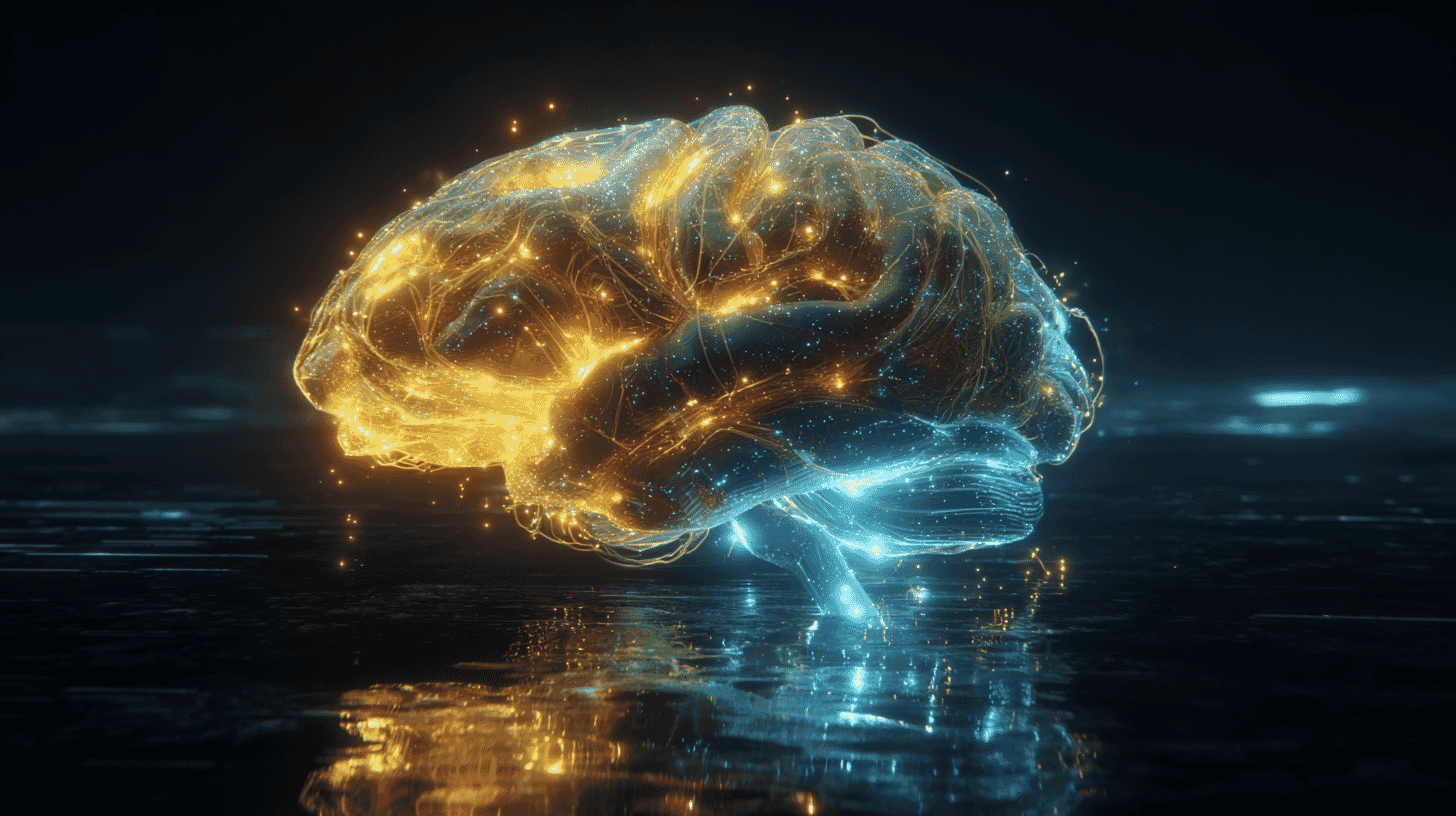
What if your memories could outlive your body? A recent survey of 312 neuroscientists asked how likely it is that long-term memories could be decoded from a brain preserved after death; the median answer was 41%. The median probability they gave for "whole brain emulation" eventually recreating a person's mind inside a computer was 40%, with a median estimate of around 2125 for humans. Here's what the science says, and why the debate is far from settled.
Your Memories Leave Physical Traces in Your Brain
We all carry memories that never seem to fade: your first day of school, the birth of a child, or a moment that changed your life forever. Scientists have long suspected that these lasting memories are not just abstract thoughts floating around in your head, but actual physical changes etched into your brain's structure.
A research team led by Australia's Monash University published a study in the journal PLOS One in June 2025 that finally put this question to the scientific community in a systematic way. They surveyed 312 neuroscientists, including specialists in memory research and general brain scientists, and asked them a series of 28 questions about how memories are stored.
The results were striking. A full 70% of the respondents agreed that long-term memories are primarily maintained through persistent changes in the strength of connections between neurons (nerve cells) and their synapses (the junctions where neurons communicate with each other).
In simple terms, when you have a powerful experience, it causes chemical and physical changes in clusters of neurons in your brain. Scientists call these changes "engrams." The stronger the memory, the more connections form between the cells in that engram. Over a lifetime, these patterns of neural connections build up into what researchers call your "connectome", essentially a wiring diagram of your brain that is uniquely yours.
Can Memories Survive Death?
Here's where things get really interesting. If memories are physically encoded in the brain's structure, could they still be "readable" from a preserved brain after the person has died?
The survey asked neuroscientists exactly this question, focusing on a technique called aldehyde-stabilized cryopreservation (ASC), a method that bathes the brain in a chemical fixative and stores it at extremely low temperatures to maintain its structure.
How likely is it that a brain preserved using ASC retains enough structural information to theoretically decode at least some long-term memories? The median probability estimated by the surveyed scientists was 41%.
That's a remarkable number for such a speculative question, as Ariel Zeleznikow-Johnston, the lead author from Monash University, pointed out: "Scientists often are very cautious and unwilling to be drawn into speculation about what might be possible in the future. [This finding] says that neuroscientists think this has a reasonable shot at working, if done correctly."
High-quality brain preservation has already been achieved in animal experiments. Preserved brains can be imaged at extremely high resolution, showing individual synapses and nerve connections. The challenge, of course, is that doing this with a recently deceased human brain raises enormous practical, ethical, and legal questions.
Whole Brain Emulation: Uploading Your Mind to a Computer
If a dead brain can preserve its memories, the next logical step is audacious: could we map all of that information and recreate a person's mind inside a computer?
This concept is called Whole Brain Emulation (WBE). The idea is to preserve a brain's structure at fine enough resolution to capture everything that encodes a person's psychological properties (their memories, personality, preferences, and ways of thinking) and then build a digital simulation so faithful to the original that it would behave indistinguishably from the living person.
If you've seen the 2014 film Transcendence, starring Johnny Depp, you've seen a dramatized version of this concept. But WBE is not just science fiction anymore; it's an active area of scientific research and debate.
In the Monash survey, the median probability neuroscientists gave for creating a whole brain emulation from a preserved brain being theoretically possible was 40%. When asked to assume that recording technologies were established in advance, the median rose to 62%.
As for when this might happen, the median predictions were surprisingly specific: whole brain emulation for C. elegans (a tiny roundworm with just 302 neurons) by around 2045, for mice by around 2065, and for humans by approximately 2125.
The Connectome Revolution: From Worms to Fruit Flies to Humans
To understand why scientists are even slightly optimistic about WBE, you need to know about the connectome revolution happening right now.
A connectome is a complete map of every neuron and every connection in a brain. In October 2024, a massive international collaboration called FlyWire published the first complete connectome of an adult fruit fly brain in the journal Nature. The map includes all 139,255 neurons and over 50 million synaptic connections, making it the most complex complete brain map ever created for any adult animal.
For context, previous connectomes had only been completed for the C. elegans worm (302 neurons) and a larval fruit fly (3,000 neurons). The adult fruit fly is several orders of magnitude more complex.
What's even more remarkable is that researchers at UC Berkeley were able to take this connectome and simulate the entire fruit fly brain on a laptop computer, and the simulation accurately predicted how the real fly brain would respond to stimuli.
But the jump from a fruit fly to a human is staggering. A fruit fly has about 140,000 neurons. A human brain has roughly 86 billion (more than 600,000 times as many), each connected to thousands of other neurons through approximately 100 trillion synapses. The State of Brain Emulation Report 2025, a comprehensive scientific assessment, identifies data acquisition, molecular annotation, model validation, and computational scaling as the major bottlenecks.
But Would It Really Be "You"?
Even if we could perfectly copy every neuron and synapse in your brain, the deepest question remains: would the resulting digital entity actually be you?
Brian Patrick Green, an ethicist at Santa Clara University, argues that human identity goes far beyond the brain: "Our identity includes not just mind and memory, but personality, body, muscles, bones, relationships. Beyond that, our social situations, the world we live in, are also part of our identity. Even external objects (a cherished photo, a memento from a close friend) can become part of who we are."
Our experience of being alive is not just about neural connections. It's also about sensory experiences (seeing, touching, smelling, tasting) and our constant interaction with the physical world. Our biological, embodied senses are as central to what makes us human as the chemistry of our brains.
Furthermore, a living brain is constantly changing, rewiring itself in response to new experiences. If a whole brain emulation were static, frozen in the state it was captured in, it would essentially be a snapshot, not a living mind.
And then there is the "hard problem of consciousness", the deep mystery of why and how we have subjective experience at all. Some scientists have proposed that consciousness may be a quantum phenomenon, which would make it fundamentally impossible to replicate through classical computing.
A University of Tokyo researcher, Masataka Watanabe, has proposed an alternative approach: rather than simply copying the brain, gradually merging a biological brain with a machine over months or years, transferring not just memories but the very algorithms that generate consciousness. Just as consciousness is shared between the left and right hemispheres of the brain (connected by the corpus callosum), he argues it could be shared between a biological brain and a machine, and eventually, when the biological brain ceases to function, consciousness would seamlessly continue in the machine.
The Frontier Companies: From Cryopreservation to Digital Afterlife
Several organizations are already working toward making brain preservation and emulation a reality.
The Carboncopies Foundation, a U.S.-based nonprofit, leads research and development specifically toward whole brain emulation, focusing on the three core capabilities needed: recording brain function, mapping brain structure, and computational emulation.
The Brain Preservation Foundation promotes scientifically validated research in human brain preservation for long-term storage, while companies like Nectome (a U.S. startup) have been developing techniques to preserve brains with the goal of eventually uploading their contents. However, Nectome's approach raised serious ethical concerns because it originally required removing the brain from a living person, essentially requiring euthanasia.
The Aspirational Neuroscience community even offers a $100,000 prize for successfully extracting individual memories from preserved animal brains, a milestone that researchers predict could be achieved within about five years.
Where Science, Philosophy, and Culture Collide
The concept of digital immortality touches something deeply human: our fear of death and our desire for continuity. In Japan, where Buddhist traditions teach that consciousness is impermanent and attachment to the self is a source of suffering, the idea of preserving one's mind forever raises profound philosophical tensions. And yet, Japan is also a culture fascinated by the boundaries between the living and the digital, from ghost stories to anime like Ghost in the Shell that explore what happens when mind meets machine.
The question of whether a digital copy of you is actually "you" echoes the Ship of Theseus paradox that philosophers have debated for millennia. If every plank of a ship is gradually replaced, is it still the same ship? If every neuron in your brain is mapped and replicated digitally, is the result still you, or just a very convincing copy?
These are not just abstract philosophical puzzles. As brain preservation technology advances, they will become urgent practical and legal questions: Does a digital emulation have rights? Can it consent? Who owns it? Can it be "turned off"?
The science is progressing faster than many expected, but the ethical, philosophical, and technological challenges ahead are enormous. We may be decades, or a century, away from anything resembling human whole brain emulation. But the fact that neuroscientists' median estimate reaches 40% means this is no longer just science fiction.
What do you think? In your country, how do people view the idea of preserving consciousness after death? Is digital immortality a dream worth pursuing, or does it cross a line that humans shouldn't cross?
References
- https://journals.plos.org/plosone/article?id=10.1371/journal.pone.0326920
- https://www.popularmechanics.com/science/a69989900/upload-your-brain/
- https://arxiv.org/abs/2510.15745
- https://carboncopies.org/
- https://www.brainpreservation.org/
- https://flywire.ai/
- https://news.berkeley.edu/2024/10/02/researchers-simulate-an-entire-fly-brain-on-a-laptop-is-a-human-brain-next/



Global Discussion
15 comments