Nikkei says NTT Data is in final talks on an Osaka data centre for Anthropic of up to 500 MW. Neither company has commented. Grid power will likely be slow, and a local site would not by itself keep data in Japan.
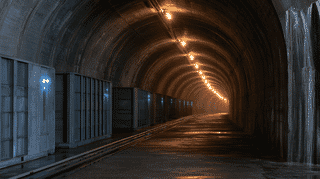
Mitsui Fudosan and partners plan a data center of up to 20 MW in a disused Kobe tunnel that stays 15 to 20°C. What reuse saves, a 2007 precedent, and the open questions on water, power and heat.
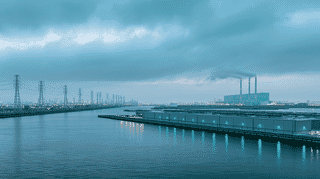
JERA, Dell and RHAELM plan a 400 MW AI data center at JERA's Chiba gas plant, powered without the public grid. Why there, what gas means, and the US case regulators blocked.
For nearly 25 years, only one double-Lambda hypernucleus had been fully identified. A RIKEN-led team used AI to sift 0.2% of J-PARC's photographic film, then pinned down a boron-13 nucleus by hand.
On September 11, 2026, 25 Fields Medalists signed a declaration on AI and mathematics. Headlines read it as a revolt against AI. The real target was AI companies using math problems as a benchmark.
Google and Microsoft park cold data on magnetic tape. Shipments dipped in 2025, then jumped 57% in the first quarter of 2026, and the business behind those cartridges belongs to a photo film company.
Toyota, NTT and Tokyu are among roughly 1,600 Japanese employers paying for an AI dating app for single staff. The workplace is trying to buy back a matchmaking role it lost over fifty years.
Underwater, only sound carries far, so the ocean is still read by a handful of specialists. NEC has a Japanese defence contract to build a self-supervised underwater acoustic foundation model by fiscal 2027.
Navitas sued Renesas on August 10, 2026 over four US patents covering SuperGaN. The CEO who filed it once ran that business inside Renesas, which sued first over trade secrets and holds 39.9 percent of Wolfspeed.
KDDI's Buffmee and SoftBank's GaranAI launched in July 2026 on the same premise: use only licensed material, meter how much gets used, and pay publishers back. One sells to readers, the other to AI developers.
Design-sector bankruptcies in Japan reached 40 in the first half of 2026, up 166.6% year on year and the highest in 14 years. Tokyo Shoko Research names three forces, and generative AI runs through one.
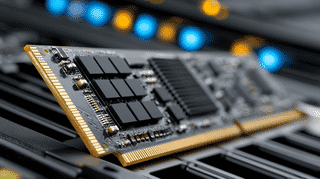
Kioxia's XL1 module pulls flash memory into the memory hierarchy over CXL to ease the DRAM crunch in AI data centers. What it can and cannot do, and why it matters for a country that no longer makes DRAM.
Japan's amended privacy law, passed on July 10, 2026, waives consent for acquiring and sharing personal data when the purpose is AI training or statistics. Medical and criminal records sit inside the exception. The design runs on the same logic as Japan's copyright carve-out, and that is what sets it apart from the EU and South Korea.
Tohoku University and Air Water went after the two bottlenecks that have kept photothermal cancer therapy in the lab for twenty years. IDP1, an artificial protein designed with AlphaFold, kept nanoparticles circulating for 150.5 minutes against 17.8 for PEG, and a 0.5 mm endoscope that fits inside a 16-gauge needle fired an 808 nm laser from inside the tumor at 28 percent less power. In mice, the tumors were gone within 14 days. How that compares with US trials already running in humans.
Japan's AutoReserve sends an AI to phone restaurants on your behalf, including ones that never opted in and keep asking it to stop. It echoes Google's 2018 Duplex furor and points at an unsolved question for every AI agent, from Operator to computer use: who on the receiving end ever consented?
Toyota, Shinshu University and 11 partners are building a self-driving lab where robots run experiments and AI picks what to try next. Here is how Japan's closed-loop materials push compares with Berkeley's A-Lab and China's robot chemist.
A Science Tokyo team finds that the brain runs multiple clocks for elapsed time, shifting between coherence and independence. From M2 and PPC recordings to the Twin-RNN model and a clue for brain-inspired AI, here's what they saw in a mouse.
In 2004, a University of Tokyo brain scientist said humans are born wired for grammar. In 2022, ChatGPT learned language without any such wiring. The half-century debate Chomsky started is wide open again.
SBI is rolling Claude out across its entire financial group and bolting it onto the on-chain finance rails it has spent years building. Unlike NEC or Fujitsu, this is a user, not a vendor. We compare how Japan, the US and the EU are wiring AI into finance, regulation included.
Japan's government and three megabanks gained access to a frontier AI model for cyber defense, with the digital minister calling to expand it to critical infrastructure. Set against the new US executive order and the EU AI Act, here is how Tokyo's approach differs.